Plan your Yala safari: how tickets work, half-day vs full-day jeep trade-offs, avoiding Block 1 crowds, and tips for spotting leopards.
Why Go on a Yala Safari
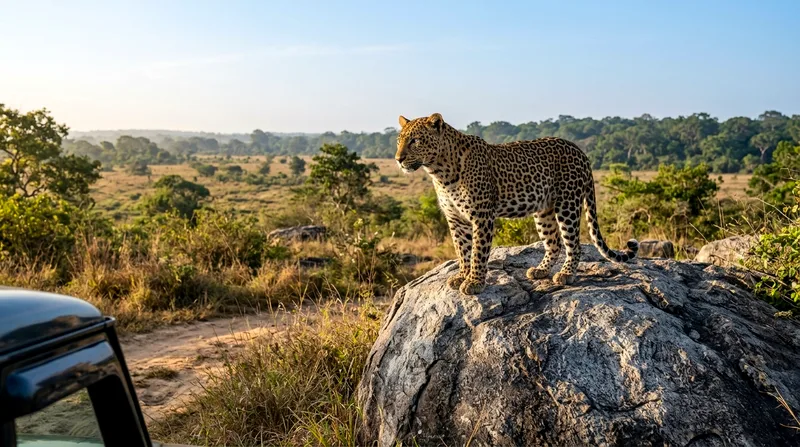
A Yala safari gets mentioned in the same breath as African big-cat parks for one reason: leopard density. Yala National Park, on Sri Lanka's southeast coast, is widely cited as having one of the highest concentrations of leopards anywhere in the world, largely because the park has no major predator competition and a healthy population of spotted deer to sustain it. That's a different proposition from the Maldives or Bali, where wildlife tourism barely registers — Sri Lanka's dry-zone parks are a genuine draw in their own right, not an add-on to a beach holiday.
I'd rank a Yala safari above a Kerala backwater cruise or a Bali rice-terrace tour for anyone who wants a real wildlife encounter rather than a scenic boat ride. That said, Yala isn't the Maasai Mara. You won't see leopards lounging in the open every game drive. What you get instead is a dry, scrubby, surprisingly varied landscape — rocky outcrops, lagoons, old reservoir tanks — dotted with elephants, crocodiles, painted storks, and the chance, not certainty, of a leopard.
Leopards, elephants and sloth bears
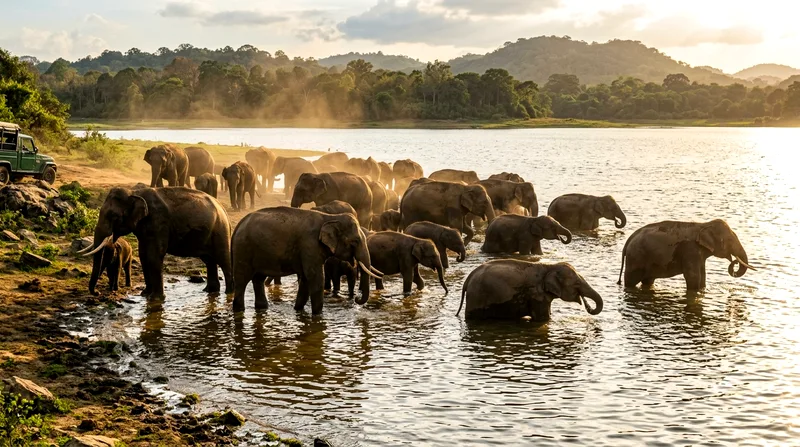
Beyond leopards, Yala holds a decent elephant population, particularly active around waterholes in the dry months, plus sloth bears that are harder to find but occasionally seen near fruiting trees between May and July. Spotted deer, wild buffalo, crocodiles basking on tank edges, and over 200 recorded bird species round out the sightings. Jackals and the shy fishing cat turn up too, though both require patience and a sharp-eyed tracker rather than luck alone.
Yala leopard safari: what to realistically expect
Set realistic expectations before you book. A single half-day drive gives you a reasonable, not guaranteed, chance of a leopard sighting — experienced trackers and repeat visitors on travel forums like TripAdvisor often report seeing one on two or three out of four drives during the dry season, fewer in the wet months. If a leopard sighting is the whole point of your trip, book two safaris across two days rather than pinning everything on one drive. A single jeep trip that only turns up elephants and birds isn't a failure — it's still a strong half-day out, just not the headline photo you wanted.
How to Visit: Independent or Guided
You cannot drive yourself into Yala. Every vehicle entering the park needs a registered tracker and driver, so the real decision isn't independent versus guided — it's which jeep setup and which operator. Self-arranging on arrival at the gate is possible, but during peak months (December to March) you'll be negotiating with touts in a car park while jeeps are filling up around you, which is a stressful way to start a 4am morning.
Booking ahead through your hotel in Tissamaharama or Kataragama, or through an operator in advance, removes that friction. It also lets you specify which block you want — important, since not every driver defaults to the quieter options unless asked.
Private vs shared jeep options
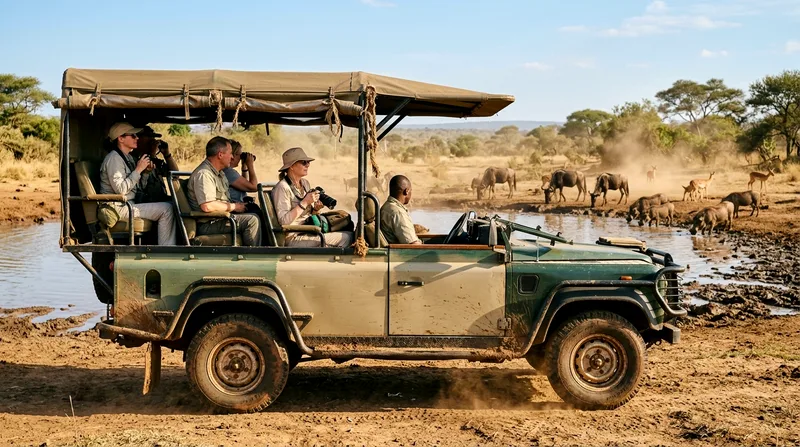
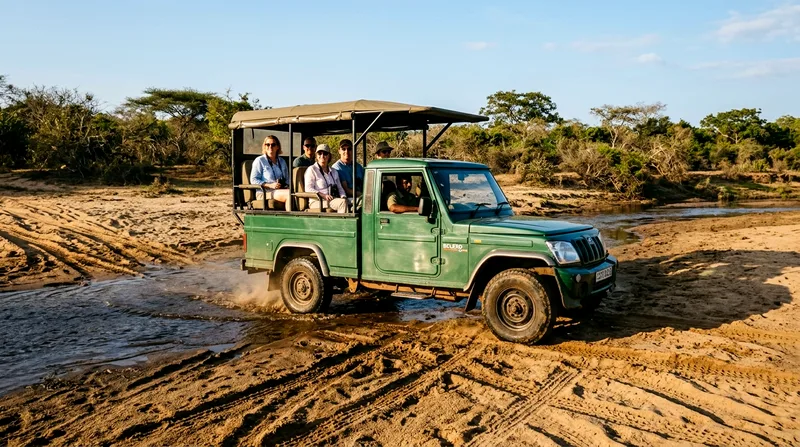
A private jeep, typically seating 4-6 people, costs more but gives you control over pace, stopping time, and which block you enter from. A shared jeep splits the cost among strangers, which is fine for solo travelers on a budget but means compromise — if the group wants to linger at a crocodile and you want to chase a leopard rumor from the radio, you don't get a vote. Families with young children generally do better with private jeeps: toddlers and three-hour group patience rarely mix well on bumpy tracks.
Choosing a reliable operator
Names like Yala Safari Holidays, Yala Wild Safaris, and Yala Dreams Wild Safari Tours show up often in trip-planning searches — treat these as examples of the type of operator to compare, not recommendations, and check recent reviews and current pricing before booking. What actually matters: does the driver double as a trained tracker, does the jeep have a roof hatch for standing photography, and will they confirm in writing which gate and block you're assigned to. A driver who's cagey about which block you're entering is a red flag — it usually means Block 1 by default.
Yala National Park Tickets and Fees
Yala National Park tickets are bundled into a fee structure set by Sri Lanka's Department of Wildlife Conservation, and it's genuinely confusing if you've never bought a Sri Lankan park ticket before. Expect several line items rather than one flat entry price.
What the fee breakdown covers
The total typically bundles: a per-person park entrance fee, a vehicle entry charge, a mandatory tracker fee, and a service/VAT charge added on top. Most operators and hotels quote you one all-in number per jeep rather than itemizing each piece, which is fine, but ask what it includes so you're not surprised by a tracker tip expectation on top. Fees are also charged per visit, not per day, so a half-day and full-day entry on the same calendar day may differ from two separate half-day entries on different days — always confirm the current structure with your operator or the park office before paying, since rates are revised periodically.
Local vs foreign visitor rates
Like most Sri Lankan national parks and heritage sites, Yala runs a tiered pricing system: Sri Lankan citizens pay substantially less than foreign visitors, and SAARC-country nationals sometimes sit in between. This isn't unusual regionally — Nepal and India run similar dual-pricing at many parks and monuments — but it does mean the number you see quoted online may not match what you pay, depending on nationality mix in your group. If you're traveling with a Sri Lankan friend or guide, their ticket won't reduce your foreign rate; each visitor is charged individually.
Skipping the Block 1 Traffic Jams
Block 1 is Yala's most famous and most congested section — it's closest to the main entrance, has the richest leopard history, and as a result attracts the bulk of jeeps on any given morning. During peak season it's common to find a dozen jeeps clustered around a single sighting, engines idling, which is neither a good wildlife experience nor a particularly peaceful one. If your main image of a safari involves silence and open space, Block 1 at 7am in February will disappoint you.
Block 1 offers the strongest leopard history but the worst crowding, while Block 5 and nearby parks trade some sighting odds for a calmer experience.
Yala safari options compared: blocks, crowds and best use
| Option | Crowd Level | Leopard Odds | Best For |
|---|---|---|---|
| Block 1 (Yala) | High, especially peak season | Highest | First-timers prioritizing leopard odds |
| Block 5 (Yala) | Low | Moderate | Photographers, repeat visitors, crowd-averse travelers |
| Block 3 / Yala South | Low to moderate | Moderate | Those wanting variety without Block 1 density |
| Udawalawe National Park | Moderate | Low (few leopards) | Reliable elephant sightings |
| Minneriya National Park | Moderate to high (seasonal) | Low | Large elephant gatherings, July-October |
Crowd levels and sighting odds are general patterns, not guarantees; conditions shift with season and time of day.
Early entry and gate timing
The single most effective fix is timing. Gates typically open around 6am, and jeeps that arrive at the gate 20-30 minutes before opening get into the park first, ahead of the main crowd that rolls in closer to 6:30 or 7. That early window — roughly 6am to 8am — is also when animals are most active before the heat sets in, so the timing serves two purposes at once. Ask your operator specifically for "early entry" and confirm your jeep will be queued at the gate before it opens, not arriving when it opens.
Quieter blocks, including Block 5
The second fix is choosing a different entrance altogether. Block 5 (Katagamuwa) and Block 3 (Yala South, entered via Katagamuwa too) see far fewer vehicles than Block 1, partly because they're less publicized and partly because some operators default to Block 1 out of habit. You'll likely see fewer leopards per visit in Block 5 than a lucky Block 1 morning, but you'll also spend your time watching wildlife instead of watching the back of another jeep's roof. For photographers and anyone irritated by crowds, this trade-off is worth it.
Half-Day vs Full-Day Safari
A half-day Yala safari generally runs about 4 hours, either the early morning slot or an afternoon-into-evening slot. A full-day safari runs roughly 9-10 hours, often with a packed lunch inside the park, covering both the quieter early morning and late afternoon activity windows with a dead, hot middle stretch in between.
Morning vs afternoon slots
Morning slots tend to produce more sightings because temperatures are cooler and animals are still moving before they retreat into shade. Afternoon slots start around 2-2:30pm and run until the park closes near sunset (roughly 6pm), catching the second activity peak as the heat breaks. Midday itself — bright, hot, mid-afternoon-adjacent hours — is the least productive window in the park, which is exactly the stretch a full-day safari forces you to sit through.
Who should choose which
Choose a half-day safari if you're short on time, traveling with young kids, or prone to fatigue from early starts and bumpy roads — seniors and families often do better picking one strong session rather than grinding through a full day. Choose a full-day safari if photography is a priority, since you get both golden-hour windows in one ticket, or if leopard-spotting odds matter more to you than comfort. Couples and solo travelers with flexible schedules get the best value from full-day trips split across two separate half-day bookings on consecutive days instead — more total drives, more chances, less of the midday lull.
Best Time and Nearby Add-Ons
The best time for a Yala safari, broadly, is the dry season from around February through June, when vegetation thins out and animals cluster near remaining waterholes, making sightings easier. Yala sometimes closes for part of September for annual maintenance — confirm current closure dates before building a trip around this park specifically.
Dry season and visibility
During the wet months, roughly October to January, thicker vegetation gives leopards more cover and animals disperse across a wider area instead of concentrating at a few tanks, so sightings become more a matter of patience. The upside of visiting in the wetter months is fewer jeeps and greener, more photogenic scenery — a genuine trade-off, not just a consolation prize. If leopard-spotting is your single priority, aim for the dry season; if you want a quieter, greener park and don't mind lower odds, the shoulder months work fine.
Yala vs Minneriya and Udawalawe
Yala isn't the only safari option in Sri Lanka, and it's worth weighing against two others. Udawalawe National Park, a few hours west, is far more reliable for elephant sightings — some say near-certain — but has nothing like Yala's leopard density. Minneriya National Park, in the central region, is famous for "the Gathering," a seasonal congregation of several hundred elephants around its reservoir between roughly July and October, which is a spectacle Yala doesn't replicate. If your itinerary already includes Sigiriya or Kandy, pairing it with Minneriya makes more geographic sense than detouring south to Yala. If you're based along the south coast near Mirissa or Tangalle for surfing or whale watching, Yala is the natural add-on.
Frequently asked questions
What time should I start a Yala safari?
Aim to be queued at the entrance gate 20-30 minutes before it opens, typically around 6am. Jeeps that arrive early get ahead of the main rush and catch the dawn activity window, which runs roughly until 8am before the heat sets in and animals retreat into shade.
How long does a typical Yala safari take?
A half-day safari runs about 4 hours, either morning or afternoon. A full-day safari runs roughly 9-10 hours with a packed lunch inside the park, covering both activity peaks but including a slower, hotter midday stretch in between.
How do I avoid Block 1 traffic jams?
Book early entry so your jeep is at the gate before opening, and ask your operator specifically for Block 5 or Block 3 instead of the default Block 1 route. Confirm the block assignment in writing before the day, since some drivers default to Block 1 unless told otherwise.
What is the best season to visit Yala?
The dry season, roughly February to June, gives the best sighting odds since animals cluster near remaining waterholes. The park sometimes closes for part of September for maintenance, so check current closure dates if traveling around that period.
Should I book a private or group jeep tour?
Private jeeps cost more but let you choose the block, pace, and stopping points — worth it for families with children or anyone serious about photography. Shared jeeps are cheaper and fine for solo or budget travelers willing to compromise on route and timing with strangers.