Plan Mirissa whale watching with confidence: compare tour types, learn how to pick a responsible operator, and see season, seasickness and Trincomalee tips.
Which Whale Watching Tour Suits You
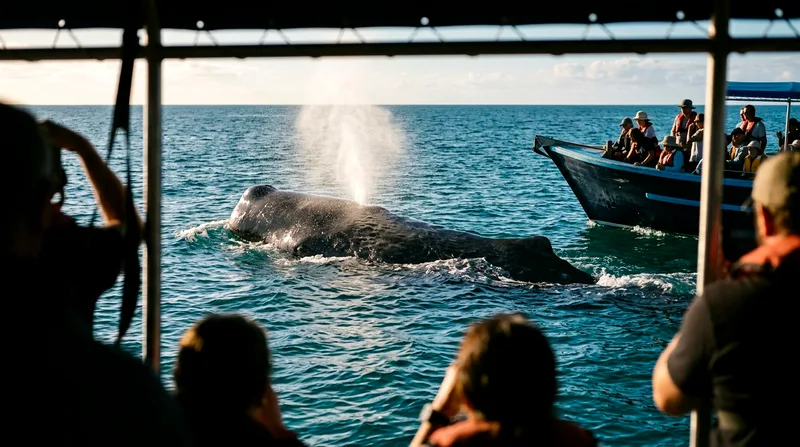
Mirissa whale watching pulls in everyone from honeymooners to retired birders with serious lenses, and the "best" tour genuinely depends on who's climbing aboard. The harbour runs boats from around 6am through to late morning between roughly December and April, when the sea is at its calmest and blue whales feed in the deep channel a few miles offshore. That single fact — calm season, deep-water feeding — explains almost everything about how these tours are structured.
I'd steer most first-time visitors toward a mid-sized shared boat rather than the cheapest mass-market option or the most expensive private charter. The middle ground tends to have better crew-to-passenger ratios, which matters more for your experience than people expect. A boat crammed with 40-plus people means a scrum at the railing every time something surfaces; a boat with 15-20 means you actually get a clear view and a seat in the shade.
Don't assume a higher price automatically means better ethics or better sightings — it sometimes just means a nicer breakfast. Ask specifically about group size and how the operator behaves around whales, not just what's included.
Families, couples and solo travelers
Families with children under eight should think hard before booking. Trips run three to four hours round-trip, often starting before 6:30am, with open swells for the first 20-30 minutes until the boat clears the harbour. Bored, tired, or seasick young children make for a miserable morning for everyone on board. Kids aged nine or ten upward generally do fine, especially if they've handled a ferry or small boat before.
Couples and solo travelers have more flexibility. A shared boat is cheaper and sociable — solo travelers often end up chatting with other wildlife watchers for the whole trip — while couples wanting privacy or a quieter pace might prefer a smaller charter. Senior travelers should check whether the boat has a toilet, shade cover, and reasonably easy boarding steps; some smaller boats require a jump from a jetty or ladder that isn't ideal for anyone with limited mobility.
Photographers and nervous sailors
If you're bringing a long lens, group size and boat height matter more than price. A packed upper deck means elbows and shoulders in your frame every time a whale surfaces. Ask whether the boat has a raised bow or open deck area with real room to move, and consider a trip with a smaller passenger cap — even if it costs somewhat more — purely for the working space.
Nervous sailors and anyone prone to seasickness should favor larger, more stable catamaran-style boats over small speedboats, which pitch far more in open swell. It's also worth choosing an earlier departure, since afternoon winds tend to pick up the chop later in the day during shoulder season (November or May).
Mirissa Tour Types Compared
Nearly every whale watching tour sri lanka operators sell out of Mirissa falls into one of three categories: the large shared boat, the smaller shared or semi-private boat, and the fully private charter. A fourth, increasingly marketed option, bundles whale watching with a dolphin-focused detour. None of these guarantees a blue whale sighting — treat any operator who implies otherwise as a red flag.
A smaller shared boat or private charter generally beats a large shared boat on comfort and whale-approach behavior, though it costs more per person.
Mirissa whale watching tour types compared by group size, duration and who they suit
| Tour Type | Typical Group Size | Duration | Best For | Trade-off |
|---|---|---|---|---|
| Large shared boat | 30-50 passengers | 3-4 hours | Budget-conscious solo travelers and groups | Crowded rails, variable crew ethics |
| Small shared boat | 15-20 passengers | 3-4 hours | Couples, families, photographers | Costs more than large boats |
| Private charter | 2-10 passengers (your group) | 3-4 hours, flexible | Couples, photographers, small families wanting control | Highest cost per person |
| Combined dolphin and whale trip | 20-40 passengers | 4-5 hours | Travelers wanting both species | Less dedicated whale search time |
| Trincomalee (May-Oct) | Varies by operator | 3-4 hours | Travelers visiting east coast in off-season | More sperm whales, fewer blue whale reports |
| Kalpitiya (Nov-Apr) | Varies by operator | 2-3 hours | Dolphin-focused travelers | Whales less reliably seen than dolphins |
Group sizes and durations are typical ranges, not fixed figures; always check the specific boat's capacity and schedule before booking.
Shared boat vs private charter
Large shared boats (30-50 passengers) are the default booking on platforms like GetYourGuide and through hotel desks across Mirissa and Weligama. They're the cheapest per person, run to a fixed schedule, and are easy to book with only a day or two of notice outside peak weeks. The downside is obvious once you're on the water: crowding at the rails, slower rotation for photo spots, and less flexibility if the captain wants to reposition quietly rather than gun the engine toward a sighting other boats have already spotted.
Private charters — smaller boats booked exclusively for your group — cost substantially more per person but buy you control. You can ask the captain to hang back from a pod rather than race other boats toward it, which is both a better experience and better for the whales. They suit couples, small families, and photography groups willing to pay for space and a slower, more considered approach to the water.
Early morning vs combined dolphin trips
Classic early-morning departures (typically 6-6:30am) head straight for the deep channel where blue and sperm whales feed, maximizing the calm-water window before wind picks up. These are the trips to book if whales are your priority.
Combined trips that promise both dolphins and whales sound appealing but often mean more time, more distance covered, and — because large pods of spinner dolphins are easier to find than whales — more time spent with dolphins and less dedicated whale-searching. If spotting dolphins matters as much to you as whales, these work well; if you specifically want maximum blue whale time, a straight whale-focused trip is the better bet.
How to Choose a Responsible Operator
Responsible whale watching Sri Lanka practices aren't universally enforced, and that's the uncomfortable truth behind Mirissa's whale watching boom. Sri Lanka has no binding national code with real enforcement teeth specific to whale watching distances, unlike places such as Kaikoura in New Zealand. Industry guidelines exist — generally recommending boats keep around 100 meters from whales, approach slowly, and never box a whale in or cut across its path — but compliance depends entirely on the individual captain and operator, and during peak season you'll often see several boats converging on the same animal regardless of guidelines.
That means the responsibility shifts to you, the booker. Read recent reviews on TripAdvisor specifically for mentions of boat behavior — phrases like "chased the whale" or "got too close" are warning signs, while reviews praising a captain who "hung back" or "cut the engine" are a good sign.
Distance, speed and approach guidelines
A well-run boat approaches whales slowly, from the side or behind rather than head-on, and cuts its engine to idle once within a few hundred meters. It won't chase a whale that's diving away, and it won't let more than one or two boats crowd the same animal at once. Ask directly, before booking: "What's your approach distance policy, and what happens if a whale swims away?" A vague answer or a shrug is itself useful information.
Red flags to avoid on the water
Avoid any boat that speeds toward a sighting called in by another vessel's radio — this high-speed convergence is one of the most common complaints about Mirissa's industry and a genuine stress risk for the whales. Also be wary of boats that circle an animal repeatedly for extended photo time, or captains who let five or six other boats box a whale in simultaneously. If you see this happening from the shore before you've even booked, it's worth asking your prospective operator directly how they handle crowded sighting situations.
What to Look For When Booking
Beyond ethics, a few practical details separate a smooth morning from a frustrating one. None of these cost extra to ask about, and a reputable operator should answer clearly and quickly.
Inclusions, group size and cancellation terms
Check whether the price includes hotel pickup, breakfast or snacks, bottled water, and life jackets — these vary more than you'd expect between operators at similar price points. Ask the maximum passenger number the boat is licensed for, not just how many are currently booked for your date; boats can and do fill up right before departure. Also check the cancellation and no-sighting policy. Some operators offer a free repeat trip or partial refund if no whales are spotted; others don't, so read the fine print before you pay rather than after a disappointing morning.
Booking direct vs through platforms
Booking through an aggregator like GetYourGuide gives you review transparency, a clear cancellation window, and a single payment system if something goes wrong. Booking direct through a guesthouse or harbor-side desk in Mirissa can be cheaper and more flexible on dates, but you're relying more on word-of-mouth and in-person judgment of the boat and crew. If it's your first time in Sri Lanka, I'd lean toward a platform booking with strong, recent reviews — you can always switch to direct bookings for other activities once you've got a feel for how things work on the ground.
Season, Seasickness and Trincomalee Alternatives
Mirissa whale watching season runs roughly from mid-November to April, with December through March generally considered peak for both calm seas and blue whale activity in the deep-water channel just offshore. Outside this window, the southwest monsoon makes the water too rough for most boats to run safely, and many operators simply stop operating between May and October.
Species-wise, blue whales are the headline draw and are seen regularly in season, alongside sperm whales, Bryde's whales less often, and pods of spinner dolphins that can number in the hundreds. No tour can promise a blue whale — sighting rates during peak months are good but not certain, and honest operators will say so rather than guarantee an encounter.
Sea conditions and seasickness prevention
Even in calm season, the first half hour outside Mirissa's harbor can be choppy, and the open channel where whales feed has real Indian Ocean swell — this isn't a sheltered bay trip. Take seasickness medication (like Dramamine or a scopolamine patch) 30-60 minutes before boarding, not after you start feeling unwell. Eat a light breakfast rather than skip it, sit toward the center of the boat where motion is less pronounced, and keep your eyes on the horizon rather than on a phone or camera screen between sightings. If you've been seasick on boats before, this trip will likely test you — be honest with yourself about that before booking a non-refundable slot.
Trincomalee and Kalpitiya as alternatives
Whale watching Trincomalee, on the island's east coast, runs opposite to Mirissa's calendar — roughly May to October — making it a useful option if your trip falls outside Mirissa's season. Sperm whales are the more common sighting there, often in larger numbers than Mirissa typically sees, with blue whale encounters less predictable. Kalpitiya, on the northwest coast, is known more for large dolphin pods than whales, and its season runs similarly to Trincomalee's, roughly November to April with some crossover. If your itinerary takes you around the island rather than just the south coast, timing a leg in Trincomalee can mean a second, genuinely different whale watching chance rather than a repeat of Mirissa.
When to Book Your Tour
Book once you have firm dates, but don't leave it to the morning of — especially in January and February, Mirissa's busiest weeks, when good boats with strong reviews fill several days ahead. Weather can also force last-minute cancellations even in peak season, so building a buffer day or two into your south coast itinerary gives you a fallback if your first booking gets scrapped for rough seas.
Booking ahead in peak season
During December through February, aim to book three to seven days ahead if you want a specific boat or a smaller group size — the bigger shared boats often have late availability, but the better-reviewed smaller operators sell out faster. Shoulder months (November and April) are generally easier to book last-minute, with the trade-off of slightly choppier seas and a modest dip in sighting consistency. If your dates are fixed and non-negotiable, book earlier rather than later; if you're flexible, watch the marine forecast and book two or three days out once you see a calm weather window opening up.
Frequently asked questions
What is the best time for whale watching in Mirissa?
December through March is the most reliable window, sitting inside the broader Mirissa whale watching season of roughly mid-November to April. Seas are calmer and blue whale sightings in the deep channel offshore tend to be more consistent during these peak months than in the shoulder months of November or April.
How likely are you to see whales in Mirissa?
Sighting rates during peak season (December-March) are good, but no responsible operator will guarantee a blue whale encounter — weather, whale movement, and sheer luck all play a role. Dolphins are seen far more consistently than whales on most trips. If a sighting matters enormously to you, ask about the operator's no-sighting policy before booking.
How long does a whale watching tour take?
Most Mirissa trips run three to four hours door-to-door, with an early departure around 6-6:30am to catch calmer morning seas. Combined dolphin-and-whale trips can run slightly longer, up to four or five hours, since they cover more ground searching for both species.
What whale species can be seen in Mirissa?
Blue whales are the main draw and are seen regularly in season, alongside sperm whales and, less frequently, Bryde's whales. Spinner dolphins are a near-constant presence and often appear in large, active pods even on trips where whales don't show up.
Are there alternatives to Mirissa for whale watching?
Yes — Trincomalee on the east coast runs roughly May to October, opposite Mirissa's season, with sperm whales more commonly reported there. Kalpitiya on the northwest coast focuses more on large dolphin pods, with a season similar to Mirissa's. Both are worth considering if your travel dates fall outside Mirissa's window.