Plan a Minneriya safari to see the seasonal elephant gathering: when to go, how jeep tours work, Kaudulla as an alternative, and Cultural Triangle pairings.
Why Minneriya Is Worth Visiting
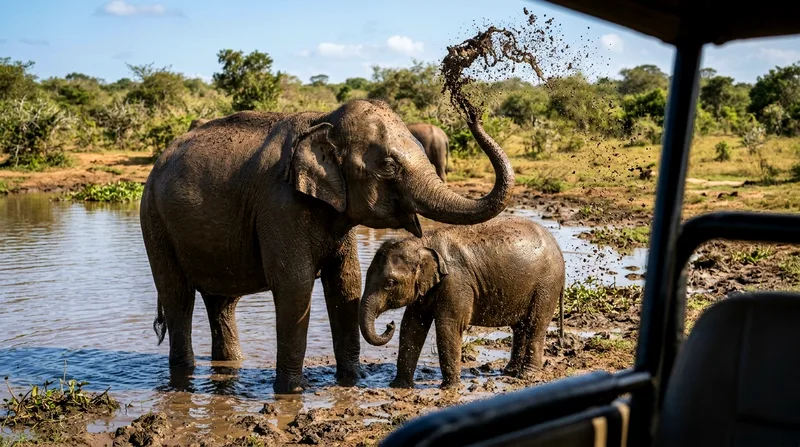
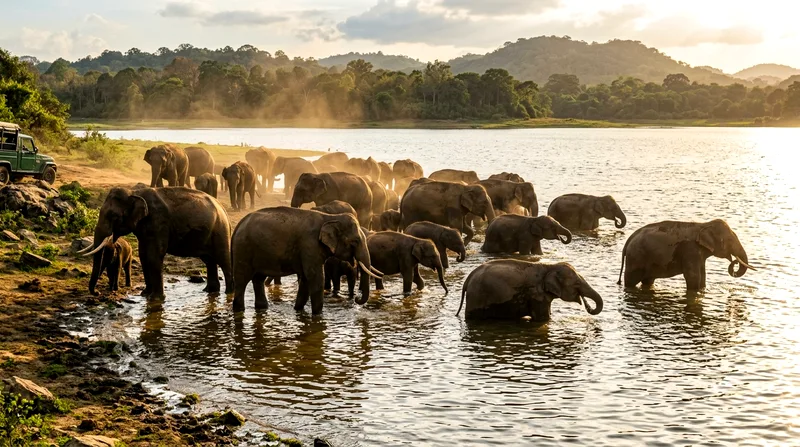
Picture a reservoir bed the size of several football pitches, its water receded to a muddy fringe, and two or three hundred wild elephants spread across the exposed grass eating, sparring, and bathing in loose family groups. That's the draw of a Minneriya safari, and for a few months a year it's one of the most reliable large-mammal gatherings anywhere in Asia — not a staged feeding, not a sanctuary, just wild animals doing what they do when the dry season concentrates food and water into one place.
Minneriya National Park sits in Sri Lanka's north-central Cultural Triangle, built around an ancient irrigation tank constructed under King Mahasena in the 3rd century. The tank itself is the whole point: as the dry season progresses, the water level drops and exposes nutrient-rich grass on the reservoir bed, pulling elephants in from the surrounding forest corridors. It's a 20-minute drive from Habarana and under an hour from Sigiriya, which makes it an easy half-day add-on rather than a detour requiring its own overnight stay.
I'd rate it above most standalone "elephant park" visits elsewhere in Asia for one reason: the animals aren't fenced, farmed, or fed by staff. Compare that to some elephant encounters in Thailand or Bali, where "sanctuary" visits often still involve captive animals on short chains between photo sessions. Minneriya isn't perfect — the number of jeeps can get genuinely excessive at peak season — but the elephants are free to leave, and most days they choose not to.
What the Great Gathering Is
Locally and in tourism literature this seasonal congregation is called "the Gathering," and it's considered one of the largest wild Asian elephant gatherings anywhere on the continent, with numbers reported at times above 150-200 animals in a single visible herd. It's driven entirely by water and grass availability, not by any human intervention, which means the timing shifts slightly year to year depending on how the monsoon behaves. Elephants arrive from the Minneriya-Kaudulla-Girithale forest corridor and from Wasgamuwa further south, forming matriarchal herds that graze together through the day before dispersing toward the tree line in late afternoon.
Wildlife Beyond Elephants
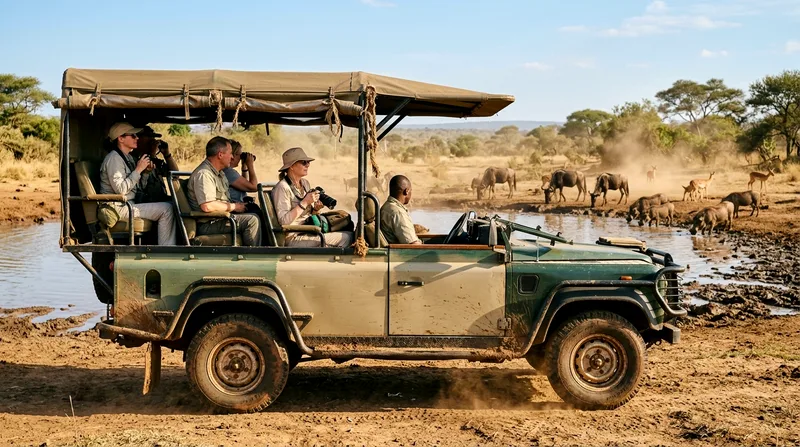
Don't book this purely for elephants and ignore everything else moving through the park. Minneriya holds a healthy population of water buffalo, sambar deer, and spotted deer along the grassland edges, plus over 160 recorded bird species — painted storks, pelicans, and white-bellied sea eagles are common around the tank margins. Toque macaques and grey langurs work the tree line, and if you're quiet and lucky you might spot a mugger crocodile hauled out near the water. It's a modest park in size compared to Yala, but the open sightlines across the reservoir bed make spotting easier than in Yala's denser scrub.
How to Visit: Independent or Guided
You cannot drive your own rental car into Minneriya — entry is by permitted safari jeep only, with a park-authorized tracker-guide aboard. So the real decision isn't "independent versus guided" in the usual sense; it's "which jeep and driver," and whether you book that jeep yourself on the spot or arrange it in advance through a platform or your hotel.
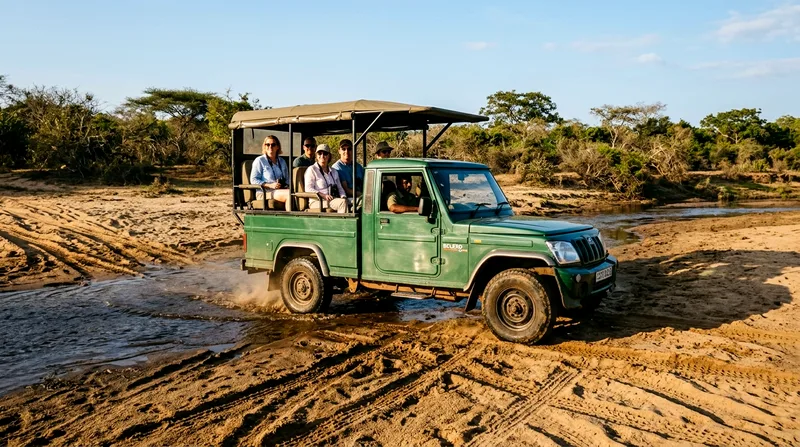
Most travelers base themselves in Habarana or Sigiriya and arrange a half-day jeep safari either through their hotel, a tour operator, or platforms like GetYourGuide, which lists a range of Minneriya and Kaudulla jeep tours with reviews you can cross-check against TripAdvisor before booking. The jeep itself — open-sided, bench seating for 4-6 — is standard regardless of how you book it; the difference is in pickup convenience, group size, and whether the driver doubles as a decent wildlife spotter or just drives fast between sightings.
Getting There from Sigiriya and Habarana
Habarana is the closest base, roughly 20 minutes from the Minneriya park entrance and the logistical hub for safari jeeps in this part of the Cultural Triangle. Sigiriya is about 35-45 minutes away depending on your exact hotel, still comfortable for a half-day round trip. If you're staying further out in Dambulla or Polonnaruwa, add 20-30 minutes each way — still workable, just factor it into an early or late departure so you're not driving in the heat of midday for nothing.
Booking Through a Tour or a Local Driver
Three realistic routes: book a packaged half-day tour online in advance, ask your hotel to arrange a jeep (most do, often at similar rates to booking direct), or negotiate with a driver at the park gate once you arrive. Booking ahead through a reputable platform gives you a fixed meeting time and a reviewed operator, which matters if you're short on time or traveling with kids who don't do well with uncertainty. Turning up and negotiating at the gate can be cheaper but is a gamble on jeep condition and guide quality — fine for flexible solo travelers, riskier if the Gathering is the one thing you came to see. Either way, compare current jeep safari tours and prices before you book, since rates shift with fuel costs and season.
Park Entry and Jeep Safari Formats
Entry to Minneriya National Park involves a ticket covering park fees, a service charge, and VAT, typically bundled into whatever rate your jeep driver or tour quotes you — ask explicitly whether entry is included, since some advertised prices are jeep-hire only. Tickets are checked at the gate and safaris run in two main windows: morning (roughly 6-10am) and afternoon (2pm until park closing around 6pm). Afternoon is the stronger bet for the Gathering specifically, since elephants tend to move onto the exposed reservoir bed as the day cools.
Half-Day Game Drive: What to Expect
A standard Minneriya national park jeep tour runs about 3-4 hours door to door from Habarana or Sigiriya, including driving time, with roughly 2-2.5 hours actually inside the park. Expect a dirt-track route through scrub forest before opening onto the tank-bed grassland where most elephant sightings happen. Jeeps cluster around good sightings, which is part of the experience and part of the drawback — during peak Gathering months you'll share the view with a line of other vehicles, not a single-jeep wilderness moment. Bring a hat, water, and a zoom lens if you have one; the best elephant views are often 40-80 meters out, not close-up.
Responsible Safari Practices
Ask your driver beforehand not to box in or approach elephants closely, especially mothers with calves — stressed elephants have charged jeeps in Sri Lankan parks before, and a driver who hangs back is doing it right, not doing it wrong. Avoid tours that promise "guaranteed close encounters," since that phrasing usually signals a willingness to crowd animals for a better photo. A park with hundreds of elephants doesn't need anyone to force proximity.
Best Time for the Elephant Gathering
The best time for a Minneriya safari aimed at the elephant gathering is roughly July through October, when the dry season has drawn down the reservoir far enough to expose grazing ground but there's still enough water nearby to hold the herds in place. Outside that window numbers thin out considerably, and in the wettest months (November to January) elephants disperse into the surrounding forest and the "gathering" effect largely disappears.
Dry-Season Pattern and Month Guide
August and September are generally considered the peak, with reports of the largest assembled herds. July and October are good back-up months with somewhat smaller but still substantial numbers. From February to June elephants are more scattered and sightings become hit-or-miss — you might still see 20-40 animals, which is worthwhile in its own right, just don't expect the full spectacle. Treat any month guide as a tendency, not a guarantee: water levels and elephant movement vary year to year depending on monsoon timing, and the Gathering has shifted in both scale and exact months in different seasons.
Photography and Timing Tips
Afternoon safaris (departing around 2-2:30pm) generally put you on the reservoir bed during the golden-hour light before the 6pm park closing, which makes for better photographs than the flatter light of a morning drive. If photography is your priority, ask for a driver experienced with positioning the jeep for light rather than just proximity — a herd backlit against low sun 60 meters away photographs better than the same herd in harsh midday glare up close.
Minneriya or Kaudulla: Choosing a Park
Minneriya and Kaudulla National Park sit in the same elephant corridor about 25km apart, and which one holds the bigger herds in any given month depends on where water and grass are best at that moment. Kaudulla safari trips follow the same jeep format and similar pricing, and local trackers generally know week-to-week which park is currently hosting more elephants — this is worth asking about directly when you book rather than assuming Minneriya is always the stronger choice.
For the largest wild elephant herds, Minneriya and Kaudulla between roughly July and January outperform Yala and Udawalawe, which offer more consistent but smaller sightings year-round.
Minneriya safari vs Kaudulla, Yala and Udawalawe compared
| Park | Best Season | Elephant Numbers | Standout Feature | Crowd Level |
|---|---|---|---|---|
| Minneriya | Jul-Oct | Very high (seasonal) | The Gathering on tank bed | High in peak months |
| Kaudulla | Sep-Jan | High (seasonal) | Similar gathering, fewer jeeps | Moderate |
| Hurulu Eco Park | Year-round, modest | Low-moderate | Quieter, smaller-scale | Low |
| Udawalawe | Year-round | Moderate, reliable | Easiest guaranteed sightings | Moderate |
| Yala | Dry season (Feb-Jun strongest) | Low-moderate | Best leopard chances | Very high at main gate |
Elephant numbers and movement vary year to year with monsoon timing; treat all seasonal patterns as tendencies, not guarantees.
When Kaudulla Becomes the Better Option
Kaudulla often becomes the better bet from roughly September through January, when Minneriya's water levels have risen again after its peak dry season and elephants shift toward Kaudulla's own receding tank bed. It also tends to have fewer jeeps on a given afternoon simply because it's less marketed than Minneriya, which some travelers will prefer. Hurulu Eco Park, a smaller reserve near Habarana, is a third option worth knowing about — less dramatic in scale, but useful as a quieter, less crowded alternative on days when both Minneriya and Kaudulla are overrun with vehicles.
How They Compare with Yala and Udawalawe
Yala National Park, in the south, is Sri Lanka's leopard park — better for predator sightings, worse for elephant numbers, and considerably more crowded at its main entrance during peak season. Udawalawe National Park, also in the south, guarantees elephant sightings almost year-round because of its open grassland habitat, but you'll typically see loose groups of 10-30 animals rather than Minneriya's seasonal mass gathering. If elephants in genuinely large numbers are the goal, Minneriya and Kaudulla in the right months outperform both. If you want a broader wildlife checklist including a shot at leopards, Yala is the better use of a day, even with its crowding problems.
Combining Safari with Cultural Triangle
Minneriya sits almost in the geographic center of the Cultural Triangle, which is the main practical argument for building your Sri Lanka itinerary around it rather than treating it as a standalone side trip. Sigiriya's rock fortress, Dambulla's cave temples, and the ruins of Polonnaruwa are all within roughly 20-60 minutes of a Habarana base, so a safari slots naturally into a 2-3 night stay rather than requiring its own dedicated trip.
Sample Day Plan with Sigiriya
A workable day: climb Sigiriya Rock early (gates open around 7am, and climbing before 9am avoids both heat and the worst crowds), rest and have lunch back at your hotel in Habarana or Sigiriya town through the midday heat, then head out for a 2-2:30pm Minneriya or Kaudulla jeep safari that returns by early evening. It's a full day, but not an exhausting one, and it pairs the Triangle's best-known monument with its best wildlife experience without needing a third location.
Where to Stay Nearby
Habarana offers the most direct access to both Minneriya and Kaudulla and has a good spread of mid-range and higher-end lodges, several with their own minor wildlife on the grounds. Sigiriya town has more guesthouse-level budget options and puts you closer to the rock climb itself, at the cost of a slightly longer safari transfer. Dambulla works as a cheaper, more central fallback if you're also visiting the cave temples, though it's the least atmospheric of the three bases.
Frequently asked questions
Is Minneriya safari worth it?
Yes, particularly between July and October when the elephant gathering is at its strongest — seeing 100+ wild elephants on an open reservoir bed is hard to replicate anywhere else in Asia. Outside that window it's still a decent half-day wildlife safari with buffalo, deer, and good birdlife, just manage expectations on elephant numbers and consider checking whether Kaudulla is the better bet that month.
What is the best time to see the elephant gathering?
August and September are generally the strongest months, with July and October as solid alternatives. From roughly November through June numbers drop as rain disperses elephants back into the forest, so if the gathering itself is your goal, build your Sri Lanka trip around the July-October window rather than fitting Minneriya into an off-season itinerary.
How long is a typical Minneriya safari tour?
Most half-day jeep tours run 3-4 hours total from a Habarana or Sigiriya hotel, including transfer time, with about 2-2.5 hours inside the park itself. Morning and afternoon departures are both offered; afternoon (around 2-2:30pm) generally gives better light and a higher chance of elephants on the open tank bed.
Which safari is better, Minneriya or Yala?
It depends on what you want to see. Minneriya wins decisively for elephant numbers during its July-October peak; Yala is Sri Lanka's best park for leopard sightings and offers a wider variety of terrain, but its main entrance gets significantly more jeep traffic. Families chasing a single big wildlife spectacle usually prefer Minneriya; dedicated wildlife-watchers often rate Yala higher overall.
Can I combine a Minneriya safari with Cultural Triangle visits?
Easily — Minneriya is roughly 20 minutes from Habarana and 35-45 minutes from Sigiriya, both central bases for visiting Sigiriya Rock, Dambulla's cave temples, and Polonnaruwa's ruins. A common pattern is sightseeing in the morning and an afternoon safari, or dedicating one full day of a 2-3 night Cultural Triangle stay entirely to the jeep safari.