See what a Sri Lanka safari price really includes: jeep hire, park fees, tracker and taxes. Learn how to spot overpricing and share a jeep to save money.
Sri Lanka Safari Price: What You're Actually Paying For
Ask three operators in Tissamaharama for a Yala safari quote and you might get three numbers that differ by $20 or more per person. That gap isn't random — it usually comes down to how many people are splitting the jeep, whether park fees and tax are already included, and whether the driver is quoting a half-day or full-day rate and hoping you won't notice. A Sri Lanka safari price is never one number. It's four or five line items stacked together: jeep hire, national park entrance fee, a tracker fee, and government tax, sometimes with a "service charge" tacked on at the end.
Once you can see those parts separately, comparing quotes stops being guesswork. You can tell within a minute whether a $45-per-person quote for Udawalawe is reasonable or whether someone's padding the jeep hire because you're clearly a first-time visitor. This matters more in Sri Lanka than in, say, Kenya or Tanzania, because the per-vehicle pricing model here means your cost per person swings hard depending on group size — and that's the single biggest lever you control.
Where Your Safari Money Goes
Every legitimate safari price in Sri Lanka is built from the same basic structure, regardless of which park you visit or which operator you book through. Understanding the structure is the fastest way to stop overpaying.
Jeep hire, park fees, tracker and taxes
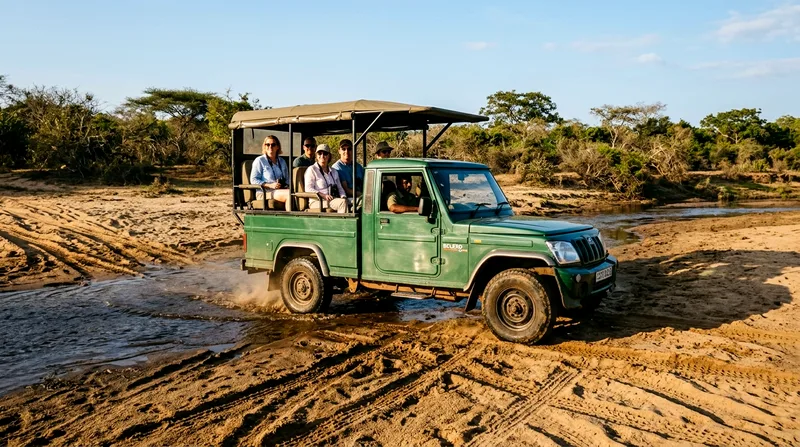
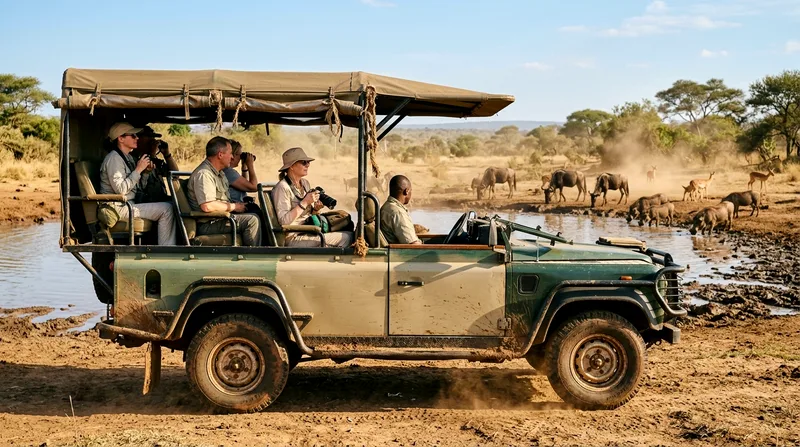
The jeep itself is hired per vehicle, not per person — a standard safari jeep seats six to seven passengers comfortably, sometimes squeezed to eight or nine by budget operators. Jeep hire covers the vehicle, fuel, and driver, and it's the cost that gets diluted most when you share with more people. Separate from that is the national park entrance fee, set by Sri Lanka's Department of Wildlife Conservation and charged per visitor, with different rates for adults and children and for foreign versus local visitors. On top of the entrance fee sits a tracker fee — the spotter who rides along and genuinely improves your odds of seeing leopard or elephant — and this is usually a small flat fee per jeep, not per person. Finally, expect a service charge and VAT, typically applied to the whole package rather than itemized separately, which is often the part budget quotes quietly omit and then add back in once you've committed. None of these fees are fixed forever; the Department of Wildlife Conservation revises entrance charges periodically, so always confirm current rates with the park office or your operator before paying.
Yala versus other national parks
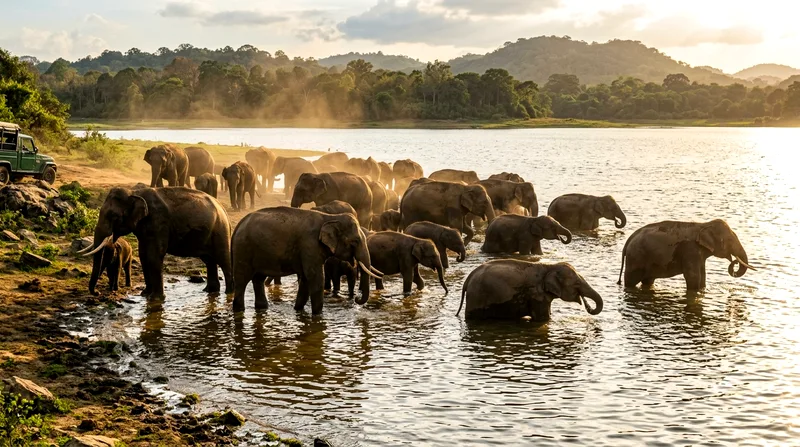
Yala National Park, accessed via Tissamaharama or Kataragama, carries the highest demand and consequently the highest jeep rates and the most crowded entrance queues, especially on weekends and during the December–March dry season. Udawalawe, further west, is cheaper to enter, smaller, and almost guarantees elephant sightings without the leopard hype driving up prices — a better value pick if you're not fixated on big cats. Wilpattu, in the north-west, has lower visitor numbers and a noticeably quieter price structure, but the drive from Negombo or Kandy is longer, so you're trading fuel cost and time for a cheaper, less crowded safari. If your itinerary already routes you near Kandy, factoring in a Wilpattu detour versus backtracking to Yala is worth doing on a map before you book anything.
Legitimate Ways to Save on Safaris
There's no discount code for a Yala safari, but there are structural choices that reliably lower what you pay without cutting corners on safety or wildlife odds.
Timing, season and booking early
Jeep rates themselves don't usually have an official "high season" price list, but demand does — and demand drives what drivers quote walk-up travelers. Book a day or two ahead through your guesthouse in Tissamaharama rather than negotiating at the park gate, and you'll generally get a steadier, fairer per-jeep rate because the driver isn't pricing in the risk of an empty seat. Visiting outside the peak December–March season, or avoiding Sri Lankan public holiday weekends when local tourism spikes, also means less competition for jeeps and less incentive for drivers to inflate quotes. Early morning safaris (roughly 6 a.m. departure) cost the same as afternoon ones but deliver better animal activity, so there's no savings there — just better value for the same money.
Choosing half-day over full-day
A full-day safari roughly doubles jeep hire time and fuel, but it does not double your wildlife sightings — most animal activity concentrates in the first two hours after dawn and the last two before dusk, with a quiet, hot midday lull in between. A half-day safari, timed for either the morning or evening session, captures the best activity window for a fraction of the cost. Families with young children especially benefit here: six hours in an open jeep under the midday sun is hard on a seven-year-old, and you're not missing much wildlife-wise by skipping it. Save the full-day option for Wilpattu, where lower density means more driving time improves your odds.
Spotting Overpriced Safari Quotes
Most inflated safari quotes aren't outright scams — they're just vague, and vagueness is where the extra margin hides.
Hidden costs and red flags
Watch for quotes that bundle everything into one round number with no breakdown — "$50 per person, all included" sounds simple, but you have no way to check whether the entrance fee quoted matches the Department of Wildlife Conservation's published rate, or whether tax was added on top after you agreed verbally. A common pattern near Tissamaharama and Kataragama is quoting a jeep rate that sounds cheap, then adding "park fee" and "service charge" as surprises once you're at the gate with no easy way to back out. Another red flag: a driver who refuses to confirm in writing (even just a WhatsApp message) what's included before you get in the jeep. Compare that to how a Bali or Thailand day-tour quote usually works — most reputable operators there itemize transport, entrance, and guide fee separately precisely because travelers expect it. Sri Lanka's safari market is catching up, but plenty of operators still bank on tourists not asking.
Questions to ask before paying
Before you hand over any money, ask directly: does this price include the park entrance fee and tracker fee, or are those extra at the gate? Is tax included in the number you've been quoted? How many passengers will be in the jeep — am I sharing or is this private? And is this a full-day or half-day safari, with what start and end time? A driver or guesthouse who answers all four without hesitation is probably quoting fairly. One who gets vague on any single question — especially the per-jeep headcount — is the one worth double-checking against a second quote before you commit.
What Not to Skimp On
Saving money on a safari shouldn't mean saving money on the parts that determine whether you actually see anything or get home safely.
Jeep condition, driver and tracker quality
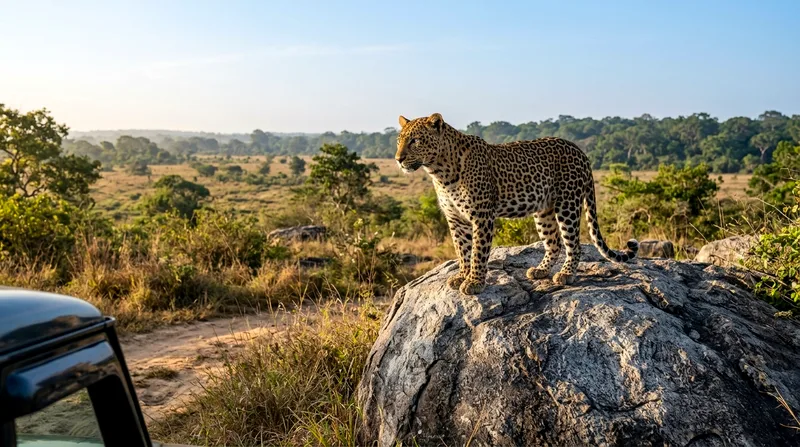
The cheapest jeep in Tissamaharama is sometimes cheap because it's old, lacks a roof hatch tall enough to stand through comfortably, or has a driver who doesn't know the park's current animal movement patterns. A good tracker — the spotter, not the driver — is worth paying for even if it nudges the per-jeep price up slightly, because tracker quality is the single biggest factor in whether you see a leopard in Yala versus just driving past empty scrubland for three hours. I'd skip any operator advertising an unusually low full-day Yala rate with no mention of a tracker at all; that's usually where the savings come from, and it's the wrong place to cut. Similarly, don't let price pressure you into an overcrowded jeep — nine people in a six-seat vehicle means half the group never gets a clean photo or sightline, which defeats the point of going.
Safari Booking Checklist
Before confirming any Sri Lanka safari booking, run through this list. Confirm whether the quoted price includes park entrance fee, tracker fee, and tax, or whether those are added separately at the gate. Confirm the jeep capacity and whether you're being placed in a shared or private vehicle — ask for the exact passenger count, not just "shared." Confirm pick-up and drop-off times and whether it's a half-day or full-day safari, since those rates differ substantially. Check the current national park entrance fee directly with the Department of Wildlife Conservation or a recent, reliable source rather than trusting an operator's word alone, since rates are revised periodically. Ask whether a tracker is included, and if not, whether you can add one. Finally, get the total price in writing — even a text message — before the morning of the safari, so there's no renegotiation at the park gate when you have no use left.
Once you've split any quote into these parts, comparing two or three operators takes minutes rather than guesswork, and you'll know exactly where your money is going — and where it's better spent on a sharper tracker than a slightly newer jeep.
Frequently asked questions
How much does a safari in Sri Lanka cost?
There's no single fixed figure because cost depends on park, group size, and half-day versus full-day length. The total is built from jeep hire (split among passengers), a per-person national park entrance fee, a small per-jeep tracker fee, and tax. A shared jeep in a popular park like Yala typically costs noticeably less per person than a private jeep for the same route — always ask for the breakdown rather than accepting one bundled number.
What is included in Sri Lanka safari pricing?
A complete quote should cover jeep hire with driver and fuel, the national park entrance fee set by the Department of Wildlife Conservation, a tracker/spotter fee, and applicable service charge and tax. Food, drinks, and binoculars are almost never included — bring your own water and snacks, since options inside the park gates are limited and overpriced.
What are the park entrance fees for a safari?
Entrance fees are charged per visitor by the Department of Wildlife Conservation and vary by park, with different rates for adults, children, and foreign versus local visitors. Rates are revised periodically, so confirm the current fee directly with the park office or a recently updated source before you travel rather than relying on an old quote.
Is a shared jeep safari cheaper than a private one?
Almost always, because jeep hire is a per-vehicle cost that gets divided among however many people are in it, while only the entrance and tracker fees scale per person. A shared jeep with five or six travelers in Yala or Udawalawe typically costs substantially less per head than hiring the same jeep privately for two.
How can I save money on a Sri Lanka safari?
Share a jeep instead of booking private, choose a half-day safari over a full-day one since wildlife activity concentrates at dawn and dusk anyway, book a day ahead through your guesthouse rather than negotiating at the gate, and avoid peak weekends during the December–March high season when demand pushes jeep rates up.