Plan your Udawalawe safari: why it's Sri Lanka's most reliable elephant sighting spot, how to visit, ticket basics, best season and family-friendly tips.
Why Udawalawe Is Sri Lanka's Best Elephant Safari
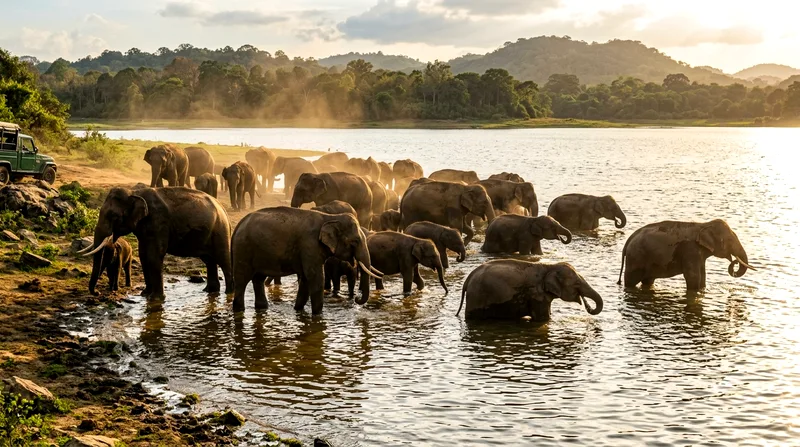
If you want to see wild elephants in Sri Lanka and you only have time for one park, make it Udawalawe. The park sits around 165 km southeast of Colombo, built around the Udawalawe Reservoir, and its open grassland and scrub make elephants easy to spot — there's nowhere for a herd of 20 to hide the way they might in Yala's denser thorn forest. Sightings aren't guaranteed by any national park anywhere, but guides and repeat visitors consistently rate Udawalawe as the most dependable place in the country to see wild Sri Lankan elephants, often in family groups with calves.
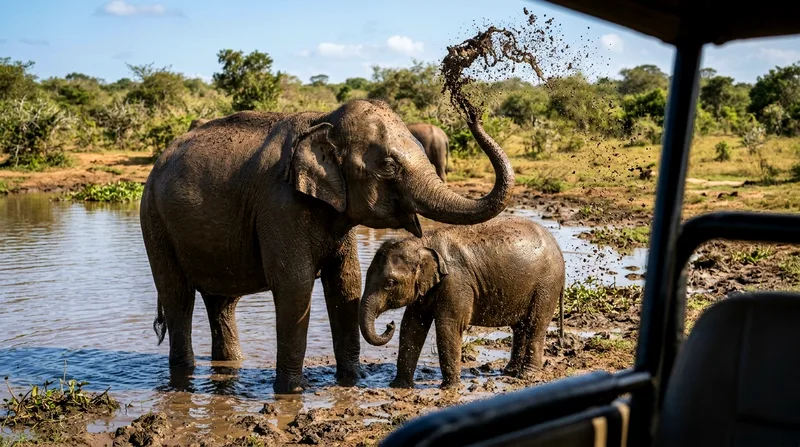
That reliability is the whole pitch. A lot of visitors go into Yala hoping for a leopard and come out having seen one elephant at distance and a lot of dust. Udawalawe inverts that gamble — it's not marketed as a leopard park, and sightings of other big predators are rare, but elephant encounters at close range, sometimes a jeep-length away, happen on most drives. The park holds an estimated elephant population in the hundreds, concentrated enough around the reservoir and grassland plains that multiple herds in a single three-hour drive isn't unusual.
I wouldn't oversell it as a complete wildlife park, though. Bird life is decent — look for painted storks, eagles and the odd peacock — and you might spot water buffalo, crocodiles basking near the reservoir, or sambar deer. But if you're chasing the full "big cat plus elephant" checklist, you'll want to add Yala or Wilpattu to your itinerary rather than relying on Udawalawe alone.
Udawalawe offers more reliable elephant sightings and easier logistics, while Yala offers greater species variety at the cost of crowds and longer waits.
Udawalawe safari vs Yala safari: what to expect before you book
| Park | Elephant sighting odds | Leopard chance | Drive length | Crowds | Best for |
|---|---|---|---|---|---|
| Udawalawe National Park | Very high | Low | approx. 2-3 hrs | Low-moderate | Families, first-timers, short trips |
| Yala National Park | Moderate-high | Low-moderate | approx. 3-4 hrs | High (Block 1) | Big-cat seekers, repeat visitors |
Sighting rates vary by season and individual drive; treat these as general tendencies, not guarantees.
Wildlife You Can Expect to See
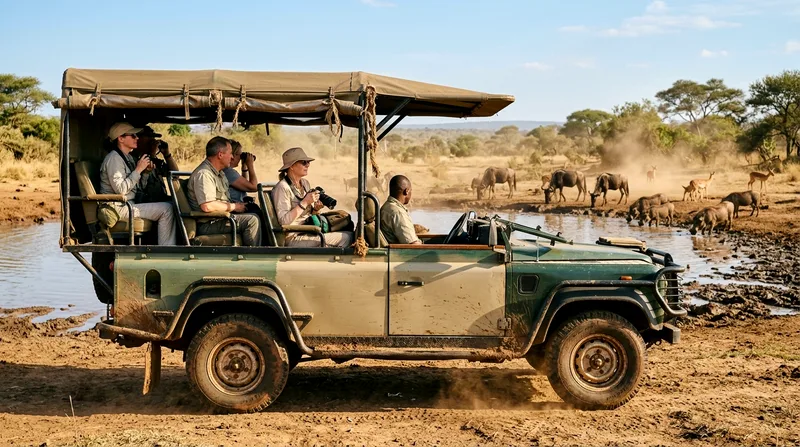
Elephants are the headline act, and on a typical dry-season drive you can realistically expect two to four separate sightings, sometimes herds of 10–30 animals grazing together near the water. Beyond elephants, watch for crocodiles along the reservoir edges, water monitors, and raptors like the crested serpent eagle and various buzzards. Leopards exist in Udawalawe but sightings are uncommon — treat any as a bonus, not an expectation. Jackals and wild boar turn up occasionally at dusk. If birding matters to you, bring binoculars; the open terrain actually favors bird spotting more than denser parks do.
Udawalawe vs Yala for Families
For families with young children, Udawalawe wins on almost every practical measure. Drives are shorter on average, the terrain is flatter and less jarring, and the near-certainty of an elephant sighting within the first hour keeps kids engaged instead of restless. Yala — particularly its crowded Block 1 — can mean long waits in jeep traffic jams around a single leopard sighting, which tests the patience of anyone under ten (and plenty of adults). Yala's compensation is scale and variety: more terrain types, better odds for leopard and sloth bear. If your trip allows only one safari day, choose Udawalawe for kids and seniors who want comfort and payoff without a long, bumpy, unpredictable chase.
How to Visit: Independent or Guided
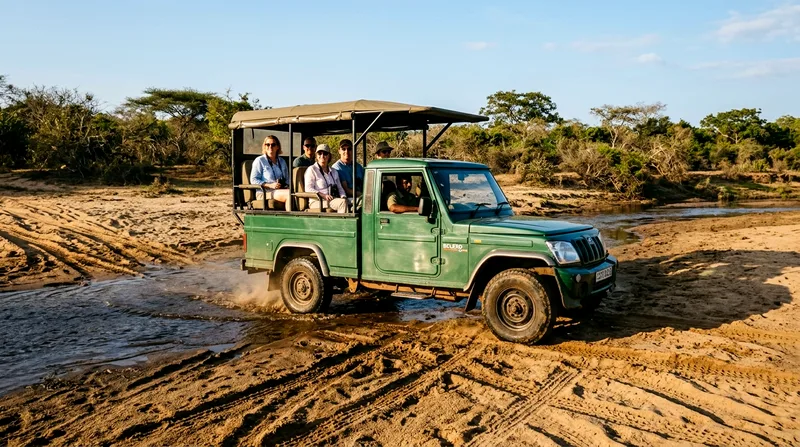
Nearly everyone visits Udawalawe by jeep safari, and almost nobody does so entirely independently — you can't just drive your own rental car into the park. Visitors arrange a 4x4 jeep with a driver, either booked through their hotel, a local tour operator in the nearby town, or arranged at the park entrance itself. A park-appointed tracker or guide typically joins the jeep as well, which is standard practice and adds to the entry cost.
The "guided vs independent" question in Udawalawe really comes down to who arranges the jeep, not whether you need a guide at all — you do, by park rules enforced through the Department of Wildlife Conservation. Booking through your guesthouse is usually simplest and often cheapest, since many properties near the park gate have long-standing relationships with specific drivers. Booking a structured tour from Colombo or the south coast adds convenience — transport, pickup, sometimes breakfast — but costs more and gives you less flexibility over drive timing.
My honest take: skip anything that bundles Udawalawe into a rushed day trip from Colombo with four hours of driving each way. It's doable but exhausting, and you'll likely hit the park in the flat, hot midday hours when animals are least active. Staying one night near the park and taking an early-morning drive is a far better use of your time.
Jeep Safari Basics and Duration
Standard Udawalawe jeep safaris run two options: a half-day drive of roughly 3 hours, or a shorter sunrise/sunset session closer to 2 hours. Jeeps typically hold 4–6 passengers plus driver and tracker, with open sides and a raised rear seating section for visibility — good for photos, less ideal if you're traveling with a toddler who needs to be held securely. Full-day safaris exist but are less common here than in larger parks, since Udawalawe's compact road network means most of what you'll see is covered in a half-day.
Getting There from Colombo and the South Coast
From Colombo, Udawalawe is about a 3 to 3.5 hour drive via the Southern Expressway, exiting toward Pelmadulla or Ratnapura routes depending on traffic. From south coast beach towns like Mirissa, Weligama or Tangalle, it's closer — roughly 1.5 to 2 hours by car. Many travelers combine Udawalawe with a south coast stay, doing the safari as a day trip from Tangalle rather than from Colombo. Public buses connect to Udawalawe town, but given jeep pickup logistics, a private car or hotel-arranged transport is far more practical than public transit for this particular excursion.
Udawalawe Park Tickets and Entry
Entry tickets for Udawalawe National Park are issued through the Department of Wildlife Conservation and are typically priced in a tiered structure — foreign adult, foreign child, and separate local resident rates, with Sri Lankan citizens and residents paying substantially less than foreign visitors. On top of the park entry fee, expect a separate jeep hire cost (paid directly to the driver or operator) and a small service/tracker charge bundled into most jeep quotes. Because rates and service charges are adjusted periodically, don't rely on any number you read online as final — confirm current prices and ticket requirements with your hotel or a local operator before you go, or check official sources when booking.
Tickets are usually processed at the main park entrance gate, and visitors need to bring passports (or copies) for foreign-visitor registration. There's no advance online booking system comparable to major international park systems — you turn up, your jeep driver handles ticketing, and you wait at the gate while paperwork is processed, which can take 15–20 minutes during busy periods.
What Entry Fees and Jeep Costs Cover
The park entry fee covers your admission and a mandatory tracker/guide who rides along to spot wildlife and communicate with other jeeps by radio about sightings — this radio network is actually one reason Udawalawe sightings are so consistent, since drivers share herd locations in real time. The jeep hire fee is separate and covers the vehicle, fuel and driver for your chosen time slot (half-day or short session). Payment is generally in LKR (Sri Lankan Rupees), though some drivers and operators will quote in USD for convenience — clarify which currency and whether the total includes entry fees before you commit, so there's no surprise add-on at the gate.
Best Time for a Udawalawe Safari
Udawalawe is one of the few Sri Lankan parks that's genuinely worth visiting year-round, which is part of why it's such a reliable booking compared to seasonal parks elsewhere on the island. That said, timing still shapes what you'll see and how comfortable the drive is.
Dry Season vs Wet Season
The dry season, roughly May through September, tends to produce the best elephant concentrations — as vegetation elsewhere dries out, elephants gather more visibly around the reservoir and remaining water sources, making for larger, closer herds. The wetter months, especially October to January, bring lush green grassland, which looks better in photos but can push elephants into denser brush, slightly reducing visibility. Rain can also mean a muddier, slower drive, and occasional short closures after heavy storms. Unlike Yala, which closes for around a month annually (usually September) for conservation reasons, Udawalawe generally stays open throughout the year, another point in its favor for trip planning.
Morning vs Afternoon Game Drives
Early morning drives, starting around 6:00–6:30 am at the gate, consistently produce more activity — elephants and birds are more active in cooler temperatures, and you'll beat both the heat and the bulk of other jeeps. Afternoon drives, typically starting around 2:30–3:00 pm and running to sunset near 6:00 pm, are the second-best option and suit families who struggle with a pre-dawn wake-up. Midday safaris are the weakest choice: heat pushes animals into shade and cover, and you'll do more driving for less reward. If you can only choose one slot, go early morning — it's a short-term discomfort for a noticeably better sighting rate.
Elephant Transit Home and Nearby Add-Ons
Right beside the park, the Elephant Transit Home is one of the best half-day add-ons in southern Sri Lanka and pairs naturally with a safari. Run with Department of Wildlife Conservation involvement, it rehabilitates orphaned and injured wild elephant calves with the explicit goal of releasing them back into Udawalawe and other parks — unlike some elephant attractions elsewhere in the island, this isn't a riding or bathing experience, and that's exactly why it's worth visiting.
Visiting the Elephant Transit Home Responsibly
Visitors watch scheduled milk-feeding sessions from a raised viewing area set back from the feeding enclosure — you don't get close contact, and that's the point. Keep a respectful distance, don't call out to the calves to get their attention, and skip the flash photography. Feeding times are fixed and run several times daily, but confirm the current schedule locally since timings can shift. If you're choosing between an elephant orphanage experience and one of the commercial "elephant ride" venues elsewhere in Sri Lanka, choose this one — it's a genuinely different model, focused on eventual wild release rather than tourism contact.
Where to Stay and Eat Nearby
Udawalawe town and the roads leading to the park entrance have a decent spread of guesthouses and small safari lodges, generally more affordable than comparable accommodation near Yala. Budget guesthouses run simple but clean; a handful of mid-range lodges offer pools and better bedding, useful if you're traveling with kids after a dusty drive. Eating options are mostly attached to guesthouses — don't expect much of a standalone restaurant scene, so ask your lodge about dinner in advance rather than arriving late and hungry with nowhere open.
Frequently asked questions
How much does a safari cost in Udawalawe?
Costs combine a park entry fee (tiered by nationality, with foreign visitors paying more than residents) and a separate jeep hire fee covering vehicle, driver and tracker, usually quoted per jeep rather than per person. Because rates change periodically, confirm current prices with your guesthouse or a local operator shortly before you go rather than relying on older published figures.
What is the best time for a Udawalawe safari?
Early morning, right at gate opening around 6:00–6:30 am, gives the best combination of cooler weather and active wildlife. Seasonally, the dry months from roughly May to September tend to concentrate elephants more visibly around the reservoir, though the park stays open and worth visiting year-round, unlike Yala's annual closure period.
Is Udawalawe or Yala better for a safari?
For reliable elephant sightings, shorter drives and fewer jeep traffic jams, Udawalawe is the better choice, especially with children or limited time. For visitors prioritizing leopard or sloth bear sightings and willing to accept crowding and longer odds, Yala offers greater overall species variety.
Can children go on a Udawalawe safari?
Yes — Udawalawe is widely considered one of the most child-friendly safari parks in Sri Lanka thanks to short drive times, flat open terrain, and high odds of an early elephant sighting that keeps young kids engaged. Bring hats, sun protection and snacks, since jeeps don't stop for breaks mid-drive.
How long does a typical Udawalawe safari last?
Most jeep safaris run as a half-day session of roughly 2 to 3 hours, timed either for early morning or late afternoon game drives. Full-day safaris are available but uncommon here, since the park's road network is compact enough that a half-day drive typically covers the key sighting areas.