Plan your visit to the Nine Arch Bridge in Ella: how to get there, when to catch a train crossing, best viewpoints, and how to add Little Adams Peak.
Why Visit the Nine Arch Bridge
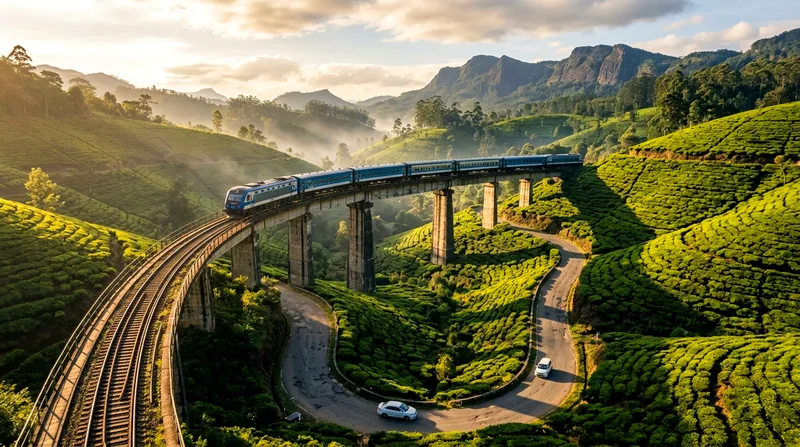
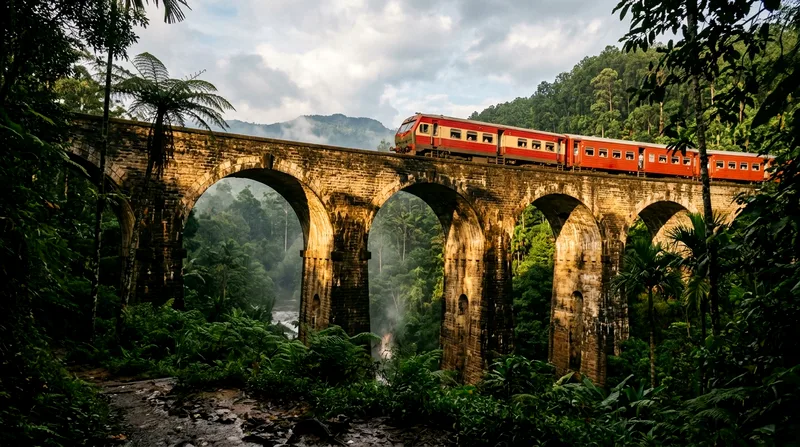
Every photo of Ella you've seen probably features this spot: a colonial-era stone viaduct curving through jungle, a blue-and-yellow train crawling across it, hills stacked up behind in every direction. The Nine Arch Bridge is the single most photographed structure in Sri Lanka's hill country, and it earns that reputation honestly — there's no other place on the island where a train crossing feels this theatrical, framed by rainforest rather than station platforms.
That said, I'd temper expectations slightly. It's a small site. You're not touring a monument with interpretive signage and a visitor center — you're standing on or near a railway line in a jungle clearing, waiting for a train that runs on an approximate schedule. If you go expecting a quiet, exclusive experience, you'll be disappointed between 9am and 11am when tour vans from Ella and even Nuwara Eliya day-trippers converge. If you go expecting a simple, free, genuinely scenic stop that takes 30–90 minutes depending on how long you wait for a train, you'll leave satisfied.
Compare it to other Sri Lankan rail moments — the Kandy to Ella line generally, or the Demodara loop nearby — and the Nine Arch Bridge wins for photogenic drama but loses for solitude. If you've been to Vietnam's Hai Van Pass by train or Kerala's backwater routes, the scale here is smaller and more intimate, which is part of the appeal.
History and Architecture in Brief
The bridge was built during British colonial rule, completed around 1921 as part of the extension of the railway line toward Badulla. Local accounts describe a construction delay caused by a shortage of steel during the First World War, which reportedly pushed engineers toward a solution built almost entirely from stone, brick, and cement rather than imported ironwork. Whether that story is fully accurate in every detail is debated, but the resulting structure — nine arches, roughly 30 metres high and 91 metres long, built without structural steel — is unusual enough that it's worth knowing before you arrive. It's not just a scenic backdrop; it's a genuine piece of early 20th-century railway engineering, built by local labour using techniques that predate most of Sri Lanka's modern infrastructure.
How to Get to the Bridge
There's no vehicle access directly to the bridge — you either walk or take the train itself and get off at Ella station, then walk in. Most visitors base themselves in Ella town, which sits about 2.5 to 3 km from the bridge by foot via Kithalella Road and a signposted path through tea plantation.
Walking From Ella Town
Walking is the way most people do this, and I'd recommend it over a tuk-tuk unless you're pressed for time or the weather's against you. From central Ella, follow Passara Road out past the Flower Garden Guest House area, then pick up the path signed toward Nine Arch Bridge through tea bushes and light forest. It takes 35–45 minutes at an easy pace, mostly flat with a couple of short inclines, and it's genuinely one of the nicer short walks in town — you pass through working tea plantation, not a manicured tourist trail. Wear proper shoes; the path turns muddy and slick for an hour or two after rain, which in the hill country can happen any afternoon.
By Tuk-Tuk or Train
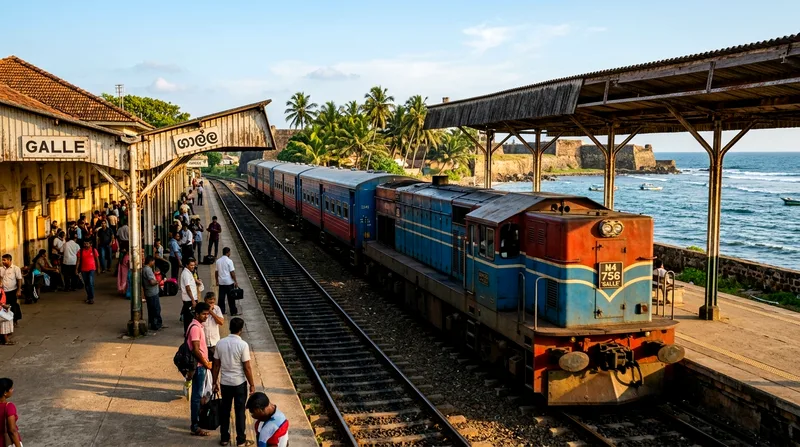
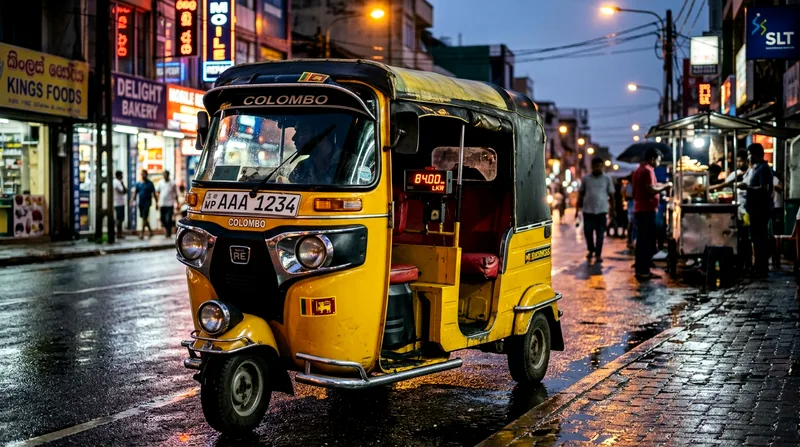
A tuk-tuk from Ella town to the closest drop-off point costs roughly 400–600 LKR one-way, negotiated on the spot — there's no meter system, so agree the price before you get in. From the drop point it's a five-to-ten minute walk down to track level. The other option, which I actually like better if your timing works, is boarding a train from Ella Railway Station one stop to Demodara Railway Station (or vice versa) and walking back — this lets you experience the crossing from inside the train once, then photograph it from outside on a different crossing. Demodara is also home to the famous "loop" where the track spirals under itself, worth a quick look if you're already out that way.
Entry and Visiting With a Tour
There's no ticket booth and no official entry fee to view the Nine Arch Bridge — it's an open railway structure, not a managed attraction, so you don't need to book anything in advance to see it. That said, some of the viewpoint platforms built on private land beside the tracks ask for a small voluntary donation or charge a nominal fee, generally under 100 LKR, to use their deck or café. It's worth it for the vantage point alone.
Entry and Accessibility
Accessibility is limited. The approach paths are unpaved, uneven, and occasionally steep with no handrails, so this isn't a realistic stop for wheelchair users or anyone with significant mobility restrictions. Families with young children manage it fine, but keep a hand on toddlers — there are drop-offs near the viewing platforms and the track itself has no barriers. Senior travelers in reasonable walking condition handle the 35-minute walk without much trouble, though the tuk-tuk option is sensible if knees or heat are a concern; hill country afternoons regularly hit 28–30°C with high humidity.
Guided Tours vs Going Independently
Going independently is cheap, flexible, all most people need — it's a short walk to a free site. I wouldn't pay for a dedicated bridge-only tour; it's not complex enough to justify a guide. Where a guided tour earns its cost is when it's bundled — a half-day package combining the bridge, Little Adams Peak, and Ravana Falls with a driver who knows train timing locally and can adjust your schedule on the fly. That bundling saves you the guesswork on timing and transport between three spread-out sites. If you're short on time or traveling with a group that doesn't want to walk much, compare current half-day Ella tour options and prices before you book rather than arranging transport separately for each stop.
Best Time and Train Crossings
Timing is the one thing that makes or breaks this visit. Arrive with no idea when a train's due and you might wait two hours, or you might wait ten minutes — it's genuinely unpredictable without checking ahead.
Time of Day and Season
Early morning, before 7am, is the best combination of good light, cooler temperatures, and thin crowds. Mid-morning through to lunchtime is when tour groups peak and the platforms get crowded enough that photos involve other people's shoulders. Late afternoon, from around 3:30pm, is a good second window — softer light, fewer buses, though you're racing the 6pm sunset. Dry season (roughly December to March) gives you the clearest skies and least chance of the muddy approach path; the April-to-June and October-to-November shoulder periods bring more rain and occasional afternoon downpours that can delay trains.
Checking Current Train Times
I'll be straightforward: don't rely on a fixed timetable printed anywhere online, including this page. Sri Lanka Railways schedules shift, trains run late fairly often on this hill line, and extra or special services get added seasonally. The reliable method is asking at your guesthouse the evening before, checking at Ella Railway Station directly, or asking locals near the bridge who track crossings all day and generally know the next one within 20 minutes. Expect somewhere in the range of 6 to 8 passenger crossings a day in each direction, roughly spread from early morning to early evening, with a noticeable gap around midday.
Best Viewpoints and Photo Tips
Most people take the first viewpoint they reach, which is also the most crowded. It's fine, but not the best option.
The hillside viewpoint above the tracks gives the best full-bridge photo, while the lower track-level spot is closest but crowded.
Nine Arch Bridge Ella viewpoints compared for access, crowds and photo quality
| Viewpoint | Walk from drop-off | Crowd level | Best for |
|---|---|---|---|
| Lower track-level spot | 2-5 min | High, especially mid-morning | Close-up train shots |
| Upper hillside viewpoint | 10-15 min, short climb | Moderate | Classic wide shot, full bridge |
| Private café platform | 10 min | Low to moderate | Comfortable waiting, seated view |
| Demodara Station approach | 20-30 min walk from Demodara | Low | Combining with train loop visit |
Walk times are approximate from the main Ella-side drop-off point and vary with path conditions after rain.
Viewpoint Comparison
The lower track-level spot gives you the closest view but the least sense of scale — you're too close to capture the full curve of all nine arches with the jungle backdrop. The hillside viewpoint above and to the side, reached by a short climb past the lower platforms, gives the classic wide shot with the full bridge, tea hills, and valley in frame — this is the one you've seen in nearly every photo of the bridge. There's also a café-platform run privately on the opposite hillside that charges a small fee for a seated view with a drink — less athletic, decent photos, more comfortable if you're waiting an hour for a train.
Safety and Crowd Tips
Don't stand on the tracks for photos while waiting — it sounds obvious, but it's the single most common unsafe behavior at this site, and trains don't always sound a warning horn with much notice on the approach curve. Step well back onto the stone ledges or designated viewing areas at least a minute before a train's due. Crowds are worst on weekends and during Sri Lankan school holidays; a weekday visit cuts the viewpoint congestion noticeably.
Combine It With Other Ella Activities
The bridge alone fills an hour. Most visitors pair it with at least one other Ella activity to make a full morning or day of it, and I'd actively encourage that — Ella's small enough that wasting a day on one five-minute photo stop feels like a missed opportunity.
Little Adams Peak Half-Day Plan
A popular and genuinely good plan: start at the Nine Arch Bridge for an early crossing around 6:30am, walk back toward town, then head to Little Adams Peak for sunrise-adjacent light and valley views. The peak trail takes 45 minutes to an hour round trip from the base, with a paved and stepped path for most of it — far gentler than the longer Ella Rock hike, which takes 3–4 hours round trip and involves route-finding across active train tracks that trip up a fair number of hikers each year. If you only have a half-day in Ella, bridge plus Little Adams Peak is the efficient combination; save Ella Rock for when you have a full morning free.
Ravana Falls and Other Add-Ons
Ravana Falls sits about 6 km from Ella town toward Wellawaya and is an easy tuk-tuk add-on, roughly 15–20 minutes each way, costing around 1,000–1,500 LKR round trip if you keep the driver waiting. It's a roadside waterfall, not a hidden one, so don't expect solitude — but it's a worthwhile 20-minute stop. Other reasonable pairings include the Ella Flower Garden, a short walk through Ella town's small market street, or, with more time, the longer journey out to Badulla, the terminus of this scenic rail line, for travelers who want to ride the full stretch rather than just the Ella-to-Demodara segment.
Frequently asked questions
How do I get from Ella to the Nine Arch Bridge?
Walk via Passara Road and the signed tea-plantation path, about 35–45 minutes from central Ella, or take a tuk-tuk for roughly 400–600 LKR one-way to a drop-off point five to ten minutes from the bridge. Both are straightforward and don't require booking ahead.
What is the best time to visit the Nine Arch Bridge?
Early morning before 7am gives the best light, cooler walking conditions, and the smallest crowds. Late afternoon from around 3:30pm is a decent second option. Avoid the 9am–11am window when tour groups cluster at the viewpoints.
Can you walk to the Nine Arch Bridge from Ella town?
Yes, it's a 2.5–3 km walk taking 35–45 minutes on a mostly flat path through tea plantation and light forest. Wear shoes with grip, since the trail gets muddy for an hour or two after rain.
Is there an entry fee for the Nine Arch Bridge?
No official entry fee exists for the bridge itself since it's an open railway structure, not a managed site. Some privately run viewpoint platforms nearby charge a small fee, usually under 100 LKR, for access to their deck.
What are the best viewpoints for photographing the bridge?
The upper hillside viewpoint, a 10–15 minute climb from the lower track level, gives the classic wide shot with all nine arches and the surrounding hills in frame. The lower spot is closer but more crowded and doesn't capture the full curve of the bridge.