Sri Lanka train vs private driver: compare scenery, cost level, comfort, luggage and flexibility, and see when to mix both for seniors and families.
Sri Lanka Train vs Private Driver: The Real Dilemma
Every Sri Lanka itinerary eventually runs into the same decision: do you book the famous train through the hill country, or do you hire a private driver for the whole trip and skip the queues? The honest answer is that the sri lanka train vs private driver question isn't really an either/or. It's a question of which parts of the country reward the rails and which parts punish you for not having a car.
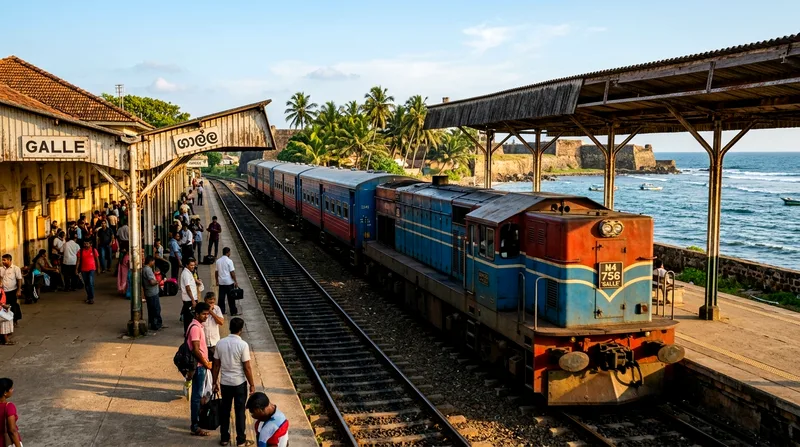
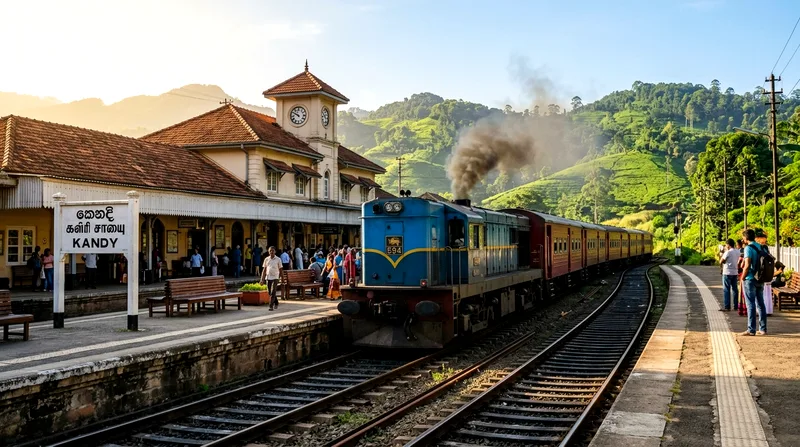
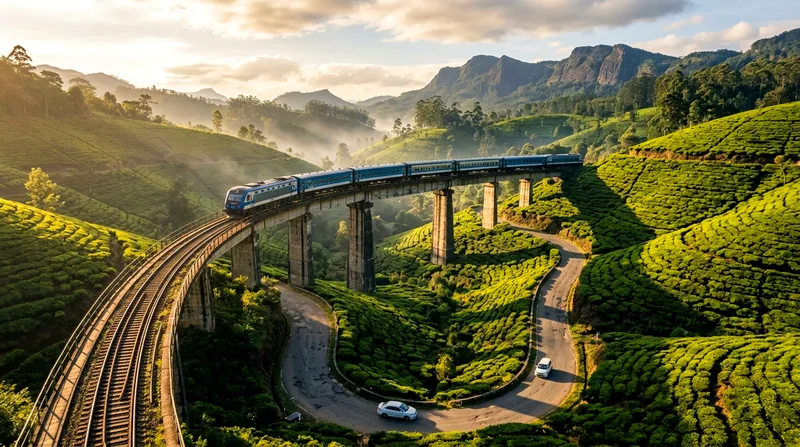
The train from Kandy to Ella is genuinely one of the best rail journeys anywhere — tea estates right up against the track, waterfalls visible from the carriage, kids hanging out of open doors for photos. But Sri Lanka's train network is limited, slow outside the hill country, and often booked solid weeks ahead in reserved classes. A private driver, meanwhile, gets you door-to-door, handles your luggage, and can detour to a viewpoint or a roadside kottu stall on a whim — but you lose the open-window theater of the train and pay more for it. This page breaks down the trade-offs with numbers you can actually use when booking.
Train vs Private Driver at a Glance
Neither option wins outright. The train wins on scenery and atmosphere for a handful of specific routes; the driver wins on everything involving logistics, time pressure, or more than one piece of luggage per person. Sri Lanka's rail map is also oddly shaped — it reaches Kandy, Ella, Jaffna, and the south coast, but it does not go to Sigiriya, Yala, or most beach towns directly, so a pure train trip simply isn't possible for most itineraries.
For most routes a private driver saves time and hassle, while the train wins specifically on the Kandy–Ella hill country stretch.
Sri Lanka train vs private driver vs bus: time, cost and comfort compared
| Option | Typical cost level | Comfort | Flexibility | Best for |
|---|---|---|---|---|
| Reserved train (hill country) | Low | Moderate, can be crowded | Low, fixed schedule | Scenic Kandy–Ella or Colombo–Kandy legs |
| Unreserved/second class train | Very low | Basic, often crowded | Low | Budget travellers, short hops |
| Private driver | High (per day) | High | High | Multi-stop days, families, luggage-heavy trips |
| AC expressway bus | Low | Moderate | Low, fixed schedule | Colombo–Kandy, Colombo–south coast |
| Local public bus | Very low | Basic, crowded | Low | Short local journeys, maximum budget savings |
| Tuk-tuk | Low-moderate | Basic, open-air | High for short trips | Town hopping, last-mile transport |
Cost levels are relative, not fixed prices — always check current prices and seat availability when booking.
Quick Comparison Table
See the table below for a direct side-by-side on time, cost level, comfort and flexibility. The short version: trains are cheap and scenic but rigid and occasionally overcrowded in unreserved classes; a private driver costs more per day but saves hours on multi-stop routes and removes the luggage problem entirely.
Where the Bus Fits In
Public buses deserve a mention because they're the actual backbone of Sri Lankan transport, not the train. Buses go everywhere the train doesn't — Sigiriya, Mirissa, Arugam Bay, Yala's entrance towns — and fares are low, often less than a dollar or two for a few hours of travel. The catch: non-AC buses are packed, driven aggressively, and have no real luggage storage beyond your lap or the floor. I'd recommend buses for short hops when you're genuinely budget-constrained and travelling light, but not as a comfortable option for families or anyone with a tight schedule. Expressway AC buses between Colombo and Kandy or the south coast are a decent middle ground if you want to save money without the full local-bus experience.
Head-to-Head: Time, Cost, Effort and Views
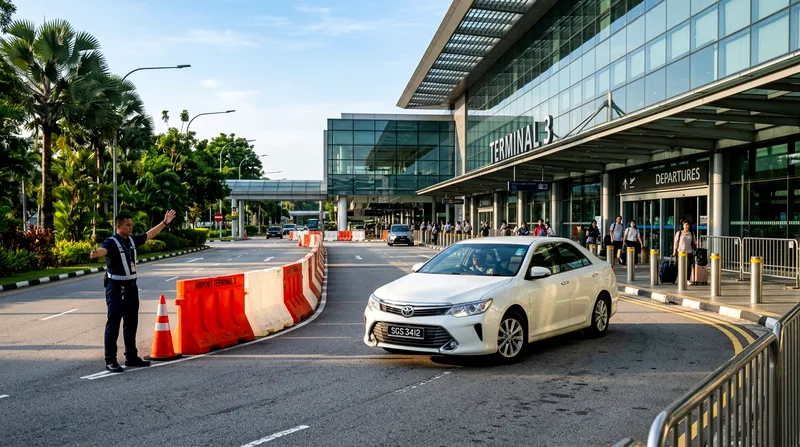
Strip away the romance of train travel for a second and look at the logistics. A private driver door-to-door from Colombo airport to Kandy takes roughly 3 to 3.5 hours on the expressway-plus-mountain-road route. The equivalent train journey, once you add the taxi to the station, waiting time, and the train's own pace, often takes 4.5 to 5 hours — and that's before accounting for a possible missed connection.
Journey Time and Door-to-Door Logistics
Trains only go station to station, which means every train trip actually involves three legs: tuk-tuk or taxi to the station, the train itself, then transport again at the other end. A driver eliminates two of those three legs. For a single scenic journey like Kandy to Ella (roughly 6 to 7 hours by train, versus 4 to 4.5 hours by car on a more direct road), the time cost of the train is the price you pay for the view — and for many travellers, especially photographers and anyone doing this once, it's worth it. But stacking three or four train journeys back-to-back over a two-week trip adds up to a lot of dead time waiting on platforms and in station traffic.
Cost Level, Crowding and Reliability
Trains are cheap, full stop. Reserved observation-car seats on the Kandy–Ella line cost a fraction of a private driver's daily rate, even with a booking fee factored in. The problem is reliability of access, not price: reserved seats on the popular morning trains sell out well in advance, sometimes weeks ahead in peak season (December to March, and around August), leaving you to either buy unreserved tickets and stand, or rearrange your whole schedule. A private driver costs considerably more per day — think of it as paying for a guaranteed seat, a guaranteed departure time, and a guaranteed place to put your bags. If your trip has a fixed number of days and a flight to catch, that guarantee has real value. I'd avoid relying on unreserved train tickets during peak travel weeks unless you're happy standing in a crowded vestibule for an hour.
Luggage, Seniors and Family Considerations
This is where the decision usually gets made in practice, not in theory. A family travelling with two large suitcases, a stroller, and a toddler has a fundamentally different trip than a solo backpacker with a 40-litre bag.
Handling Bags on Trains vs in a Car
Sri Lankan trains have no dedicated luggage car and limited overhead space, especially in the popular observation carriages where seats face outward toward windows rather than having traditional overhead racks above every row. A single carry-on-sized bag per person is manageable; two large suitcases per person is a genuine struggle, and you'll be guarding them in a crowded vestibule while also trying to get photos through the open door. A private driver's car boot handles this without a second thought, and most drivers will also store bags safely during day stops at Sigiriya, Yala, or a tea factory visit. If you're flying into Colombo with golf clubs, surfboards, or more than one suitcase per person, that alone tips the decision toward hiring a car for at least the transfer days.
Accessibility and Comfort for Older Travellers
Sri Lankan train stations often involve stairs, uneven platforms, and a scramble to board before the train pulls away — not ideal for travellers with limited mobility. Toilets on trains are basic and not always clean. A private driver, by contrast, can stop every hour, pull over for a toilet break at a proper rest stop, and adjust the pace of the day around someone who needs it. For senior travellers or anyone with joint pain, knee problems, or just a dislike of crowds, I'd lean private driver for the bulk of the trip, and treat one reserved train leg — ideally Nanu Oya to Ella or Kandy to Ella in an observation car — as a planned highlight rather than the default mode of transport.
Which Option Suits Which Traveller
There's no universal answer here, and anyone who tells you one single mode of transport is "the" way to do Sri Lanka is oversimplifying. The right call depends heavily on your budget, your patience for crowds, and how many places you're trying to see in a fixed number of days.
Solo and Budget Travellers
If you're travelling alone or on a tight budget, lean toward trains and buses for the bulk of your trip, and book a private driver only for specific days — an airport transfer, or a day trip to Yala or Sigiriya where public transport logistics are genuinely painful. Reserve train tickets as far ahead as you can for the Kandy–Ella corridor, since second class and unreserved cars are where most solo budget travellers end up standing for long stretches. Combine with tuk-tuks for last-mile hops in towns — cheap, flexible, and genuinely fun once you've negotiated a fair fare before getting in.
Couples, Families and Seniors
For couples on a two-week trip, families with children, or senior travellers, a private driver for most of the itinerary makes more sense than it might seem at first glance. You're not just paying for a car — you're paying for someone who knows which roads flood in the monsoon, which rest stops have clean toilets, and how to time a departure around Colombo traffic. Compare this to Bali or Thailand, where Grab and reliable metered taxis make ad-hoc transport painless; Sri Lanka's infrastructure isn't there yet, so a known driver for the week removes a lot of friction that doesn't exist in those destinations. Still book one or two train legs as experiences in their own right, particularly if there are kids who'd enjoy hanging out of an open carriage door through tea country.
Best Mixed Plan: Rails and Road
The strongest approach for most visitors is a hybrid: private driver for the bulk of the trip, train for the one or two legs where the view genuinely outperforms the car window. This mirrors how a lot of people now do Vietnam — overnight trains for the scenic northern stretches, private cars or domestic flights for the rest — rather than committing fully to one mode.
Scenic Train Legs Worth Taking
The Kandy to Ella stretch (or the shorter Nanu Oya to Ella segment, which covers the most dramatic tea country scenery in under two hours) is the one train journey worth rearranging your itinerary around. The Colombo to Kandy line is pleasant but less dramatic, and mostly useful if you're avoiding Colombo's traffic rather than chasing scenery. Skip the idea of doing long-distance trains to the south coast or north unless you have genuine time to spare — they're slow, and a driver covers the same ground in roughly half the time with air conditioning and no standing room only.
Sample Hybrid Itinerary
A workable two-week structure: private driver from Colombo airport to Sigiriya (around 3.5 to 4 hours) and on to Kandy, with stops at Dambulla cave temple along the way; driver drops you and your bags at a Kandy hotel, then collects you the next morning and drives ahead to Ella while you take the reserved observation-car train from Kandy or Nanu Oya separately, bags already waiting at your Ella guesthouse; driver picks you up in Ella for the push south to Yala and the beaches around Mirissa or Weligama. This way you get the single best train experience in the country without forcing your luggage, your schedule, or an elderly relative through five separate crowded platforms. Compare this setup with a Kerala houseboat-plus-car itinerary, or a Bali driver-for-the-week arrangement — Sri Lanka's version just happens to include one spectacular rail segment worth planning around.
Frequently asked questions
Is a private driver worth it compared to trains in Sri Lanka?
For multi-stop trips, families, or anyone short on time, yes — a private driver saves hours per day by cutting out station transfers and handles luggage with no fuss. For a single scenic leg like Kandy to Ella, the train is worth doing specifically because the view from an open carriage door beats anything visible from a car window.
Can you combine train and private driver travel in Sri Lanka?
Yes, and it's the approach most experienced visitors end up using. Book a driver for the overall trip, have them drive your luggage ahead to the next hotel, and take a reserved train seat yourself for one or two scenic legs — typically Kandy–Ella or Nanu Oya–Ella — meeting the driver at the other end.
Are trains crowded in Sri Lanka?
Unreserved and second-class carriages get genuinely crowded, especially on the popular Kandy–Ella route during peak season (December to March, and August). Reserved observation-class seats are more comfortable but sell out weeks ahead in high season, so book as early as the booking window allows.
What is the best transportation for families with luggage in Sri Lanka?
A private driver is the practical choice for families — Sri Lankan trains have minimal luggage storage and no dedicated luggage car, which turns two suitcases per person into a real hassle in a crowded carriage. Keep one train leg for the experience and let the driver carry the bags the rest of the week.
Is public transport cheaper than a private driver in Sri Lanka?
Significantly cheaper per journey — trains and buses cost a small fraction of a private driver's daily rate. The trade-off is time, comfort, and flexibility: buses can be crowded and trains run on a fixed, sometimes fully booked schedule, so budget travellers trade convenience for savings.