Sri Lanka train classes explained: what observation car, first class, reserved and unreserved seats really feel like on hill-country rides, and which to chase.
Sri Lanka Train Classes Explained
Seven hours between Kandy and Ella, and the seat you're holding decides everything. Get it right, and you're leaning out of an open doorway with tea terraces sliding past at arm's length, camera ready, wind in your face. Get it wrong, and you're standing in a packed aisle for three hours, bag wedged between your knees, watching that same view through someone else's shoulder. Sri Lanka train classes aren't a minor logistics detail — on the Colombo-Kandy and Colombo-Ella routes, the class and reservation status you book shapes the entire experience more than almost any other choice you'll make on the trip.
Sri Lankan Railways runs a system inherited from the colonial era and still built around it: four broad classes, a mix of reserved and unreserved seating, and one much-loved observation car that locals and TripAdvisor reviewers alike treat as a minor celebrity. None of it is complicated once you understand the structure — but almost nobody explains it clearly before boarding, which is how backpackers end up sitting on the floor of a first class carriage they never meant to downgrade from.
How Sri Lanka Train Classes Are Structured
Sri Lankan Railways sells roughly four tiers: observation class (sometimes called the observation saloon), first class air-conditioned, second class, and third class. Not every train carries all four — the observation car, for instance, is typically attached only to specific intercity services on the Colombo-Ella line, not on every run through Kandy. Second class is the workhorse of the network: it's on nearly every long-distance train and splits into reserved and unreserved compartments. Third class is the cheapest and most basic, usually unreserved, and it's where you'll find the most local color and the least personal space.
Don't assume consistency route to route. A second class carriage on the Colombo-Badulla line might have cushioned seats and fans; a second class carriage on a short-hop rural service might be bare benches. Lonely Planet's Sri Lanka coverage rightly flags this unevenness — the same class label can mean different things depending on the specific train and its age.
Express and Intercity Trains Compared
Intercity trains are the faster, more comfortable option — fewer stops, assigned seating in most classes, and usually the only services that carry the observation car or a proper first class air-conditioned saloon. Express trains stop more often, carry a higher proportion of unreserved seating, and tend to be busier with commuters rather than tourists, especially near Colombo Fort in the early morning and late afternoon. If you're riding purely for scenery between Kandy and Ella, an intercity service is worth the extra planning; if you're hopping a short local leg, an express train is fine and often the only option running at a convenient time.
Which Classes Run on Which Routes
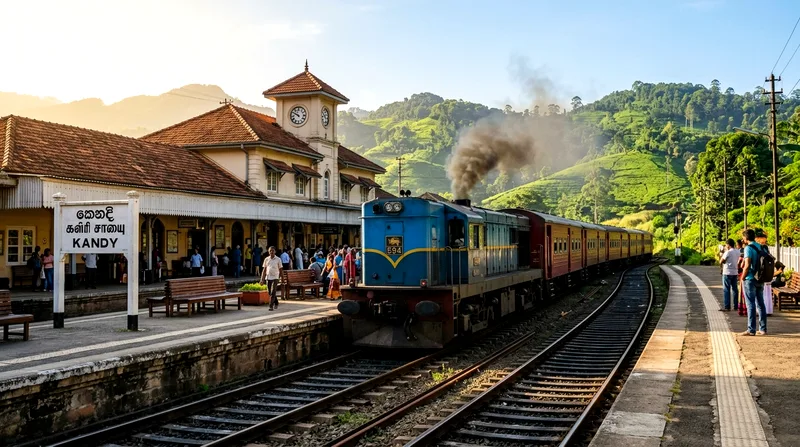
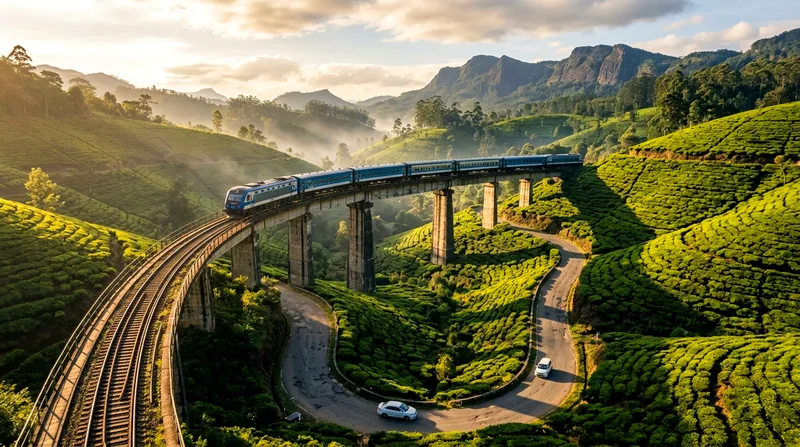
The Colombo-Kandy route carries the fullest range — observation car on some services, first class air-conditioned, reserved and unreserved second class, and third class. The Colombo-Ella route (often booked as one continuous scenic ride, sometimes broken at Kandy) is where the observation car gets most of its reputation, riding the dramatic stretch past Nanu Oya and Ella's Nine Arches Bridge area. Shorter rural branches may run second and third class only, with no reservations offered at all — worth checking before you build an itinerary around a specific class.
Observation Car and First Class Experience
The observation car sits at the rear of the train with large rear-facing windows and forward-and-side visibility that no other carriage offers — it's the closest Sri Lanka's railway gets to a scenic-rail product you'd find marketed in the Alps. Seats are airline-style, usually recline slightly, and the whole carriage turns into a slow-motion photography session once the train climbs past Hatton. It's popular enough that seats sell out weeks ahead in high season, and I'd treat "popular" as an understatement — this is the single most requested seat on Sri Lanka's entire rail network.
First class air-conditioned carriages are a notch below the observation car: comfortable, enclosed, cooler, but with smaller windows that don't open, which matters more than people expect. You trade the breeze and the open-door photo opportunity for a quieter, cooler ride. On a 95°F day in the lowlands before the climb starts, that trade-off is worth it. Once you're up in the hills past Nanu Oya, the air is cool anyway, and sealed windows start to feel like a loss rather than a comfort.
Air Conditioning, Windows and Photography
If photography is the priority, air conditioning works against you. Sealed, tinted windows in first class produce reflections and glare in photos; the observation car's rear windows are larger and sometimes allow the end door to stay open, giving a clean, glass-free shot. Second class with an open window or open doorway beats both for photography — it's just less comfortable. Decide what you're optimizing for before you book, because you can't have maximum comfort and maximum photo access in the same seat.
Views and Comfort on Colombo-Ella
On the Colombo-Ella stretch specifically, the payoff section is roughly the two to three hours after Nanu Oya — tea estates, waterfalls, and the approach into Ella through pine-covered slopes. The observation car is positioned for exactly this section. First class gets you there in comfort but somewhat insulated from it. Either way, this is the leg worth planning around; the lowland run out of Colombo Fort is comparatively unremarkable and fine to spend in a more basic class.
Second and Third Class: Real Atmosphere
Second class reserved is the sweet spot for most travelers who don't book the observation car: a guaranteed seat, usually by a window that opens, fans or sometimes AC depending on the specific train set, and a fraction of the price of first class. Second class unreserved and third class are where the real, unfiltered Sri Lanka happens — vendors moving through with hoppers and tea, families with baskets of vegetables, monks in orange robes finding space wherever they can. It's not comfortable in the way a European traveler might expect comfort, but it's honest, and it's the version of the ride that regular Sri Lankan commuters actually live.
Open Windows, Doors and Crowds
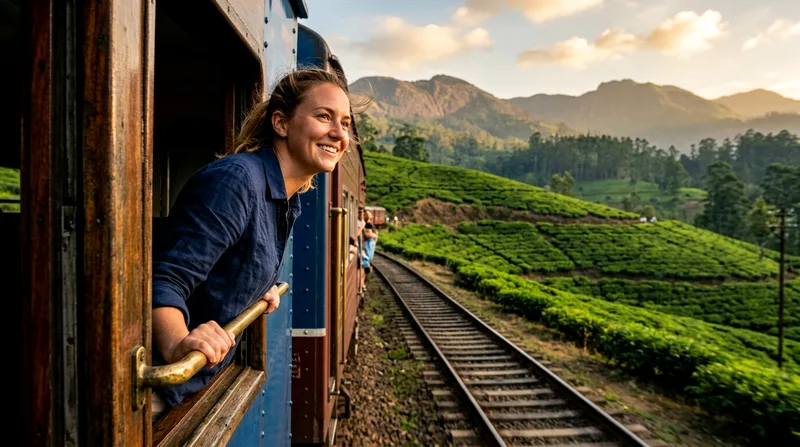
The famous image of people leaning out of open doorways on the Ella line happens almost entirely in second and third class, because those carriages keep doors open for ventilation and boarding. It's the best vantage point on the entire train for photos and genuinely close-up views of the gorges and viaducts — and it's also the spot with the most risk, since there's no barrier and the train does sway on curves. Hold on properly, don't lean further than the frame, and keep kids within arm's reach if you let them near the doorway at all.
Noise, Comfort and Local Life
Expect noise — conversation, vendors calling out, the clatter of the carriage itself — and expect to stand for stretches if you're unreserved and the train is busy, which it usually is on the Kandy-Ella corridor during midday departures. Third class benches are hard, legroom is tight, and on a long ride that adds up. For a one-hour hop it's a non-issue and arguably more fun than the quiet of first class; for the full seven-hour Colombo-Badulla run, I wouldn't do it without a reservation.
Reserved vs Unreserved Seating Explained
This is the distinction that trips up more travelers than the class system itself. A reserved second class ticket guarantees you a specific numbered seat — book it a few weeks ahead for the Ella line in peak season (December to March, and around April's Sinhala New Year) and you're set. An unreserved ticket for the same class gets you onto the train and nothing more; you take whatever space is physically free, which on a popular midday departure might mean the floor of the vestibule between carriages.
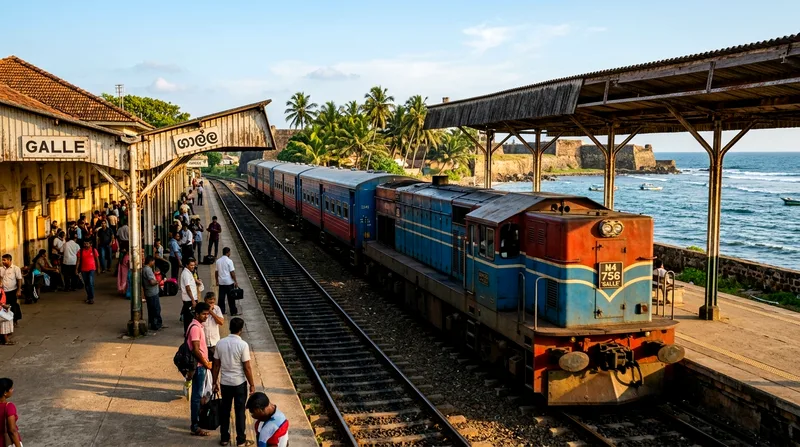
Sri Lanka train reserved vs unreserved isn't just about comfort — it's about certainty. Reserved tickets for popular intercity trains on Colombo-Kandy and Colombo-Ella sell out, sometimes weeks out for the observation car and first class, and a few days out for reserved second class in high season. Unreserved tickets are sold right up to departure and sometimes on the day itself, which makes them the fallback for spontaneous travelers — but "fallback" is the right word. Don't build a tight itinerary around getting an unreserved seat on a Friday afternoon train out of Colombo Fort.
Reserved second class or the observation car offer the best balance of guaranteed seating and scenic access on Sri Lanka's hill-country routes.
Sri Lanka train classes compared: comfort, views and booking needs
| Class | Seat Guarantee | Windows/Doors | Comfort Level | Best For |
|---|---|---|---|---|
| Observation car | Reserved only | Large rear windows | High | Scenic photography, special occasions |
| First class A/C | Reserved only | Sealed, no opening | High | Heat relief, quiet ride |
| Second class reserved | Guaranteed seat | Opens, sometimes fan-cooled | Medium | Most travelers, families |
| Second class unreserved | None | Opens, open doorways | Low-Medium | Flexible budget travel |
| Third class | None | Open doorways common | Low | Short hops, local atmosphere |
Class features vary by specific train set and age of carriage; check current seat maps and prices when booking.
Which Class Suits Your Journey
There's no single "best" class — it depends on what you're riding for. A honeymoon couple chasing photos of Nine Arches Bridge wants a different seat than a family of five moving house-sized luggage from Kandy to Nuwara Eliya for a week.
Best Class for Scenic Views
For pure scenery, rank it: observation car first, open-doorway second class second, first class air-conditioned third. The observation car wins on seat guarantee and wide glass; open-doorway second class wins on unobstructed photos and atmosphere but costs you comfort and a guaranteed seat unless reserved. If you can only get one thing right, get a reserved window seat — class matters less than whether you're guaranteed to sit beside glass that opens.
Families, Longer Rides and Luggage
Families with young kids and real luggage should pay for reserved second class or first class, full stop. Third class unreserved with suitcases and a toddler on a seven-hour ride is a bad combination — no overhead storage to speak of, narrow aisles, and standing room only if you misjudge demand. Reserved seating also means you know which carriage to stand near on the platform, which matters at Colombo Fort or Kandy station when trains arrive packed and the window for boarding calmly is short.
Booking Tips Before You Chase a Ticket
Reserved seats, especially observation car and first class on the Ella line, are the first to disappear — plan to book as soon as your dates are fixed rather than leaving it for the week before. Unreserved tickets give you flexibility but no guarantees, and standing in a corridor for the scenic highlight of your trip is a genuinely common complaint on TripAdvisor forums about this exact route. Compare the Colombo-Kandy and Colombo-Ella routes to scenic rail elsewhere before you dismiss the planning effort as overkill: it's nothing like Thailand's overnight sleeper trains to Chiang Mai, which run more frequently and reserve more easily, and it's a different proposition entirely from Vietnam's Reunification Express, which has more carriage variety but far less famous scenery packed into a single short stretch.
Choosing Class by Route and Season
In December through March and around April's holiday season, book reserved seats at least two to three weeks out if you want the observation car or first class on Colombo-Ella. Outside peak months, a week's notice is often enough. For shorter, less scenic routes — say, Kandy to Nuwara Eliya's nearest station at Nanu Oya — unreserved second class is usually fine without advance planning, since fewer tourists compete for seats on that leg.
Frequently asked questions
What is the difference between first, second and third class trains in Sri Lanka?
First class is air-conditioned with sealed windows and the most enclosed, quiet ride. Second class has opening windows, fans or sometimes AC, and splits into reserved and unreserved seating. Third class is the most basic — hard benches, open doors, no reservations, and the cheapest fares on the network.
Is first class air-conditioned on Sri Lankan trains?
Yes, where it's offered — first class air-conditioned carriages run on select intercity services, mainly on busier routes like Colombo-Kandy. Windows are sealed, which keeps the carriage cool but blocks the open-air photography angle that second and third class allow.
Which train class is best for scenic views?
The observation car, for a guaranteed wide-window seat, followed by open-doorway second class if you don't mind standing or missing a reserved spot. First class air-conditioned has the worst view-to-comfort ratio because the sealed windows create glare in photos.
What is the atmosphere like in third class?
Crowded, noisy, and genuinely local — vendors selling snacks, open doorways, hard seating, and often standing room only on popular routes. It's the cheapest way to ride and arguably the most memorable for short legs, but tough on a seven-hour journey with luggage.
Which train class is best for families with children?
Reserved second class or first class air-conditioned. Both guarantee seats, which matters far more with kids than class prestige does, and avoid the standing-room scramble that unreserved third class can turn into on busy intercity departures.