Plan your Sigiriya tickets: how to buy entry, the best start times to beat the heat, whether a guide is worth it, and what to see near Lion Rock.
Why Visit Sigiriya Rock Fortress
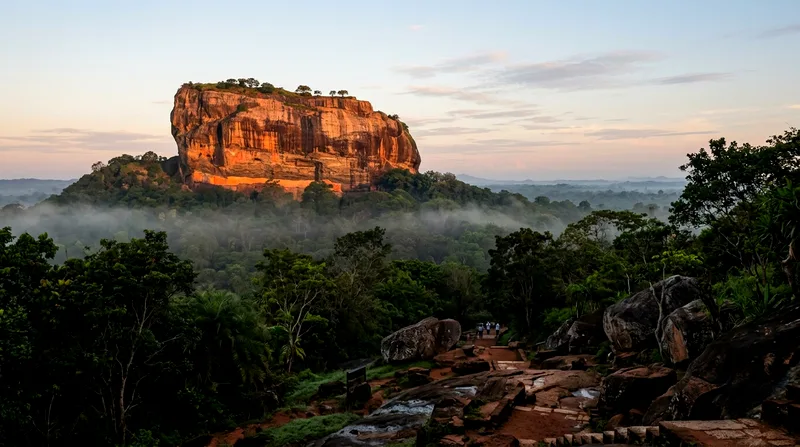
Sigiriya rock fortress is the single most photographed structure in Sri Lanka's Cultural Triangle, and it earns that status on more than looks. This is a 5th-century royal citadel built on top of a 200-metre granite plug, surrounded by water gardens, boulder gardens and terraced gardens that still follow their original engineering layout. UNESCO listed it as a World Heritage Site in 1982, and unlike some heritage sites that trade on reputation alone, Sigiriya rewards the climb with real physical evidence — brick ruins, a hydraulic system older than almost anything comparable in Asia, and a summit platform where a palace once stood.
Compare it to climbing Adam's Peak elsewhere in Sri Lanka, or to temple-hopping in Bagan or Angkor — Sigiriya is shorter and more contained than either, doable in two to three hours rather than a half-day trek. It's also less crowded than Cambodia's Angkor Wat at peak season, though that's changing as Sri Lanka's tourism numbers recover.
History of the Lion Rock Citadel
King Kashyapa built his fortress-palace here around 477 CE after seizing the throne from his father, reportedly fearing retribution from his half-brother Moggallana. He chose an almost indefensible-looking rock and made it defensible, carving a citadel into the summit and ringing the base with moats and ramparts. The name "Lion Rock" comes from the original entrance — a giant lion sculpture whose paws are the only surviving section, flanking the final staircase. Kashyapa ruled for about eighteen years before Moggallana returned with an army; Kashyapa died in battle, and the capital later moved back to Anuradhapura. What's left is one of the few sites in Asia where you can see pre-modern urban planning this intact without heavy reconstruction guesswork.
Frescoes, Mirror Wall and Summit Gardens
Partway up, a spiral metal staircase leads to a sheltered rock pocket holding the Sigiriya frescoes — around 18 surviving painted figures of women, often called "cloud maidens," out of what may have been 500 originally. Photography is typically restricted here to protect the pigment, so don't expect a long photo stop. Just below, the Mirror Wall still carries faint visitor graffiti dating back over a thousand years, some of it genuine ancient poetry praising the frescoes. At the top, the summit gardens are smaller than people expect — a flat plateau with foundation walls, a throne carved from rock, and views across the Cultural Triangle plains that make the final push worth it on a clear morning.
Sigiriya Entrance Fee and Ticket Types
Entry to Sigiriya is managed by Sri Lanka's Central Cultural Fund, the same body that oversees ticketing for several other Cultural Triangle sites. The Sigiriya entrance fee sits well above what you'd pay at most domestic Sri Lankan attractions, and that surprises a lot of first-time visitors — it's priced closer to a major international monument than a typical Sri Lankan historical site. Don't assume you can negotiate it or pay a lower "local-style" rate by arriving with a Sri Lankan guide; the foreigner rate applies regardless of who you're with.
Tickets are generally sold as single-entry passes covering the whole site — water gardens, boulder gardens, the frescoes staircase and the summit. There's no cheaper "gardens only" ticket that skips the climb, so you're paying for the full experience whether or not you intend to go all the way up. Given that, it's worth the extra hour to actually reach the summit rather than turning back at the frescoes, which some rushed tour groups do.
Sigiriya costs more and takes longer than nearby alternatives, but it's the only site combining a climb, ruins and a wide plains view in one ticket.
Sigiriya tickets and nearby Cultural Triangle sites compared
| Site | Typical Visit Time | Climb Difficulty | Best Paired With |
|---|---|---|---|
| Sigiriya Rock Fortress | 2-3 hours | Steep, exposed stairs | Dambulla, Pidurangala |
| Pidurangala Rock | 1-1.5 hours | Moderate, rocky scramble | Sigiriya sunrise view |
| Dambulla Cave Temple | 1-1.5 hours | Easy, gentle steps | Sigiriya, Kandy transit |
| Minneriya National Park | 2.5-3 hours (safari) | None (vehicle-based) | Sigiriya, Habarana stay |
Visit times and difficulty are general guides; actual duration depends on your pace and group size, so check current entrance fees and hours before you travel.
Foreign Versus Local Visitor Categories
Sri Lanka runs a two-tier pricing system at Sigiriya, as it does at Kandy's Temple of the Tooth and several national parks: foreign nationals pay a significantly higher rate than Sri Lankan citizens and SAARC-region visitors, who get a reduced price. This isn't unique to Sri Lanka — Nepal and India run similar dual pricing at heritage sites — but the gap at Sigiriya is larger than most. Bring your passport; staff may ask for ID to confirm visitor category, and residents with long-term visas should carry proof of residency if they expect the local rate.
Children, Concessions and Combined Passes
Young children typically get free or heavily discounted entry, with the cutoff usually around age six, though this is worth confirming at the ticket counter since policies get adjusted periodically. There's no official combined ticket bundling Sigiriya with Dambulla Cave Temple or other Cultural Triangle sites sold at the gate — you buy each site separately. Some tour operators package multiple sites into one itinerary price, which can simplify logistics but won't necessarily save you money over buying individually. Students with valid international ID sometimes get concessions at other Sri Lankan sites, but don't count on a discount here without checking current policy directly.
How to Buy Sigiriya Tickets
Most visitors still buy Sigiriya tickets the simple way — in person — and that remains perfectly workable outside peak periods. The bigger decision is timing your purchase around the queue, not the payment method.
Buying at the Site Ticket Office
The main ticket office sits a short walk from the base of the rock, and you'll need to show it again (or a physical/printed copy) at a checkpoint before the climb starts. Cash and card are both generally accepted, but carrying some local currency as backup is sensible — card machines occasionally go down, and you don't want that discovery to cost you your early start. Arrive at the ticket counter by 6:30-7am if you want to be climbing before the heat builds; by mid-morning the line can stretch long enough to eat 30-45 minutes you'd rather spend on the rock.
Independent Visit or Guided Tour
You don't need a guide to climb Sigiriya. The path is obvious, well-signed, and the staircases make wrong turns basically impossible. That said, a good guide changes what you actually understand while you're up there — without one, you're climbing a very impressive staircase past some old brick walls with no idea what you're looking at.
Does a Guide Add Value?
A licensed guide will walk you through the water garden symmetry, point out where the mirror wall's polish survives best, and explain which foundation marks at the summit were royal apartments versus storage. For history-focused travelers, families with curious kids, or anyone who's read a page about King Kashyapa and wants it brought to life, that's real value for a modest add-on cost. For travelers mainly chasing the view and the photo, a guide is optional — you can read a two-paragraph history summary beforehand and get 80% of the benefit for free. Avoid unlicensed guides who approach at the base offering a "cheap tour" — insist on seeing official CCF guide credentials, or book through a known operator instead.
Tour Options from Dambulla, Kandy and Colombo
Sigiriya sits roughly 15km from Dambulla, about 90 minutes from Kandy by road, and around 4-4.5 hours from Colombo. Day trips from Kandy are common and manageable if you start at dawn, but they make for a long day — you're looking at 8+ hours round trip including the climb. From Colombo, a single-day round trip is possible but rushed; most operators pair it with an overnight in the Cultural Triangle region instead, often combined with Dambulla Cave Temple or a Minneriya safari. If you're staying in Kandy or Dambulla already, compare current tour prices and group sizes before booking — private vehicles cost more than shared minivans but save real time at pickup and drop-off.
Best Time and Opening Hours
Sigiriya opening times generally run from early morning to late afternoon, with the last entry cut off well before closing to allow time for the climb and descent. Exact hours shift slightly, so confirm current Sigiriya opening times when you book or on arrival — but plan around a roughly 7am-5:30pm window as the standard baseline.
Heat-Beating Early Start Times
The best time to climb Sigiriya is right at opening. The staircases have almost no shade, the exposed summit plateau turns into a sun trap by mid-morning, and by 10am in dry season the metal stair railings are hot enough to notice. Starting by 7am gets you to the summit before the worst heat and before the bulk of tour buses arrive — those tend to roll in from about 9am onward. Sunrise climbs are possible if you arrive right at opening, and the early light on the rock face and surrounding plains is genuinely better for photos than the flat midday glare.
Crowds, Weather and the Monsoon
Sri Lanka's dry season in the Cultural Triangle runs roughly December to March, which is also when crowds peak — expect queues at the lion's paw staircase and bottlenecks on the final metal stairs. The shoulder months of April-June and September-November bring fewer crowds but more unpredictable rain; a sudden downpour can make the exposed metal staircases genuinely unsafe, and staff will sometimes pause access to the upper sections during storms. If you're flexible, a dry morning in the shoulder season with light visitor traffic beats a packed December morning every time.
Nearby Add-Ons Around Sigiriya
Sigiriya rarely justifies a dedicated day trip on its own given the travel involved, so most itineraries pair it with other Cultural Triangle stops.
Pidurangala Rock and Dambulla Cave Temple
Pidurangala Rock sits almost directly opposite Sigiriya and offers something the fortress itself can't: a clear view back at Lion Rock. Entry is far cheaper than Sigiriya, the climb is rougher and rockier near the top — expect some scrambling over boulders, not just stairs — and it's popular for sunrise precisely because you're watching Sigiriya light up rather than standing on it. Many travelers do Pidurangala at dawn and Sigiriya later that morning, or reverse the order. Dambulla Cave Temple, about 20-30 minutes south, holds five cave shrines carved into a rock face with Buddhist murals and statues dating back over two thousand years — a good half-day add-on if you have an extra afternoon.
Village Tours and Minneriya Safari
Local operators around Sigiriya town run village tour experiences — ox-cart rides, catamaran trips on a nearby lake, home-cooked meals — that give a slower-paced contrast to the climb. More popular is a Minneriya National Park safari, about 30-40 minutes away, known for its elephant gatherings around the reservoir, especially July-September during "the Gathering" when several hundred elephants can congregate. Compare this to Yala National Park further south, which has more leopard sightings but much heavier vehicle traffic in peak season — Minneriya is the easier, lower-hassle pairing with Sigiriya precisely because of the short drive.
Frequently asked questions
How much does an entrance ticket to Sigiriya cost?
Foreign visitors pay a fixed Sigiriya entrance fee that's considerably higher than most Sri Lankan attractions, while Sri Lankan citizens and SAARC nationals pay a reduced local rate. The exact figure is adjusted periodically by the Central Cultural Fund, so check the official rate at the ticket office or current booking platform before you travel rather than relying on an old quoted price.
What time does Sigiriya Rock open for visitors?
Sigiriya typically opens around 7am and allows last entry a couple of hours before closing in the late afternoon, giving you enough time to complete the climb and descent before gates shut. Arriving right at opening is the single best move — it beats both the heat and the tour bus crowds that build from mid-morning onward.
Can I buy Sigiriya tickets in advance online?
Yes, advance online booking is generally available either through official Central Cultural Fund channels or third-party platforms, and it lets you skip the on-site ticket queue. Booking ahead matters most during dry season (December-March) and around local holidays, when ticket-counter lines can run long; always confirm the seller's refund policy before paying.
Do I need a guide to climb Sigiriya?
No — the route is well-marked and safe to navigate alone. A licensed guide adds real value if you want the history of King Kashyapa, the frescoes and the water gardens explained properly, but it's not required for a safe or enjoyable climb. Avoid unlicensed touts offering tours at the base; verify credentials or book through an established operator.
Are there discounts for children or students at Sigiriya?
Young children, usually under about six, generally enter free or at a steep discount, though exact age cutoffs can shift, so confirm at the counter. Student discounts aren't consistently applied at Sigiriya the way they are at some other Sri Lankan sites — bring ID and ask, but don't plan your budget around it.