Plan your Dambulla Cave Temple visit: what the five painted caves hold, ticket basics, dress code, tour options and pairing it with Sigiriya in one day.
What Is Dambulla Cave Temple and Why Go
The Dambulla Cave Temple sits inside a long rock outcrop that rises abruptly from the flat farmland of central Sri Lanka, about 150 kilometers northeast of Colombo. Officially known as the Rangiri Dambulla Cave Temple, it's the largest and best-preserved cave temple complex in the country — five separate caves, converted into Buddhist shrines, tucked under a single overhanging rock ledge roughly 160 meters above the surrounding plain. You climb to reach them, but it's a walk, not a scramble.
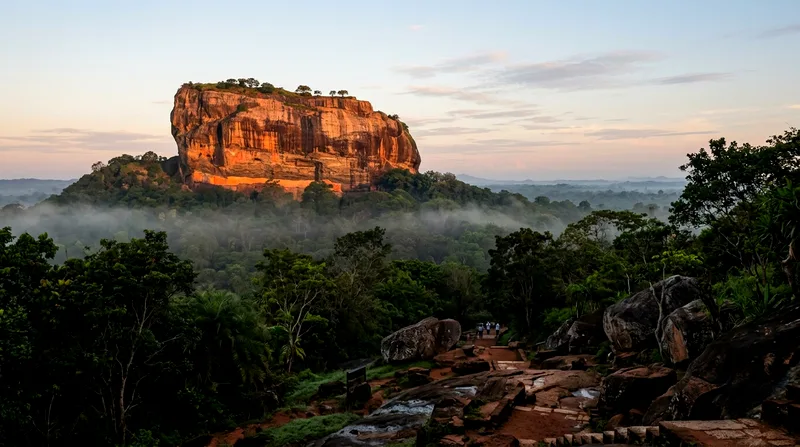
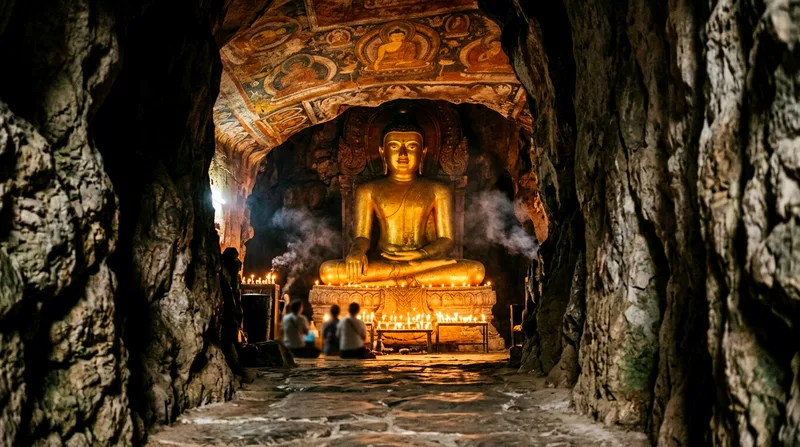
What makes Dambulla worth the detour isn't the rock itself — Sigiriya wins that contest easily — it's what's inside. Every surface of every cave, walls and ceilings alike, is covered in paintings built up over centuries, and the floor space holds more than 150 Buddha statues in varying poses and sizes. Nothing about the interior is sparse. Monks have maintained an active religious site here continuously, which means you're not walking through a museum piece — people still worship in these caves, and that changes how you should behave inside them.
I'd rank it below Sigiriya and above the Golden Temple statue complex at the base of the hill, which is a modern, brightly painted addition from the 2000s that some visitors find tacky against the austerity of the caves above. It's not required viewing, but it's hard to avoid since it sits right at the ticket office and car park.
The Five Caves and Their Paintings
Cave One, called Devaraja Lena, holds a 14-meter reclining Buddha carved directly from the rock — the oldest and simplest of the five. Cave Two, Maharaja Lena, is the largest and most impressive: around 16 meters long and 7 meters high, crammed with 56 Buddha statues and a ceiling painted with a continuous narrative of the Buddha's life, plus scenes from Sri Lankan history including King Vattagamini Abhaya, who's credited with founding the temple around the 1st century BCE. Cave Three, Maha Alut Vihara, dates to the 18th century and has some of the best-preserved painted panels. Caves Four and Five are smaller and less visited, worth a quick look but not where you should linger if time is tight.
Bring a flashlight or use your phone's torch sparingly — lighting inside is dim by design, and the ceiling paintings in Cave Two reward a slow look rather than a glance.
UNESCO Status and Buddhist Heritage
UNESCO inscribed the cave temple as a World Heritage Site in 1991, citing both the scale of the mural work and the continuity of Buddhist worship at the site across roughly 22 centuries. That's the detail that tends to land with visitors more than any single statue: monks have used these caves as a place of refuge and devotion since well before most European cathedrals existed. It sits within Sri Lanka's Cultural Triangle, the loop connecting Dambulla, Sigiriya, Kandy, Polonnaruwa and Anuradhapura — most visitors see it as one stop within that broader circuit rather than a standalone destination.
How to Visit: Independently or With a Tour
Most travelers can do Dambulla entirely on their own, and I'd argue that's the better choice for anyone comfortable navigating a ticket counter and a short uphill walk. The site is well-signed, the caves are numbered in a fixed sequence, and there's rarely any genuine need for a guide to understand what you're looking at — a decent guidebook or a few minutes of reading beforehand covers the essentials.
Where a guide earns their fee is in the detail: identifying which king commissioned which mural panel, explaining the iconography behind specific Buddha postures, or pointing out restoration work that's easy to miss. If you're traveling with kids who get bored without narrative, or you're the kind of traveler who wants context rather than just scenery, book a local guide at the entrance rather than a prearranged tour — it's cheaper and more flexible, and you can negotiate the pace.
Getting There and the Climb to the Caves
Dambulla town sits on the main road between Kandy and Sigiriya, so most visitors arrive by private car, tuk-tuk, or as part of a Cultural Triangle itinerary already in motion. From Kandy, it's about 2 to 2.5 hours by road; from Colombo, figure on 3.5 to 4 hours depending on traffic through the hill country approach. There's no train station nearby — this is a road-trip stop, full stop.
The climb itself starts from a car park near the Golden Temple and takes 15 to 20 minutes up a paved, stepped path with handrails in most sections. It's gradual rather than steep, but there's no shade for stretches of it, and macaques along the route will take food out of your hands if you're carrying any — don't bring snacks up with you. Wheelchair or limited-mobility access is difficult; there's no alternate route.
When a Guided Tour Makes Sense
A packaged tour makes sense in two scenarios: you're short on time and want Dambulla and Sigiriya covered in a single organized day without arranging your own driver, or you're traveling solo and want the cost of a private vehicle split across a group. Multi-day Cultural Triangle tours booked out of Colombo or Kandy typically bundle Dambulla in in the early morning before the heat builds, which is sound logistics even if the pace can feel rushed. Compare current Cultural Triangle tour options and prices before you book, since itineraries and inclusions vary by operator.
Tickets, Dress Code and Temple Etiquette
Entry to the Rangiri Dambulla Cave Temple requires a paid ticket, separate from any Cultural Triangle round ticket you might buy for Sigiriya, Polonnaruwa or Anuradhapura — don't assume one covers the other. Dambulla tickets are sold at a counter near the base of the climb, and the site operates on a fairly consistent daily schedule, though hours can shift slightly around religious holidays like Poya (full moon) days, when the temple fills with local pilgrims rather than tourists. Check the current Dambulla cave temple opening hours and ticket price on the official Sri Lanka Tourism or Central Cultural Fund channels before you go, since both are adjusted periodically and I won't guess at a figure that'll be outdated by the time you read this.
Where to Buy Entry Tickets
Buy tickets on-site at the booth near the car park — there's no real need to prebook online for an independent visit, unlike Sigiriya where advance booking can save a queue. If you're visiting as part of a guided day tour, your ticket is usually arranged by the operator and the cost folded into the tour price, which is worth confirming when you book so you're not paying twice.
What to Wear and Photography Rules
The Dambulla cave temple dress code is strict and enforced: shoulders and knees covered for everyone, men included, and no exceptions for heat. Sarongs are sold near the entrance if you turn up underdressed, so it's not a disaster, but it's an extra cost and a delay you can avoid by just wearing light trousers and a t-shirt with sleeves. Shoes come off before entering any cave — the stone floor gets scorching hot at midday, so bring socks if your feet are sensitive, or time your visit for cooler hours.
Photography is generally allowed inside the caves without flash, but turning your back to a Buddha statue for a selfie is considered deeply disrespectful here, more so than in many other Buddhist countries — Thailand's temples are comparatively relaxed about this. Avoid posing with your back to any statue; it's cost tourists real trouble with local authorities in the past.
Best Time to Visit Dambulla
Dambulla gets hot, flat, agricultural-plain hot, and the caves themselves have no climate control beyond thick rock walls. Timing your visit well matters more here than at Sigiriya, where the rock itself gives height and occasional breeze.
Time of Day and Crowd Avoidance
Arrive before 9am or after 3pm. Midday brings both the worst heat on that unshaded climb and the thickest crowds, since it's exactly when bus tours from Kandy and Sigiriya converge on the site for a lunch-hour stop. Late afternoon has a bonus: the light through the cave entrances hits the painted ceilings at a better angle for photos, and the terrace view back toward the plains turns a soft gold that the midday glare washes out entirely.
Season and Weather Considerations
The Cultural Triangle's dry season, roughly May through September, gives the most reliable conditions, but it also overlaps with Sri Lanka's broader high season, so don't expect to have the place quiet even then. December through March is the main international tourist season countrywide and brings steadier crowds at Dambulla too. If you're flexible, shoulder months like April or October offer a reasonable balance — occasional rain showers, but thinner crowds and lower accommodation rates in nearby Sigiriya and Kandy.
Combining Dambulla With Sigiriya and Nearby Sights
Dambulla and Sigiriya sit close enough together — about 45 minutes to an hour apart by road — that doing both in one day is the standard move, and frankly the obvious one. Skipping either feels like a waste once you're already out in the Cultural Triangle. The real question isn't whether to combine them, it's which order to do them in.
Dambulla pairs most naturally with Sigiriya, while Kandy and the national parks work better as separate half-day add-ons.
Dambulla Cave Temple vs nearby Cultural Triangle sights compared
| Site | Distance from Dambulla | Typical time needed | Physical difficulty | Best for |
|---|---|---|---|---|
| Dambulla Cave Temple | — | 1-1.5 hours | Moderate (uphill walk, no shade) | Painted caves, Buddhist heritage |
| Sigiriya Rock | approx. 20 km / 45-60 min | 2-3 hours | Strenuous (steep steps, heights) | Views, frescoes, fortress ruins |
| Pidurangala Rock | approx. 20 km / 45-60 min | 1.5-2 hours | Strenuous (rock scramble) | Sigiriya view, fewer crowds |
| Minneriya National Park | approx. 30 km / 40-50 min | 2-3 hours (safari) | Easy (vehicle-based) | Elephant sightings |
| Kandy | approx. 70 km / 2-2.5 hrs | Half to full day | Easy to moderate | Temple of the Tooth, hill-country scenery |
Distances and travel times are approximate and depend on road conditions and traffic; confirm routing with your driver or map app on the day.
Sequencing the Day Without Backtracking
Climb Sigiriya first, early, before the rock's exposed steps turn into a furnace and before the frescoes-and-crowds bottleneck near the Mirror Wall gets bad — that climb takes 1.5 to 2 hours round trip and is genuinely strenuous in heat. Then head to Dambulla in the early afternoon, once the Sigiriya crowd thins and before Dambulla's own midday peak eases toward evening. Coming from Kandy or Colombo, this sequencing also matches the natural direction of travel: you pass Dambulla town before reaching Sigiriya, but the caves tolerate afternoon light and heat far better than the open rock does, so saving them for later works with the terrain rather than against it.
Add-Ons Along the Route
If you've got an extra half-day, the Pidurangala Rock climb near Sigiriya gives a cheaper, less crowded alternative viewpoint looking back at Sigiriya itself — some travelers prefer it to the main rock. Minneriya or Kaudulla National Park, both within 30-40 minutes of Dambulla, offer afternoon safari drives built around elephant herds gathering near the reservoirs, a good contrast to a day otherwise spent on stone steps and in dim caves.
Frequently asked questions
Is Dambulla Cave Temple worth visiting?
Yes, particularly if you have any interest in Buddhist art or history — the ceiling and wall paintings across the five caves are among the most extensive in Sri Lanka, and the site has been in continuous religious use for roughly 22 centuries. It's a lower-energy visit than Sigiriya and complements it well rather than duplicating it.
How long does it take to see the Dambulla Cave Temple?
Budget 1 to 1.5 hours total, including the 15-20 minute climb up, time inside all five caves, and the walk back down. Add 20-30 minutes if you're hiring a guide at the entrance or want to linger over the Cave Two ceiling paintings, which reward a slower look.
What should you wear to Dambulla Cave Temple?
Cover your shoulders and knees — this applies to men and women alike — and wear shoes you can slip off easily, since footwear isn't allowed inside the caves. Light, breathable trousers and a sleeved top handle both the dress code and the climb comfortably; sarongs are available to rent near the entrance if needed.
How far is Dambulla from Sigiriya?
About 20 kilometers, roughly 45 minutes to an hour by road depending on traffic through Dambulla town. It's close enough that pairing both sites in a single day is standard practice for most Cultural Triangle itineraries, including self-drive and guided ones.
Can you take photos inside the Dambulla caves?
Yes, photography without flash is generally permitted inside the caves, but posing with your back turned to any Buddha statue is considered disrespectful and can draw attention from site staff or other visitors. Keep flash off to protect the painted surfaces and be mindful that people are actively worshipping around you.