Sigiriya vs Pidurangala compared on cost, difficulty, history and views, with a clear verdict for budget travellers, seniors and sunrise photographers.
Sigiriya vs Pidurangala at a Glance
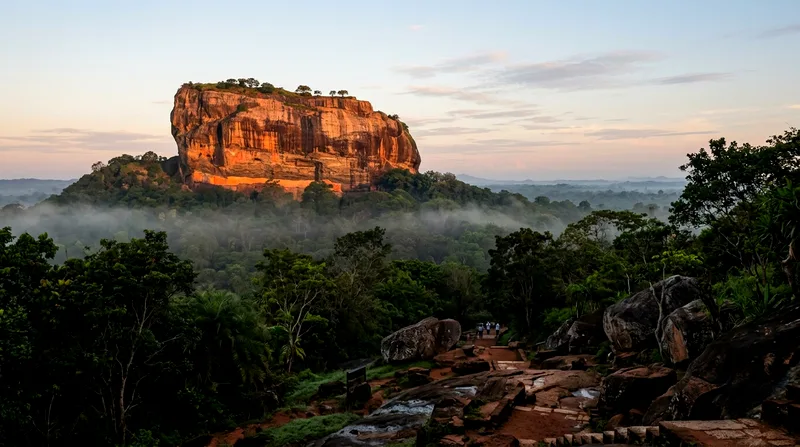
Sigiriya and Pidurangala sit roughly 2 km apart in Sri Lanka's Central Province, near the town of Dambulla. Most travellers planning a Cultural Triangle itinerary assume they're the same experience with two names — they're not. Sigiriya Rock, also called Lion Rock, is a UNESCO World Heritage Site and the ruins of a 5th-century palace complex built by King Kasyapa. Pidurangala is a working Buddhist temple and a rougher, free-climbing route up a neighboring rock that happens to have the best unobstructed view of Sigiriya anywhere in the area.
The decision isn't really "which rock is nicer" — it's "what do I want from my morning." If you want frescoes, water gardens, lion's paw stairs and genuine archaeology, that's Sigiriya. If you want a sweat-earned photo of Sigiriya glowing at dawn, with far fewer people around you, that's Pidurangala. A fair number of visitors do both on the same trip, spacing them across two mornings, and I'd argue that's the smartest move if your schedule allows it.
Sigiriya wins on history and easier footing, Pidurangala wins on cost and the best sunrise view of Sigiriya itself.
Sigiriya vs Pidurangala compared: cost, difficulty, time and best use
| Rock | Entrance Fee Level | Climb Difficulty | Time Needed | Best For |
|---|---|---|---|---|
| Sigiriya Rock | Higher | Strenuous but stepped, railed | 2-3 hours | History, frescoes, first-time visitors |
| Pidurangala Rock | Lower | Moderate, rough boulder scramble near top | 1.5-2 hours | Sunrise photos, budget travellers, fit hikers |
Typical figures based on general visitor experience; exact fees and opening times change, so check current prices and hours before you go.
Sigiriya Rock (Lion Rock) in brief
Sigiriya rises about 200 metres from the surrounding plain and is climbed via a formal staircase system with metal walkways, through the famous Lion's Paw entrance partway up. The site includes frescoes of the "Sigiriya damsels," the mirror wall with ancient graffiti, and moated water gardens at the base that are worth 30-40 minutes alone. It's a managed heritage site with ticket booths, signage and a TripAdvisor review count in the tens of thousands — this is Sri Lanka's most visited inland attraction, and it feels like it on a busy morning.
Pidurangala Rock in brief
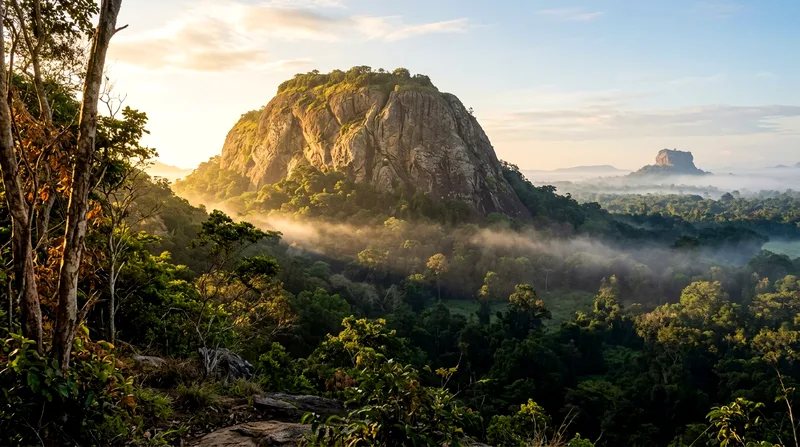
Pidurangala is a lower-key, lower-fee alternative that begins at a small temple at its base. The path starts as uneven steps through forest, then turns into a genuine boulder scramble over the final 10-15 minutes to the summit. There's a reclining Buddha statue partway up worth a look, but the real draw is the bare granite summit with a direct, camera-ready line of sight to Sigiriya across the jungle. It feels more like a hike than a heritage visit, and that's exactly its appeal for a certain kind of traveller.
Cost and Time Compared
Money and time are usually what decide this for people, so let's be blunt about both. Sigiriya's entrance fee is significantly higher than Pidurangala's — it sits in a different pricing tier altogether because it's a protected archaeological site with international-visitor pricing, similar in concept to how Angkor Wat or major Indian monuments price foreign tourists higher than domestic ones. Pidurangala charges a modest entry donation or small ticket fee at the temple, a fraction of Sigiriya's cost.
Time-wise, budget at least 2-3 hours for Sigiriya once you include the water gardens, the climb, the summit ruins, and the descent — longer if you linger over the frescoes or queue at the narrow staircase sections. Pidurangala is quicker end-to-end: most people are up and down within 90 minutes to 2 hours, including summit time, though the scramble near the top slows almost everyone down regardless of fitness.
Entrance fee level and extras
Sigiriya's ticket is one of the pricier single-site entries in Sri Lanka, and it's non-negotiable — there's no student or "quick look" discount for foreign visitors. That fee does buy you a lot: a UNESCO-listed site, a small on-site museum, and grounds that took serious labour to excavate and restore. Pidurangala's fee is far lower and goes toward temple upkeep rather than a heritage authority. If you're traveling as a family, remember Sigiriya's cost is typically per person with no family bundle, so a group of four adults feels the difference quickly compared to Pidurangala.
Climb duration and time needed
Don't assume Pidurangala is the "short" option just because it's cheaper — the final boulder section can take longer than expected if you're climbing in low light for sunrise, since you're moving carefully over smooth rock with only a rope handhold in places. Sigiriya's time sink is less about physical difficulty and more about queueing: the staircase near the Lion's Paw narrows to single file, and on a busy morning you can lose 15-20 minutes just waiting your turn to climb or descend.
Difficulty, Trail and Crowds
This is where the two climbs genuinely diverge, and where I'd push back on anyone calling them comparable in difficulty. Sigiriya is physically demanding because of the sheer number of steps — around 1,200 in total — but the surface underfoot is consistent: stone steps, then metal grated staircases bolted to the rock face with handrails throughout. It's strenuous, not technical. Pidurangala is shorter in step count but far rougher underfoot, finishing in a scramble over loose boulders with no formal railing on the last stretch.
Crowds behave differently too. Sigiriya draws large tour groups, especially from mid-morning once day-trippers arrive from Kandy or Dambulla hotels, and the central staircase becomes a bottleneck. Pidurangala pulls a smaller, more self-selecting crowd — mostly independent travellers and photographers up before dawn — so even at its busiest it rarely feels packed.
Stairs vs boulder scrambling
If you have knee problems, a fear of exposed heights, or you're traveling with young children, the stairs at Sigiriya are the safer structure even if there are more of them — handrails and grated metal steps are forgiving. Pidurangala's final scramble has no such infrastructure. It's not dangerous in dry weather for a reasonably fit adult, but it's genuinely unsuitable for small children, anyone unsteady on their feet, or hikers in flip-flops — and I see people attempt it in flip-flops more often than you'd expect.
Crowd levels and best times
Arrive at Sigiriya at gate-opening time, typically early morning, to beat both the heat and the tour buses — by mid-morning the staircase queues and the open rock face gets genuinely hot with no shade. Pidurangala's best time is pre-dawn, arriving in darkness with a headlamp so you're seated on the summit before first light. Weekends and school holiday periods thicken crowds at both, but Sigiriya feels the squeeze more because its paths are narrower relative to visitor volume.
Views, History and Sunrise
Here's the irony most first-time visitors miss: you cannot photograph Sigiriya properly from Sigiriya. From its own summit you look out over flat jungle and distant hills — pleasant, but not the iconic shot you've seen in every Sri Lanka brochure. That shot, the one with the rock rising solo above the tree line, is taken from Pidurangala. If a great photo matters to your trip, this single fact should drive your decision more than any other factor on this page.
Historically, though, Sigiriya is where the substance is. The rock functioned as a royal citadel and possibly a monastery both before and after Kasyapa's reign, and the frescoes, mirror wall graffiti, and symmetrical water gardens at its base are unmatched elsewhere in Sri Lanka — closer in cultural weight to climbing a temple mountain in Bagan, Myanmar than to a simple hike.
What you see from each summit
From Sigiriya's summit you get palace foundation ruins, a former throne carved into rock, and sweeping 360-degree views over the Cultural Triangle's flat plains and scattered reservoirs. It's historically rich but visually repetitive after the first ten minutes. From Pidurangala, the view is simpler but far more striking: Sigiriya itself, isolated and dramatic, framed by jungle, with Habarana's reservoirs visible on a clear day. One site gives you context; the other gives you the postcard.
Pidurangala sunrise vs Sigiriya sunrise
Sigiriya's opening time generally doesn't align with true sunrise, so chasing dawn light from its own summit usually isn't possible — you'll already be in daylight by the time you're up. Pidurangala has no such restriction; climbers with headlamps are often on the summit while it's still dark, waiting for first light to hit Sigiriya's rock face. That moment — the rock changing colour as the sun clears the horizon — is the single most photographed scene in this part of Sri Lanka, and it's only accessible from Pidurangala.
Which Rock Suits Which Traveller
Not every traveller type benefits equally here, and pretending otherwise would be dishonest. Families with young kids, senior travellers with joint issues, and anyone nervous about exposed heights should lean toward Sigiriya precisely because of its railed, graded staircase — slow and steady beats scrambling over granite in the dark. Solo travellers, surfers and anglers passing through the Cultural Triangle on a tight loop from the south coast, and photographers chasing that one specific shot, get more value per hour from Pidurangala.
Couples on a longer Sri Lanka itinerary — say, pairing this region with Ella's hiking trails or a wildlife safari in Yala — often have the luxury of doing both across two separate mornings, which I'd recommend if your schedule has the flexibility. European travellers used to well-maintained European hiking paths sometimes underestimate Pidurangala's scramble; it's not a groomed trail, and sturdy shoes aren't optional.
Budget travellers and seniors
Budget travellers should default to Pidurangala unless the historical content specifically matters to them — the fee difference is substantial, and you still get the better photograph. Seniors face a genuine trade-off: Sigiriya's stairs are long but structurally safer, with rest points and handrails throughout, while Pidurangala's final stretch demands hands-on scrambling that isn't realistic for most people over 65 with any mobility concerns. If in doubt, Sigiriya is the safer bet physically, even though it costs more.
Sunrise photographers and first-timers
If you're bringing a camera specifically for sunrise, Pidurangala is not optional — it's the only vantage point that delivers the shot you want. First-time visitors to Sri Lanka who only have one morning and want the fuller cultural story — Kasyapa's history, the frescoes, the scale of a 5th-century palace — should pick Sigiriya instead and accept they'll see that iconic silhouette only in other people's photos.
Verdict: Which Rock to Climb
If you can only do one, let the question decide it, not the hype: want history, ruins and an easier (if longer) staircase — climb Sigiriya. Want the iconic photo, a tougher scramble, and to spend less — climb Pidurangala at dawn. Compared with other big Asian "climb the landmark" moments — Borobudur in Indonesia, say, or a hill-temple scramble in Kerala — Sigiriya is the more polished, infrastructure-heavy experience, while Pidurangala is closer to an unmanaged trail hike that happens to end at a world-class view.
My honest take: if your itinerary has two mornings free near Dambulla, do Pidurangala for sunrise, rest through the heat of midday, then do Sigiriya itself the following day when the staircase is calmer. If you've only got one, and you're unsure, pick based on your knees and your camera — not on which one "everyone does."
Frequently asked questions
Is Pidurangala Rock worth it?
Yes, particularly for the view back at Sigiriya, which you can't get from Sigiriya itself. The entrance fee is modest and the climb takes under two hours round trip, including summit time. The trade-off is a rough, railing-free boulder scramble near the top, so it's not ideal for anyone unsteady on their feet or travelling with small children.
Which rock is better for sunrise?
Pidurangala, without question. Sigiriya's opening hours typically don't allow you to be on its summit before daylight, while Pidurangala has no such restriction, letting climbers reach the top in darkness and watch the sun hit Sigiriya's rock face from across the jungle.
Which hike is easier for seniors?
Sigiriya is the safer option for seniors despite being longer, because it's a graded staircase with handrails and rest points throughout. Pidurangala's final section is a hands-on boulder scramble with no railing, which is genuinely risky for anyone with balance or joint issues.
Which option is cheaper?
Pidurangala is significantly cheaper. Sigiriya's entrance fee is one of the higher single-site fees in Sri Lanka because it's a UNESCO-listed archaeological site, while Pidurangala's fee covers basic temple upkeep and is a fraction of that cost.
How long does it take to climb Pidurangala?
Most people take 1.5 to 2 hours round trip, including time on the summit. The lower section is a gradual forest path with steps; the final 10-15 minutes is a slower boulder scramble, which adds time regardless of your fitness level.