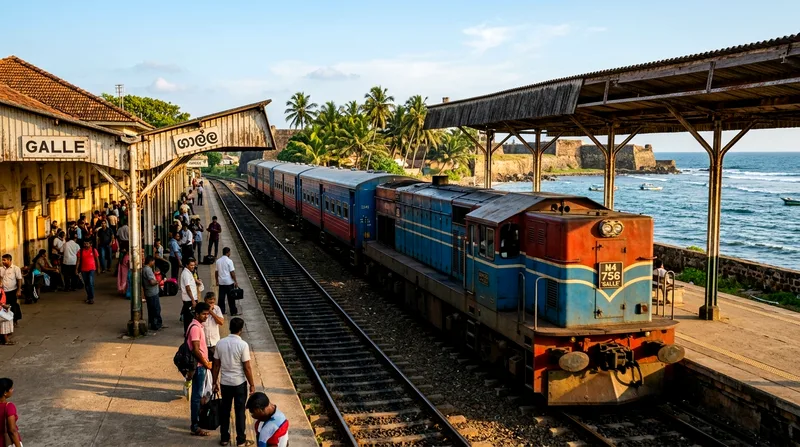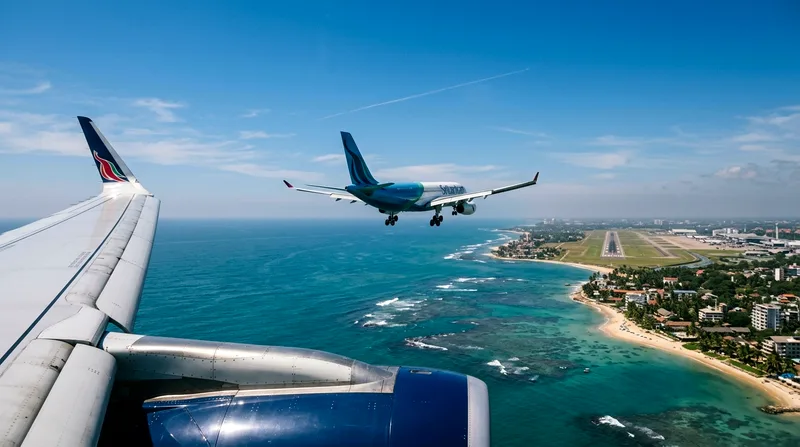
Plan how to get to Sri Lanka: flight hubs from Europe and Asia, the India ferry option, ETA entry steps and arrival-day transfers from Colombo airport.
How to Get to Sri Lanka
Here's the short answer: unless you're coming from South India, you'll fly into Bandaranaike International Airport near Colombo, almost certainly via a connecting flight through the Gulf, South or Southeast Asia. There's no direct route from the US, UK or mainland Europe — journey times run 10 to 16 hours door-to-door once you factor in the layover. From India, you have a genuine choice between a short flight and a newer ferry crossing, which is worth weighing properly rather than defaulting to the plane.
Working out how to get to Sri Lanka is really three separate decisions: which flight route and hub suits your starting point, whether you need the ETA before you fly (you do, for almost every nationality), and how you'll get from the airport to your hotel after a long-haul flight that typically lands in the evening or around midnight. Get those three sorted in advance and the rest of the trip — the transfers, the first night, the jet lag — goes a lot more smoothly. This guide walks through each one in order, booking to arrival.
Flying to Sri Lanka: Airports and Hubs
Sri Lanka has one airport that matters for international arrivals. There's a smaller airport near Mattala in the south that occasionally runs seasonal charters, but it's not a realistic option for planning purposes — ignore it unless a specific tour operator tells you otherwise. Everyone else lands at Bandaranaike.
Bandaranaike International Airport near Colombo
Bandaranaike International Airport (airport code CMB) sits in Katunayake, about 30-35 km north of central Colombo — roughly 45 minutes to an hour by road in light traffic, longer during the day. It's a mid-sized international airport, easy to navigate, with a single main terminal handling arrivals and departures. Immigration queues can run long when two or three wide-body flights land within an hour of each other, which happens often given how concentrated the Gulf carrier schedules are — budget up to an hour from touchdown to clearing immigration and baggage if you land during a busy window (early morning and late evening are the peak periods). SriLankan Airlines, the national carrier, operates out of CMB and runs a reasonable regional network alongside its long-haul partnerships, worth checking if you're already looking at Gulf or Indian connections.
Main connecting hubs in the Gulf and Southeast Asia
Three hub patterns dominate. Gulf carriers — Emirates via Dubai, Qatar Airways via Doha, Etihad via Abu Dhabi — offer some of the most frequent and often cheapest connections from Europe, Africa and parts of the Americas, usually with a layover of two to four hours. Singapore Airlines routes through Changi, a strong option if you're coming from Australia or combining Sri Lanka with a Southeast Asia leg — Bali or Vietnam, for instance, sit within a reasonable onward flight from Singapore. Thirdly, Indian hubs — Chennai, Bengaluru, Mumbai and Delhi's Indira Gandhi International Airport — connect well for anyone already in South Asia, with short hop times across the Palk Strait. I'd generally favor the Gulf routing for Europeans because the layovers are shorter and the frequency is higher, but if your dates are flexible, it's worth comparing all three — fares can swing by 20-30% between them depending on the week.
Getting to Sri Lanka from Europe and Asia
No European or North American city has a nonstop flight to Colombo at present — every booking involves at least one stop, and that shapes how you should search for fares.
Routes from the UK and Europe
From London, Frankfurt, Paris or Amsterdam, total travel time including a layover typically runs 12-15 hours. The Gulf carriers handle most of this traffic, with Emirates and Qatar Airways both running multiple daily flights into CMB from their hubs. SriLankan Airlines also flies a limited number of direct-ish services (technical stops aside) from London. Expect round-trip economy fares in the roughly €500-900 range outside peak season, climbing noticeably around Christmas and the European summer holidays. Use Skyscanner, Google Flights or Momondo to compare across carriers and dates in one pass — they're genuinely useful here because the fare spread between a Tuesday departure and a Saturday one can be substantial. I'd avoid booking anything with a layover under 90 minutes at a Gulf hub during peak season; those airports get busy and missed connections aren't rare.
Routes from Asia, Australia and North America
From the US or Canada, there's no way around at least one long layover — journeys from the US East Coast typically run 18-22 hours via Europe or the Gulf, and from the West Coast you're often better routing through Asia (Singapore or Hong Kong) instead. From Australia, Singapore Airlines and SriLankan both offer workable connections through Singapore, usually under 14 hours total. From elsewhere in Asia — Bangkok, Kuala Lumpur, Singapore itself — flights to Colombo run 3-4 hours direct in several cases, which makes Sri Lanka an easy add-on if you're already touring Thailand or doing a wider Southeast Asia loop. Compared to flying into Bali or Phuket, Colombo's flight network is thinner and fares tend to run a bit higher for the equivalent distance, simply because there's less competition on the route.
Sri Lanka from India: Flights and Ferry
India is the one place where Sri Lanka isn't primarily a flight destination — it's close enough that surface travel is a real option, and for some travellers, a better one.
Direct flights from Indian cities
Chennai is the shortest hop — around 1 hour in the air — with multiple daily flights on IndiGo, SriLankan Airlines and Air India. Bengaluru, Mumbai, Delhi (via Indira Gandhi International Airport) and Kochi also run direct or near-direct services, with flight times from 1.5 to 4 hours depending on the city. Fares from Chennai can be surprisingly cheap, sometimes under $60-80 one-way if booked a few weeks ahead, making this one of the best-value international routes in the region — cheaper, often, than a domestic Indian flight of similar distance. If you're already touring Kerala, a short flight from Kochi or Thiruvananthapuram to Colombo is a far more practical add-on than trying to loop back through Delhi.
The India to Sri Lanka ferry crossing
A passenger ferry service has operated intermittently between Nagapattinam in Tamil Nadu and Kankesanthurai near Jaffna, reviving a crossing route that had been suspended for decades. Crossing time runs around 3-4 hours. This is genuinely novel if you want to arrive in Sri Lanka by sea rather than air, and it lands you in the north, near Jaffna, rather than near Colombo — useful if your itinerary starts there, less so if you're headed straight for the south coast beaches. Schedules and frequency have been inconsistent since relaunch, so treat the ferry as an interesting option rather than a dependable primary plan — check current sailing days directly before building an itinerary around it, and have a backup flight in mind. Don't assume it runs daily; it often doesn't.
Sri Lanka ETA and Entry Requirements
Nearly every nationality needs an Electronic Travel Authorization (ETA) to enter Sri Lanka — it functions as a visa substitute for short tourist stays, typically valid for 30 days and extendable. A small number of countries have different arrangements, so check your specific nationality on the official ETA portal rather than assuming.
Most travellers will fly into Bandaranaike via a Gulf or Asian hub, while those starting in India can choose between a short flight and the newer ferry.
How to get to Sri Lanka: route options compared by time, cost and entry point
| Route | Typical travel time | Approx. cost range | Entry point | Best for |
|---|---|---|---|---|
| Europe via Gulf hub | 12-15 hrs total | €500-900 round-trip | Bandaranaike (Colombo) | Most European travellers |
| Europe via Singapore | 15-18 hrs total | €600-1000 round-trip | Bandaranaike (Colombo) | Combining with Southeast Asia |
| Chennai direct flight | approx. 1 hr | $60-150 one-way | Bandaranaike (Colombo) | Short, cheap hop from South India |
| Delhi via Indira Gandhi Int'l | 3.5-4 hrs | $100-250 one-way | Bandaranaike (Colombo) | North India travellers |
| Nagapattinam-Kankesanthurai ferry | 3-4 hrs crossing | Moderate, check current fare | Kankesanthurai (near Jaffna) | North-first itineraries, novelty crossing |
| US East Coast via Europe/Gulf | 18-22 hrs total | $900-1500 round-trip | Bandaranaike (Colombo) | Long-haul travellers with flexible dates |
Figures are typical ranges for planning only; always check current fares and ferry schedules before booking.
How to apply for the ETA step by step
Apply online through the official Sri Lanka ETA website — not a third-party site, several of which charge inflated service fees for the same form. You'll need your passport details, a return or onward flight reference, and a payment card. The form takes about 10-15 minutes, and approval emails typically arrive within 24 hours, though it can take longer during busy periods, so apply at least a few days before departure rather than at the airport gate. Print the approval or save it on your phone — immigration officers at Bandaranaike will ask to see it alongside your passport. Double-check the spelling of your name against your passport exactly; mismatches are the most common reason for delays or rejected applications.
Passport validity, documents and travel insurance
Your passport needs at least six months' validity from your date of arrival. Immigration will also want evidence of onward travel — a return flight is usually sufficient — and may occasionally ask about accommodation, though this is rarely enforced strictly for tourists on established itineraries. Travel insurance isn't currently a strict entry requirement, but given the inconsistent mobile coverage in hill country and the cost of medical evacuation from remote areas, skipping it is a bad idea. Build the ETA fee and insurance into your trip budget from the start — they're small costs compared to flights but easy to forget until the last minute.
Arrival Day: Airport to Your First Stop
A lot of long-haul flights from Europe and the Gulf land at Bandaranaike between 9pm and 2am, which catches first-time visitors off guard. Plan for this rather than being surprised by it.
Pre-booked transfers, taxis and trains from Colombo airport
Arriving at midnight in an unfamiliar country is not the moment to start haggling with touts in the arrivals hall — book a transfer in advance. Most hotels and tour operators can arrange a driver to meet you with a name board; expect to pay roughly $25-40 for a car to central Colombo, more for the south coast (Galle or Mirissa can run 2.5-3 hours by road) or the hill country. Metered taxi apps work from the airport too, though signal and driver availability can be patchy late at night. A rail line connects Katunayake to Colombo Fort, but it's not set up for arriving international passengers with luggage at odd hours — it's a daytime convenience, not an arrival-night solution. If you're heading straight into the hills or south coast, factor the transfer time into your first night's plans; don't book a 6am excursion for the day you land. This is also the point where it makes sense to look at a pre-arranged Sri Lanka tour or itinerary that bundles the airport transfer with the first few days — it removes one decision from a tired traveller's plate.
When to Book and Seasonal Considerations
Sri Lanka's two monsoon systems mean the "best" time to fly in depends partly on which coast you're heading to — the southwest gets its wet season roughly May to September, the northeast roughly October to January.
Cheaper travel months and monsoon timing
Flights tend to be cheapest in the shoulder months — April-May and September-October — when fares from Europe can drop noticeably below the December-March peak, when direct demand for the west and south coast beaches spikes. Booking 2-3 months ahead generally gets better fares than last-minute searches, though Gulf carriers occasionally run short-notice promotions worth catching on Skyscanner or Google Flights if your dates are flexible. Compare this to Bali or Thailand, where flight prices are less seasonally volatile because of denser route networks — Sri Lanka's thinner capacity means seasonal swings hit harder. If budget matters more than timing, flying in during the wetter southwest season but basing yourself on the drier east coast around Trincomalee or Arugam Bay is a reasonable trade-off many travellers don't consider.
Booking Checklist for Getting to Sri Lanka
To recap the order of operations: book a flight into Bandaranaike International Airport, routing through whichever hub — Dubai, Doha, Singapore, or an Indian city — gives you the best combination of price and layover length. Apply for your ETA online at least a few days before departure, and keep the approval accessible on your phone. Arrange your airport transfer before you land, not after. From there, you're set up to start the actual trip — whether that's a south coast surf run, a hill country rail journey, or a longer multi-stop itinerary. Browse Sri Lanka tour and itinerary options and compare airport transfer providers before you book your flights, so the whole trip — not just the arrival — is sorted in one pass.
Frequently asked questions
What is the best way to get to Sri Lanka?
For almost everyone outside India, flying into Bandaranaike International Airport via a Gulf hub (Dubai, Doha, Abu Dhabi) or Singapore is the most practical route — frequent schedules, competitive fares, and manageable layover times. From India, a short direct flight from Chennai or another South Indian city is usually faster and cheaper than you'd expect, often under 1.5 hours in the air.
Which airport do you fly into in Sri Lanka?
Bandaranaike International Airport (CMB), in Katunayake about 30-35 km north of Colombo, handles essentially all international arrivals. A smaller airport near Mattala exists but isn't used for regular scheduled international flights, so don't plan around it.
Can you fly direct to Sri Lanka from the US?
No — there's currently no nonstop flight between the US and Sri Lanka. You'll connect through a Gulf hub (Dubai, Doha, Abu Dhabi), Europe, or an Asian hub like Singapore, with total journey times typically 18-22 hours depending on your departure city and layover.
How do I get to Sri Lanka from India?
Direct flights from Chennai, Bengaluru, Mumbai, Delhi and Kochi all connect to Colombo, with Chennai the shortest at around 1 hour and often the cheapest. A passenger ferry also runs between Nagapattinam and Kankesanthurai near Jaffna, taking 3-4 hours, though schedules have been inconsistent since it relaunched — check current sailing status before relying on it.
Do I need an ETA to enter Sri Lanka?
Yes, almost all nationalities need an Electronic Travel Authorization before arrival. Apply on the official ETA website, not a third-party site, using your passport details and an onward travel reference. Approval usually arrives within 24 hours, but apply a few days ahead to be safe, and keep your passport valid for at least six months from arrival.