Cooking class or food tour in Sri Lanka? Compare time, cost level, variety and family-friendliness to choose the best food experience for your trip.
Cooking Class vs Food Tour at a Glance
Sri Lanka's food culture rewards two very different approaches, and the choice between a cooking class and a food tour really comes down to what you want to leave with — a skill, or a stomach full of new flavours. Both can be booked in Colombo, Kandy or Galle, and both usually run for half a day or less, but the experience inside those hours is not interchangeable.
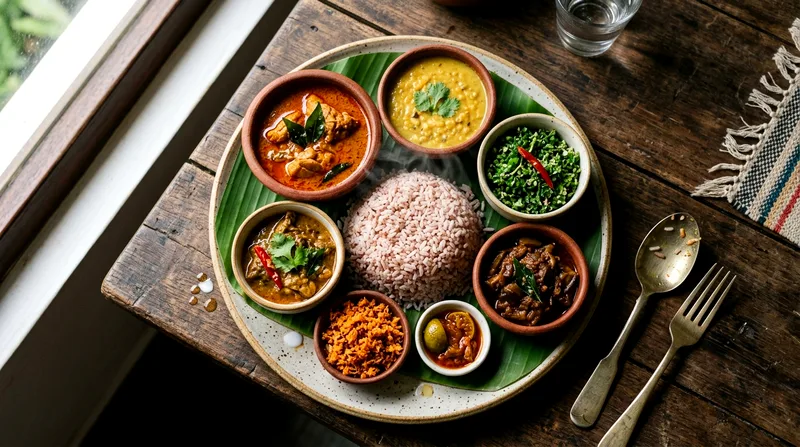
A cooking class is sit-down, hands-on and single-location. A food tour is mobile, grazing and multi-stop. If you've done a Thai cooking class in Chiang Mai or a street food crawl in Bangkok, the Sri Lankan versions follow a similar logic, just built around rice and curry, hoppers and kottu instead of pad thai and som tam. The decision matters more here than in, say, Vietnam, because Sri Lankan home cooking — the spice tempering, the coconut sambol, the slow-cooked dhal — is harder to recreate at home without seeing it done once in person.
A cooking class suits travellers who want a skill and a sit-down meal, while a food tour suits travellers who want variety and pace.
Sri Lanka cooking class vs food tour compared by time, cost and suitability
| Experience | Typical Duration | Cost Level | Physical Effort | Best For |
|---|---|---|---|---|
| Home-style cooking class | 2–4 hours | Medium | Low (seated/standing in one place) | Couples, families with time, hands-on learners |
| Street food walking tour | 2–4 hours | Low to Medium | Medium (walking, standing, heat) | Solo travellers, foodies, short stays |
| Market-to-kitchen combo class | 3–5 hours | Medium to High | Low to Medium | Serious cooks, longer stays |
| Tuk-tuk food tour | 2–3 hours | Medium | Low (seated transport between stops) | Senior travellers, families with young kids |
| Multi-day culinary itinerary | Across 2–3 days | High | Varies | World travellers combining Colombo, Kandy, Galle |
Cost levels and durations are typical ranges; always check current prices and group sizes before you book.
What a Sri Lankan cooking class involves
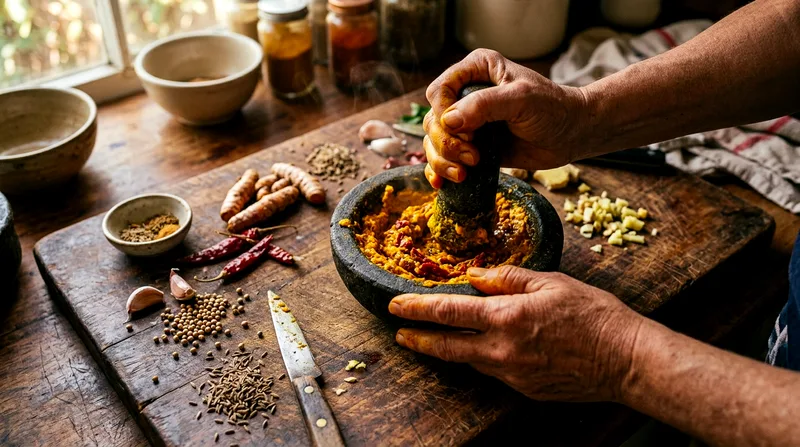
A typical class runs two to four hours, often in a home kitchen or small culinary school attached to a guesthouse. You'll usually start with a market or garden walk to see spices and vegetables before cooking, then move through four or five dishes — commonly a vegetable curry, dhal, a coconut sambol, rice, and sometimes a hopper or roti cooked fresh on a griddle. Groups tend to be small, often under ten people, and you eat everything you cook at the end as a shared meal. Expect to get your hands genuinely dirty: grating coconut, grinding spices on a stone, folding a hopper batter.
What a food tour involves
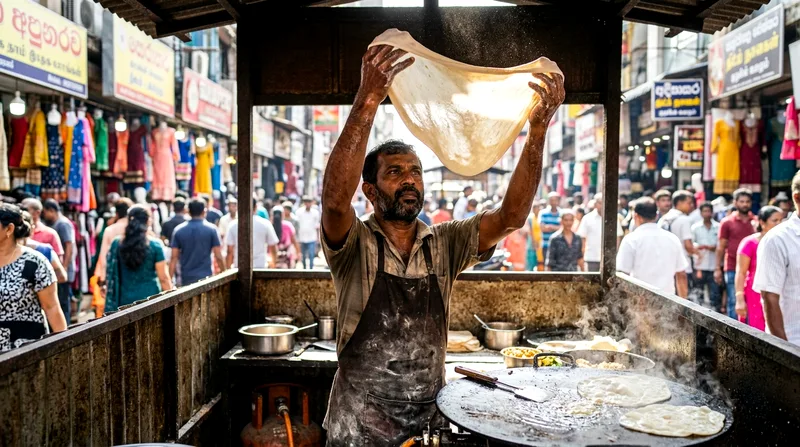
A food tour is a guided walk or tuk-tuk ride between four to eight stops — street stalls, small eateries, a market, occasionally a spice shop — over two to four hours, usually in the evening when street food vendors are busiest. You taste rather than cook: a kottu roti chopped on a hot plate in front of you, hoppers with lunu miris, maybe isso wade (prawn fritters) near the coast in Galle or Negombo. The guide explains what you're eating and why, and fills in context on where ingredients come from and how dishes vary between Tamil, Sinhalese and Muslim culinary traditions. You don't cook anything, but you cover more ground and more dishes per hour than a class allows.
Time and Effort Compared
Neither experience demands a full day, which is one reason both slot easily into a Sri Lanka itinerary that also includes temples, tea estates or beach time. But how that time feels on the ground differs a lot.
Duration and pacing
A cooking class is slower by design — you're waiting for curries to simmer, dhal to thicken, hoppers to set in the pan. Expect genuine downtime between steps, which some travellers enjoy as a chance to chat with the host, and others find a bit long if they were hoping for something brisker. A food tour moves in short bursts: ten minutes at one stall, a walk to the next, repeat. It suits people who get restless sitting in one kitchen for three hours. If you only have an evening free in Galle before an early departure, the food tour fits the window better.
Walking, heat and physical effort
Food tours in Colombo or Kandy often happen on foot through markets and narrow lanes, sometimes in humid evening heat that can tire out older travellers or small children faster than expected. Tuk-tuk based tours reduce this considerably and are worth asking about if mobility or stamina is a concern. Cooking classes, by contrast, mostly happen standing at one counter or seated at a table — far easier on the legs, though kitchens can run hot near the stove, which matters if you're sensitive to heat.
Cost Level and Value
Price ranges for both experiences sit in similar territory across Sri Lanka — generally lower than a comparable cooking class in Bali or a guided food tour in a major Thai city, partly because labour and market costs are lower. That said, "cheap" isn't always "better value," and what you actually get for the money differs in kind, not just amount.
What typically drives the price
For cooking classes, price usually scales with group size, whether a market visit is included, and whether the venue is a private home versus a dedicated cooking school. Smaller, private classes cost more per person but give you more one-on-one instruction. For food tours, price tends to track the number of stops, whether transport (tuk-tuk or van) is included, and how central the tour operates — a Colombo evening tour through Pettah market generally costs less than a tour bundled with hotel pickup from outside the city.
Skills you keep vs tastings you get
This is the real value question. A cooking class leaves you with a recipe you can repeat at home — rice and curry, a sambol, maybe a hopper technique — and that's worth more to some travellers than the meal itself. A food tour leaves you with no recipe, but you'll likely taste six or seven dishes you'd never order correctly on your own, including things a menu wouldn't translate well, like specific kottu styles or regional sambols. If you already cook Sri Lankan food at home, skip the class and spend the money on the tour instead.
Variety, Authenticity and Family-Friendliness
Authenticity isn't really the dividing line here — both formats, booked through a reasonable local host, deliver real Sri Lankan food rather than a tourist-adjusted version. The real difference is breadth versus depth, and how well each handles kids and dietary restrictions.
Dishes and flavours covered
A cooking class usually covers four to six dishes in real depth — you'll understand how the curry powder is tempered in oil, how coconut milk is extracted, why dhal gets a tadka of mustard seeds and curry leaves at the end. A food tour covers more ground but shallower: you might try hoppers, kottu, isso wade, string hoppers, and a sweet like kokis or watalappan, all in one evening, without seeing any of it made from scratch. If your interest is Sri Lankan spices specifically — how cinnamon, cardamom and curry leaves get used differently from Indian or Thai cooking — the class format teaches that far better.
Kids, dietary needs and spice levels
Families generally do better with a cooking class, because it's contained — one location, bathroom access, food made to order, and spice levels can be adjusted dish by dish for children. Street food tours involve more walking, more unfamiliar smells and textures in quick succession, and less control over how spicy something arrives, which can be a problem with younger kids. Vegetarians and those avoiding seafood or specific meats are usually well served by either format, since rice and curry spreads lean heavily vegetable- and lentil-based already, but always flag allergies to the host or guide in advance rather than assuming they'll ask.
Who Should Pick Which
There's no universally correct answer, which is exactly why this comparison matters more than it would for, say, choosing between two beaches. It depends on your travel style, your group, and how much time you've allotted to food on this trip.
Best for foodies, couples and solo travellers
If you're travelling solo or as a couple with a genuine interest in cooking, book the class. You'll get more attention from the host, more chance to ask questions about Sri Lankan spices and technique, and a dish you can cook again at home — which, frankly, is more memorable six months later than a street food crawl you can barely itemise. Solo travellers specifically tend to enjoy the class format because it's an easy way to meet other travellers around a shared table, something a moving food tour doesn't always allow.
Best for families, short stays and first-timers
If you're on a tight itinerary — one night in Galle, a day trip through Kandy — or travelling with young children, the food tour or a shorter tuk-tuk-based version generally fits better around nap times and transfers. First-timers to Sri Lankan food who aren't sure what they like should also lean toward the tour: tasting six dishes in small portions is a cheaper, lower-commitment way to find out you love kottu and could do without watalappan, compared to spending three hours cooking a full meal around dishes you might not enjoy.
Verdict: Which to Book
Choose a cooking class to take Sri Lankan flavours home, choose a food tour for broad tasting in less time, or combine both if your itinerary allows — a class in Kandy early in the trip, a street food tour in Colombo near the end, works well precisely because they don't overlap. Avoid stacking either experience onto a day that already includes a long drive or a temple visit in full sun; both are better enjoyed with some energy left, not as an afterthought squeezed in before a 6am departure. For a wider look at how food experiences fit into a Sri Lanka trip alongside tea country, beaches and wildlife, the main Sri Lanka travel guide is worth checking before you lock in dates.
Frequently asked questions
Is a cooking class or a food tour better in Sri Lanka?
Neither is universally better — a cooking class is better for learning technique and getting a recipe you'll use again, while a food tour is better for tasting widely in a short window. Pick based on how much time you have and whether you'd rather cook or graze.
Are Sri Lanka cooking classes suitable for kids?
Yes, generally more suitable than a street food tour. Classes happen in one location with bathroom access and food made fresh, so spice levels can be adjusted dish by dish. Confirm with the host beforehand that children are welcome, since some home-kitchen classes are set up mainly for adults.
Is street food on a Sri Lanka food tour safe to eat?
Reputable guided tours choose stalls with high turnover and visible cooking, which is generally safer than random street eating alone. Stick to food cooked to order and hot, avoid anything sitting out at room temperature, and carry basic rehydration sachets just in case, as you would in Thailand or Vietnam.
Can vegetarians join a Sri Lankan cooking class or food tour?
Yes, easily. Rice and curry meals are naturally vegetable- and lentil-heavy, and most hosts or guides can build a mostly vegetarian version without much adjustment. Mention dietary needs when booking rather than on arrival, especially for food tours with pre-arranged stall stops.
How long does a typical Sri Lankan cooking class or food tour take?
Most cooking classes run two to four hours including a short market or garden visit, while food tours run two to four hours covering four to eight stops. Multi-day culinary itineraries combining Colombo, Kandy and Galle exist for travellers who want a deeper dive across regions.