Plan a Sri Lanka spice garden tour without the hard sell. Learn what to expect in Matale, how to spot scams, and how to visit gardens that stay honest.
What a Sri Lanka Spice Garden Tour Offers
The pattern is familiar to anyone who has driven the road between Kandy and Dambulla: a smiling guide waves you in for a "free" walk through a garden, talks you through a dozen plants with real enthusiasm, and then steers you toward a shop stacked with oils, balms and vacuum-packed cinnamon sticks. A Sri Lanka spice garden tour is genuinely educational — this is one of the few places where you'll see cardamom, pepper, nutmeg, cocoa and Ceylon cinnamon growing side by side — but it's also a retail funnel, and pretending otherwise sets you up for frustration.
Most gardens sit around Matale, a town about 25 minutes north of Kandy on the A9 highway, where the hill climate and red soil happen to suit a wide range of tropical spices. The gardens themselves are usually family-run plots of one to three acres, planted with labeled specimens arranged along a walking loop. Guides are typically paid partly on commission from sales, which explains the enthusiasm — and the eventual pitch.
Treat the walk as the main event and the shop as optional, and you'll leave satisfied either way.
Spices You Will See and Taste
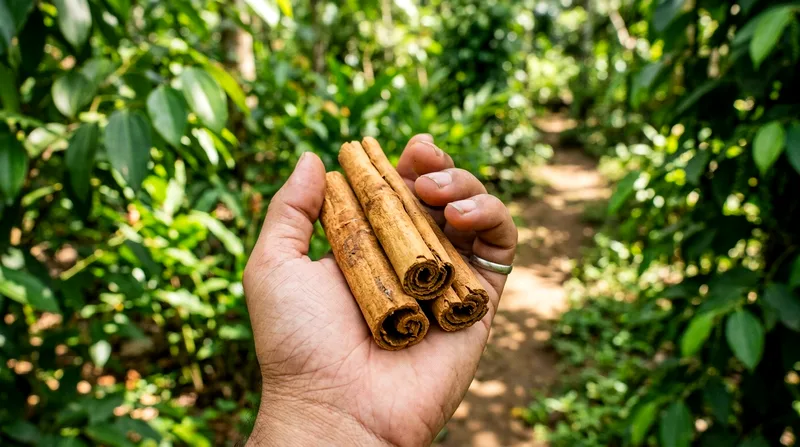
Expect to see cinnamon trees with bark freshly peeled to show the inner layer, pepper vines climbing support trees, cardamom growing low to the ground in clustered pods, nutmeg fruit split open to reveal the red mace coating, vanilla orchids, cloves, turmeric and ginger roots, and cocoa pods growing directly from the trunk. Most gardens also grow aloe vera and a handful of medicinal herbs used in Ayurvedic preparations. Tastings usually include a herbal tea, sometimes a small sample of cinnamon-infused coffee, and a chance to rub crushed leaves between your fingers to smell cloves, curry leaf or citronella. It's a sensory walk more than a lecture, and kids tend to enjoy it more than adults expect.
Typical Tour Flow and Duration
A standard visit runs 30 to 45 minutes: a guided walk through the planted rows, a stop at a demonstration table where someone peels cinnamon bark or crushes seeds for oil, then a herbal tea or tasting, followed by the shop. If you're visiting independently and specifically ask for a shorter walk, most guides will happily oblige — they'd still rather show you the garden than have you leave at the gate. Larger operations near Matale sometimes pad the visit to an hour with extra product demonstrations, which is your cue that the sales section is coming.
Which Spice Gardens Are Worth Visiting
Not all gardens are equal, and the difference usually comes down to how much the place leans on sales pressure versus genuine horticultural interest. The National Spice Garden of Sri Lanka, near Matale, is often cited as one of the more established options — larger plantings, clearer labeling, and a somewhat calmer sales approach than the smaller roadside operations. That said, "national" in the name doesn't mean government-run; it's a private garden using a name that sounds official, which is worth knowing going in.
Matale Herbal & Spice Garden and Surathura tend to get the best marks for a relaxed pace, while larger operations push harder on sales.
Best spice gardens in Sri Lanka compared for visitors near Matale
| Garden | Typical Visit Length | Sales Pressure (reported) | Best For |
|---|---|---|---|
| National Spice Garden of Sri Lanka | 40-45 min | Moderate | Wider variety, clearer labeling |
| Matale Herbal & Spice Garden | 30-40 min | Low to moderate | Relaxed pace, good for families |
| Surathura Spice Garden | 30 min | Low | Quieter, smaller groups |
| Susantha Spice & Herbal Garden | 30-40 min | Varies by guide | Friendly guides, check recent reviews |
| Warala Watta Farm | 30-45 min | Low | Working farm feel, less staged |
Visit lengths and sales pressure are based on commonly reported traveler experience and can vary by guide and season — check current reviews before choosing.
Matale Spice Gardens Compared
Among the Matale cluster, visitor reports consistently rank a few names: Matale Herbal & Spice Garden, Surathura Spice Garden, and Susantha Spice & Herbal Garden. Matale Herbal & Spice Garden tends to get credit for a more relaxed pace and a wider variety of plants per square meter. Surathura is smaller and often quieter, which some travelers prefer precisely because the sales pitch feels less rehearsed. Susantha's garden shows up often in traveler reviews for friendly, lower-pressure guides, though experiences vary by which staff member you get on a given day — check recent reviews on TripAdvisor before committing, since these are small family operations where service quality can shift.
Gardens Beyond Matale
Warala Watta Farm, also near Matale, is a working farm rather than a purely tourist-facing garden, and some visitors find that distinction makes the visit feel more authentic — you're seeing spices grown for actual sale, not just for demonstration. Outside the Matale area, smaller spice patches turn up near Sigiriya and in the hill country around Kandy, often attached to guesthouses or as an add-on stop on three-wheeler tours. These tend to be less polished but also less commission-driven, since the guide isn't necessarily working on a cut of the shop's sales.
Spice Garden Scams and Red Flags
"Spice garden scam Sri Lanka" is a genuinely common search for a reason. The core issue isn't that the gardens are fake — the plants are real and the demonstrations are usually accurate — it's that pricing in the shop can be wildly inflated compared to what you'd pay in a Kandy or Colombo supermarket for the same cinnamon or pepper. Tuk-tuk drivers sometimes get a commission for dropping tourists at a particular garden, which is why your driver might insist a stop is "on the way" when it clearly involves a detour.
Common Hard-Sell Tactics
Watch for guides who frame products as medical cures — claims that a particular oil treats arthritis, baldness or diabetes should be treated with skepticism, however warmly they're delivered. Another tactic is bundling: you're shown a small, reasonably priced item, then the actual sale pushes a much larger, pricier set "for the family." Some gardens also apply gentle social pressure by having staff wrap and bag items before you've agreed to buy, making it awkward to back out. None of this makes the garden a total scam, but it does mean you should decide your spending limit before you arrive, not during the pitch.
How to Say No Politely
A simple, firm line works better than vague hesitation: "I'm not buying today, but I'd like to see the garden." Repeating it calmly, without apologizing excessively, tends to shut down further pressure faster than a soft "maybe later." If a guide keeps pushing after a clear no, it's reasonable to end the visit and walk back to your vehicle — a legitimate garden won't block your exit, but a very aggressive one might make you feel like it should.
Independent Visit or Guided Tour
You can simply drive or tuk-tuk to a Matale spice garden and pay the entry or "donation" at the gate, which is how most independent travelers do it. The upside is flexibility — you choose the garden based on current reviews rather than a driver's commission arrangement. The downside is you're on your own for vetting the place, and a bad experience at a pushy garden can sour an otherwise good day near Sigiriya or Dambulla.
Booking a half-day Matale spice garden tour through a platform like GetYourGuide, or including it as a stop on a multi-day itinerary with an operator like G Adventures, generally guarantees a pre-vetted garden and a guide held to some service standard, since repeat business depends on traveler satisfaction. It usually costs more than walking in independently, but you trade that for predictability.
Booking Directly vs Through Platforms
Booking directly with a garden — by phone, through a hotel desk, or just showing up — is cheaper and more spontaneous, but you're relying on word of mouth or a quick TripAdvisor check in the car. Platforms add a layer of accountability: reviews are tied to a specific listing, refund policies exist if the tour doesn't match the description, and the itinerary is usually bundled with other Matale or Kandy stops so you're not paying for a separate taxi detour. If you're already booking a Sigiriya or Dambulla day tour, ask whether a spice garden stop is included — it often is, at no extra cost beyond the optional shopping.
Entry, Costs and Buying Spices Fairly
Spice garden tour cost varies a lot by garden and by how you arrive. Many gardens don't charge a fixed entry fee at all — they operate on a "free tour, optional purchase" model, while others charge a small entrance fee that's waived or discounted if you buy something. Rather than quoting a figure that will be outdated or inconsistent garden to garden, ask directly at the gate what's included before the guide starts walking: is the tea included, is there an entry charge, and is the walk the same length whether or not you buy anything.
What Is Usually Included
Expect the walking tour, the plant identification, at least one demonstration (usually cinnamon peeling or oil extraction), and a tea or juice tasting to be included regardless of purchase. What's not included, and what forms the actual revenue for the garden, is the shop at the end — oils, balms, packaged spices, soaps and sometimes clothing or jewelry made from local materials. If a guide implies the walk itself is conditional on buying, that's unusual and worth pushing back on.
Smart Shopping Tips for Spice Products
If you do want to buy Ceylon cinnamon — genuinely one of Sri Lanka's best exports, and distinct from the cheaper cassia cinnamon sold in most Western supermarkets — check the packaging for an origin label and compare the quill thickness; true Ceylon cinnamon rolls into thin, papery layers rather than one thick curl. Prices at tourist gardens tend to run higher than in a Kandy market or supermarket like Cargills, so if you're not in a hurry, note the product name and buy it later in town. Buying a small amount on the spot as a souvenir is reasonable; buying a large "family pack" under pressure usually isn't.
Best Time to Visit and Nearby Stops
Spice gardens work as a year-round activity since most of the walk is under tree cover, which matters in a region that gets genuinely hot by late morning.
Seasonal Considerations
Early morning visits, before 10am, avoid both the worst heat and the bulk of tour-bus traffic coming from Kandy or Sigiriya. The Matale area sits in a drier zone than the hill country further south, so rain is less of a planning concern, though the November-to-January monsoon tail can bring short afternoon showers. Visiting outside peak tourist season — avoiding the December-to-March high season crowds — generally means more relaxed guides with more time per group, since they're not rushing between successive minivan loads of visitors.
Pairing with Dambulla, Sigiriya or Kandy
Matale sits almost exactly between Kandy and Dambulla/Sigiriya, which makes a spice garden a natural stop on the drive rather than a dedicated day trip. If you're climbing Sigiriya Rock or touring the Dambulla Cave Temple in the morning, a spice garden fits neatly into the afternoon leg back toward Kandy, before you tackle the Temple of the Tooth or an evening cultural show. Trying to treat it as a standalone destination worth a special trip from Kandy is probably overkill — 30 to 45 minutes doesn't justify a dedicated half-day unless you're combining it with other Matale-area stops like a local market.
Frequently asked questions
What are the best spice gardens to visit in Sri Lanka?
Most of the well-regarded gardens cluster around Matale, between Kandy and Dambulla. Matale Herbal & Spice Garden, Surathura Spice Garden and the National Spice Garden of Sri Lanka are the names that come up most often in traveler reviews for a reasonable balance of informative walks and manageable sales pressure. Check TripAdvisor for recent comments, since quality depends heavily on which guide you get that day.
Are spice gardens in Sri Lanka tourist traps?
Partly, yes — the plants and demonstrations are real, but the business model relies on commission-based sales, and shop prices are often higher than you'd pay in a Kandy supermarket. That's not the same as a scam, but it does mean you should go in treating the shop as optional and set a spending limit before the tour starts.
How long does a spice garden tour take?
A typical visit runs 30 to 45 minutes, including the garden walk, a demonstration like cinnamon peeling, and a tea or herbal tasting. The shop visit afterward can extend this if you engage with the sales pitch, so budget an hour total if you're pairing it with other Matale-area stops.
What spices can you see at Sri Lankan spice gardens?
Expect Ceylon cinnamon, black pepper vines, cardamom, nutmeg with its mace coating, cloves, vanilla orchids, turmeric, ginger and cocoa pods growing on the trunk. Most gardens also grow aloe vera and a few Ayurvedic herbs used in local medicine, which guides will point out even if you're not buying.
Is the National Spice Garden worth visiting?
It's generally considered one of the more established options near Matale, with a wider range of labeled plantings than some smaller roadside gardens. The name suggests government backing, but it's a private operation — still worth a stop, just don't expect it to be meaningfully different in sales approach from its competitors.