Plan your Temple of the Tooth Kandy visit: how to get tickets, when to arrive for the drumming puja, what to wear and how to behave respectfully.
What the Temple of the Tooth Is
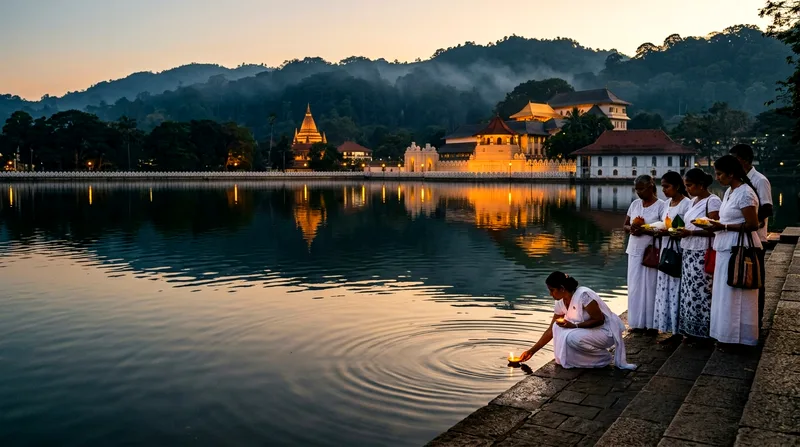
Drums start somewhere inside the complex before you've even reached the gate, and the smell of frangipani offerings carries across the moat. The Temple of the Tooth — known locally as Sri Dalada Maligawa — sits on the edge of Kandy Lake in the Central Province, and it's the most important Buddhist site in Sri Lanka, visited daily by pilgrims in white and by travelers from Colombo, Galle and well beyond.
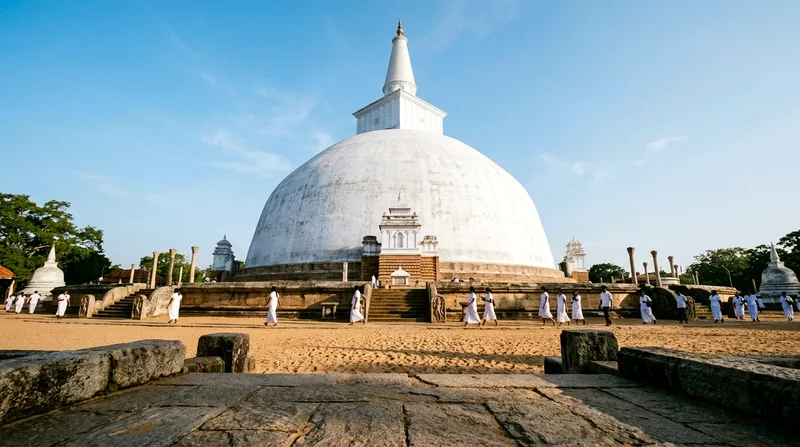
The temple forms part of the Sacred City of Kandy, a UNESCO World Heritage site inscribed in 1988, which also covers the old royal palace complex surrounding it. Unlike Angkor Wat in Cambodia or the temples of Chiang Mai in Thailand, this isn't a ruin — it's a working royal-era temple still central to religious and civic life, with ceremonies held every single day of the year.
The sacred tooth relic and UNESCO status
The temple houses what Buddhists believe is a tooth relic of Gautama Buddha, brought to Sri Lanka in the fourth century and moved between capitals before settling in Kandy in the sixteenth century. The relic itself is kept inside a gold casket within a shrine room — you won't see the tooth directly, and that surprises a lot of first-time visitors who expect something more visible. What you do see is the ceremony and the shrine room exterior, which is enough to understand why the site carries the weight it does.
Why it matters to Sri Lankan Buddhists
Historically, possession of the tooth relic was tied to the right to rule — Sinhalese kings who held it were considered legitimate sovereigns, which is part of why the temple sits directly inside the old royal palace grounds rather than off on its own. For many Sri Lankans, a visit here isn't tourism; it's pilgrimage. That distinction matters for how you behave once inside, and it's worth remembering if you're used to more casual temple visits in Bali or Kerala.
Visiting Independently or With a Guide
Most visitors do this independently, and it's genuinely easy to do so. The temple is self-explanatory enough once you're inside, and the ceremonies run on a fixed daily pattern that doesn't require a guide to interpret.
Getting to the temple from Kandy town
If you're staying anywhere in central Kandy, it's a 10-15 minute walk around Kandy Lake to the temple entrance. A tuk-tuk from the clock tower or railway station costs a small, negotiable fare — agree the price before getting in, as meters aren't standard. If you're coming from Nuwara Eliya or Sigiriya as a day trip, factor in 1.5-3 hours of driving each way plus temple time, which makes an overnight stay in Kandy the more comfortable option rather than a rushed there-and-back.
When a guided tour adds value
A guide earns their fee in two situations: if you want the historical and religious context explained properly rather than pieced together from signage, or if you're visiting during a festival period like Esala Perahera when crowd management becomes genuinely difficult. Outside of that, paying for a packaged "Kandy city tour" that bundles the temple with a cultural dance show and a gem shop stop often means less time at the temple itself and a detour to a commission-paying souvenir stop. If culture and context are what you want, hire an independent licensed guide at the entrance instead of booking a bundled tour — you'll get more flexibility on timing.
Tickets and Entry at Sri Dalada Maligawa
Entry for foreign visitors requires a paid ticket, while Sri Lankan nationals typically enter free or at a reduced local rate. The foreigner entrance fee is collected at a ticket counter near the main entrance — it's a fixed, posted price, but because rates do get revised periodically, confirm the current fee at the counter or on the temple's official notices rather than relying on older blog posts.
Where to buy tickets and what is included
Tickets are sold on-site only — there's no real need to pre-book online for general entry, since the temple doesn't operate a timed-entry system like some museums do. Your ticket covers access to the main shrine area and the small museums within the complex, including rooms displaying gifts presented to the temple and exhibits on the relic's history. Keep the ticket on you; it may be checked again at secondary checkpoints inside the grounds.
Security checks and photography rules
Expect an airport-style security check at the entrance — bags get scanned, and you'll walk through a metal detector. This isn't a formality; the temple was the target of a bombing in 1998, and security remains tight as a result. Photography is generally permitted in the outer courtyards and shrine exterior, but it's typically prohibited directly in front of the inner relic chamber during ceremonies, and flash photography of monks or worshippers mid-prayer is poor form even where it's technically allowed. Leave tripods and drones at your hotel; neither is permitted.
Puja Ceremonies and When to Arrive
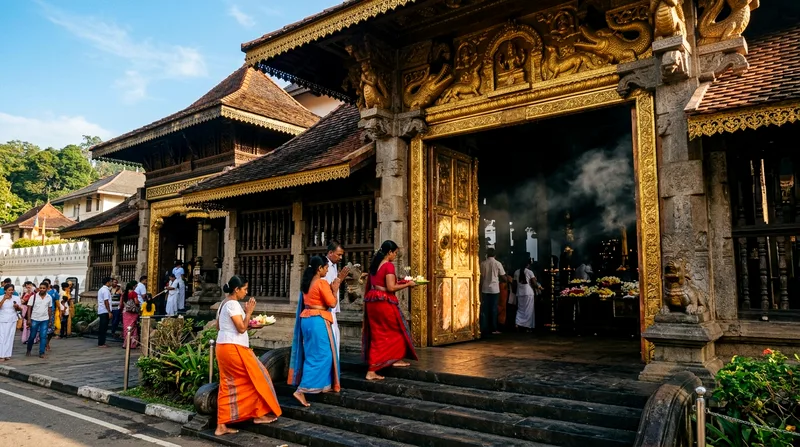
The puja is the actual event here — three times daily, the temple holds a ritual offering ceremony accompanied by drumming and horn playing, during which the doors to the inner shrine room are opened. This is when the atmosphere shifts from "historic building" to something closer to what pilgrims actually experience.
The morning puja is calmest, while the evening session draws the largest crowds and needs the earliest arrival.
Temple of the Tooth Kandy puja sessions compared: timing, crowds and arrival advice
| Puja Session | Typical Time of Day | Crowd Level | Recommended Arrival |
|---|---|---|---|
| Morning puja | Early morning | Low to moderate | 30 minutes before |
| Midday puja | Around midday | Moderate | 30 minutes before |
| Evening puja | Early evening | High | 45 minutes before |
| Esala Perahera nights (July/August) | Evening | Very high | 1-2 hours before, expect restricted access |
Exact puja times shift periodically; confirm the current schedule at the temple entrance or with your accommodation on the day of your visit.
The drumming rituals and what to expect
Traditional Kandyan drummers — playing the geta bera drum — set up near the entrance to the shrine room and build to a loud, layered rhythm as the ceremony approaches. It's not subtle, and that's the point; the drumming is meant to announce and honor the opening of the shrine. Puja ceremonies are held in the early morning, around midday, and in the evening, each lasting roughly 30-45 minutes. Exact timings shift occasionally, so check the schedule posted at the temple entrance or ask your guesthouse the morning of your visit rather than planning around times quoted in older guides.
Where to stand and how to see the relic chamber
During puja, a queue forms that moves past the open doors of the shrine room, giving each visitor a brief few seconds looking toward the casket — you won't get a lingering view, and pushing for one just annoys everyone behind you. Arrive 30-45 minutes before the posted ceremony time to get a reasonable position; arrive right at the start and you'll be stuck at the back of a slow-moving line. Evening puja tends to draw the biggest crowds because it suits both tour groups and after-work local worshippers, so the morning session is calmer if you have the choice.
Dress Code and Temple Etiquette
This is a working religious site, not a photo backdrop, and the dress code is enforced more consistently here than at many temples in Southeast Asia.
What to wear and what to avoid
Shoulders and knees need to be covered — no shorts, no sleeveless tops, no short skirts. White is the traditional color worn by Sri Lankan devotees, though you don't have to wear it; any modest, light-colored clothing works fine. Attendants at the entrance do turn people away or ask them to cover up with a provided sarong if they're dressed too casually, which wastes time you'd rather spend inside. Save the tank top and shorts for Mirissa or Unawatuna beach days — save modest cotton layers for temple mornings.
Behaviour, offerings and shoe removal
Shoes come off before entering the inner shrine areas — carry a bag for them or leave them at the designated shoe-storage area near the entrance, usually for a small fee. Many visitors buy lotus flowers from vendors just outside the gate to place as offerings; it's a nice gesture and genuinely appreciated, though not required. Keep voices low, don't point your feet toward Buddha statues when sitting, and don't touch monks if you're a woman — a small nod or verbal greeting is the correct alternative.
Best Time to Visit and Nearby Add-Ons
Timing your visit well changes the experience more than almost anything else on this page.
Crowds, weather and festival periods
Weekday mornings are noticeably quieter than weekends, when local families visit in large numbers. The Central Province's hill climate means Kandy stays cooler and wetter than the coast — light rain is common, so bring a small umbrella rather than relying on sun alone. Avoid visiting during Esala Perahera in July or August unless the festival itself is the reason for your trip; the ten-night procession draws enormous crowds and the temple operates on a completely different rhythm, with tighter security and packed streets around Kandy Lake.
Kandy Lake, royal palace complex and nearby sights
Budget at least half a day, longer if you want to linger. Kandy Lake itself makes for a pleasant walk before or after — it's flat, shaded in parts, and takes about 45 minutes to circle fully. The old royal palace complex surrounding the temple includes the Archaeological Museum and the National Museum, both worth 30-45 minutes each if you enjoy history beyond relics. Pair the visit with Peradeniya Botanical Gardens, a 20-minute tuk-tuk ride away, or an evening cultural dance performance in town — just note that the dance shows are a separate, commercial experience unrelated to temple ceremonies, despite sometimes being marketed together.
Frequently asked questions
Is the Temple of the Tooth worth visiting?
Yes, particularly if you time it around a puja ceremony rather than visiting during a quiet mid-afternoon lull. The drumming ritual and the atmosphere of pilgrims gathering is more memorable than the brief glimpse of the shrine room itself. If you only have one cultural stop in Kandy, this should be it over the royal palace museums alone.
When are the puja ceremonies held at the Temple of the Tooth?
Three ceremonies are held daily — morning, midday and evening — each lasting roughly 30-45 minutes with drumming leading up to the opening of the shrine doors. Exact times are posted at the temple entrance and can shift slightly, so check on the day rather than relying on a fixed schedule from an old source.
What should I wear to the Temple of the Tooth?
Cover your shoulders and knees — no shorts, sleeveless tops or short skirts for either gender. White is traditional but not mandatory; any modest, light clothing is accepted. You'll remove your shoes before entering the inner shrine areas, so slip-on footwear makes things easier.
Do I need to buy tickets for the Temple of the Tooth in advance?
No — tickets are sold on-site at a counter near the main entrance and there's no timed-entry system requiring pre-booking. Foreign visitors pay an entrance fee that's periodically revised, so confirm the current price at the ticket counter rather than trusting an outdated figure online.
Can you take photos inside the Temple of the Tooth?
Photography is generally fine in the courtyards and around the shrine exterior, but it's typically restricted directly facing the inner relic chamber, especially during active ceremonies. Tripods and drones aren't permitted anywhere on the grounds, and flash photography aimed at worshippers mid-prayer is discouraged even where technically allowed.