Compare deep sea fishing charters in Sri Lanka from Mirissa, Negombo and Trincomalee. See target species, seasons and what a full-day boat should include.
Which Fishing Charter Suits You?
Deep sea fishing in Sri Lanka means heading out past the continental shelf, usually somewhere between 5 and 25 nautical miles offshore, into water deep enough that yellowfin tuna, sailfish and dorado move close to the surface. The island sits near a steep drop-off on both its south and east coasts, which is why boats from Mirissa or Trincomalee can reach genuine blue water faster than most charters in, say, Goa or Kerala, where the shelf runs out much further from shore.
That proximity is the real selling point. You're not booking a scenic boat ride with a line thrown in — you're booking access to a fishing ground that's a short run from the harbour, which matters if you've only got a morning and want actual fishing time rather than transit time.
Charters fall into two broad categories, and conflating them is the most common booking mistake. There's the shared or semi-private trip aimed at tourists who want an active morning on the water, and there's the serious game-fishing charter aimed at people who already know what a fighting chair is for. Picking the wrong one wastes a day and, depending on the operator, a fair bit of money.
Beginners, families and first-timers
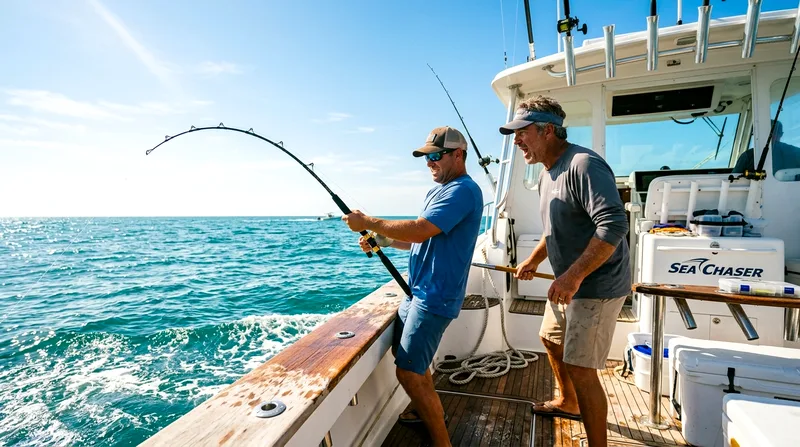
If you've never held a rod on open water, start with a half-day or full-day shared charter rather than a private game boat. These trips typically troll with hand-lines or light tackle, targeting skipjack tuna, mackerel and the occasional barracuda — fish that bite readily and don't require technical skill to land. Boats are usually small, 25 to 40 feet, carrying four to eight passengers, and the crew does the rigging and gaffing.
Kids over around 8 generally manage fine for two to three hours, less so for a full eight-hour run in open swell — motion sickness is the real limiter, not strength. If you're traveling with children, ask specifically about trip length and sea conditions before committing, and consider the calmer inshore option from Negombo over a long-range trip from Mirissa during rough weeks.
Serious game anglers
For anglers chasing yellowfin tuna over 20kg, sailfish, or marlin, you want a dedicated game-fishing charter with outriggers, a fighting chair, and a skipper who trolls lures or live bait specifically for pelagic species rather than running a generic tourist route. These boats are smaller in passenger count — often just two to four anglers — and cost noticeably more per person because the whole day is built around your catch, not a group experience.
Ask before booking whether the operator uses circle hooks and whether they practice catch-and-release on billfish; the better game-fishing operators in Mirissa and Trincomalee do, partly because sailfish and marlin numbers are not large enough to sustain heavy harvest. If an operator can't answer that clearly, that's a red flag worth weighing against price.
Mirissa, Negombo and Trincomalee Compared
Mirissa, on the south coast near Galle, is Sri Lanka's best-known fishing harbour because the drop-off is close and the same boats double as whale-watching vessels outside fishing hours. It's also the most crowded port in season, with harbour traffic and multiple boats trolling similar lines — fine for a sociable shared trip, less ideal if you want solitude or a serious game-fishing experience without other boats nearby.
Negombo sits just north of Colombo airport, making it the pragmatic choice if you're short on time or tacking a fishing trip onto an arrival or departure day. The fishing grounds here are closer to shore and less dramatic than Mirissa's blue water, but it's genuinely convenient — you can fish a half-day and still make an evening flight.
Trincomalee, on the east coast, gets less tourist traffic and arguably better big-game fishing, particularly for sailfish and larger tuna, because the shelf there is less heavily fished by tourist boats. The trade-off is logistics: it's a five to six hour drive from Colombo, or a short domestic flight, and the fishing season runs opposite to the south coast's.
Mirissa and Trincomalee suit serious game fishing, while Negombo wins on convenience for a shorter trip near Colombo.
Deep sea fishing Sri Lanka: coasts and charter styles compared
| Location | Typical target species | Best season | Suited angler |
|---|---|---|---|
| Mirissa | Yellowfin tuna, skipjack, mackerel, occasional sailfish | November to April | First-timers, families, mixed groups |
| Negombo | Skipjack tuna, mackerel, barracuda | November to April, with calmer inshore options year-round | Short-stay travelers, beginners, half-day trips |
| Trincomalee | Sailfish, larger yellowfin tuna, barracuda, grouper | May to September | Serious game anglers, experienced crews |
| Galle (day trips from) | Similar to Mirissa, often same operators | November to April | Couples, solo travelers based in Galle |
Seasons are typical monsoon-driven patterns; always check current sea conditions and operator schedules before booking.
Trolling, popping and bottom fishing styles
Most tourist charters troll — dragging lures or baited lines behind a moving boat — because it covers ground and works for tuna, mackerel and barracuda without much angler skill. Popping, where you cast topwater lures at structure and retrieve aggressively, is offered by a smaller number of game-focused operators and suits anglers chasing giant trevally near reefs or drop-offs. Bottom fishing, with weighted rigs dropped to the seafloor, is the quieter option and the one most likely to bring up grouper or snapper rather than open-water species.
If you specifically want grouper, ask the operator whether the day includes bottom fishing time near reef structure — a pure trolling day targeting tuna may never anchor at all.
Private boat vs shared charter
A shared charter splits the boat and cost among strangers, which is cheaper per head but means you're fishing someone else's priorities too — if the group wants to stop early, you stop early. A private charter costs more overall but you control the route, the target species and the timing, which matters if you're chasing a specific fish on a tight window before a flight. For a family or a couple trying fishing for the first time, shared is usually the better value; for anglers with a real target species in mind, private is worth the premium.
Target Species and Seasons by Coast
Sri Lanka's two monsoon systems split the island's fishing calendar cleanly in half, and this is the single most important factor in planning a trip — more important than which harbour looks nicer in photos. The southwest monsoon brings rough seas to Mirissa, Negombo and Galle roughly from May to September, while the northeast monsoon does the same to Trincomalee from around October to April. Book the wrong coast in the wrong month and you may find boats not running at all, whatever the brochure says.
Tuna, barracuda, grouper and mackerel
Skipjack tuna is the most consistent catch on nearly every charter, biting readily on trolled lures and forming the backbone of most full-day trips. Yellowfin tuna run larger and fight harder, and are the main draw for anglers who want a genuine physical contest rather than a quick reel-in. Barracuda show up on most trolling runs and are exciting on light tackle but bony and less prized for eating. Grouper require bottom fishing near reef structure rather than trolling, so they're a deliberate target rather than an incidental catch — mention them specifically when booking if that's your goal, since not every operator fishes that style.
Monsoon weather and sea conditions
Outside the two monsoon windows, inter-monsoon periods in April and October can bring short, sharp storms that cancel trips with little notice on either coast. If you're booking a south coast trip in April or an east coast trip in October, build in a spare day or two rather than scheduling your only shot at fishing on arrival morning. Operators that are upfront about cancelling for safety rather than pushing through rough water are the ones worth trusting — a flat calm sea matters more to the day's success than any amount of tackle.
What a Full-Day Charter Should Include
A genuine full-day fishing charter in Sri Lanka generally runs seven to nine hours, departing before sunrise to reach the fishing grounds while tuna are feeding at the surface. Expect the boat to run for 45 minutes to an hour before lines go in, more if you're heading to Trincomalee's deeper grounds. Watch out for shorter trips marketed as "full-day" that are actually five hours door to door — always ask for departure and return times, not just a duration label.
Tackle, bait, crew and safety gear
A proper charter supplies rods, reels, line and lures or bait as standard — you shouldn't need to bring your own unless you're a dedicated angler with preferred gear. Life jackets should be available for every passenger, and the boat should carry a radio or working phone signal for the distances involved; ask about this directly if you're going further out with Trincomalee's game-fishing operators. Crew size matters too — a boat with just one person driving and fishing simultaneously is a worse setup than one with a dedicated skipper plus one or two crew handling lines and gaffing.
Food, drinks and catch handling
Most full-day charters include drinking water and sometimes a simple lunch or snacks, but this varies enough that you should confirm it rather than assume it. Sun exposure on open water for eight hours is serious — bring your own reef-safe sunscreen and a hat regardless of what's promised. On catch handling, ask what happens to your fish: many operators let you keep your catch, some cook it back at a restaurant on request, and responsible ones release billfish and undersized fish rather than keeping everything that comes aboard. A good operator will mention catch-and-release policy without being asked.
How to Choose and Book a Charter
Booking a Sri Lanka fishing charter comes down to matching boat size and group structure to what you actually want from the day, then locking in the right season for your chosen coast. Compare current prices and reviews for Mirissa, Negombo and Trincomalee operators before booking rather than assuming one coast is automatically cheaper — group charters from Negombo are sometimes priced similarly to Mirissa despite the shorter run to deep water, because demand near Colombo is higher.
Boat size, group limits and cancellation terms
Check how many passengers the boat carries alongside how many rods are actually rigged — a boat advertised for eight people but with only two working rods means a lot of standing around. Ask about the cancellation and weather policy specifically: reputable operators rebook or refund for cancelled trips due to rough seas, while vaguer terms ("subject to conditions") can leave you with no recourse if the trip is scrapped on the morning. Read recent reviews for mentions of actual fish caught, not just "beautiful boat ride," since that distinction tells you whether a listing is really a fishing trip or a sea excursion with rods as decoration.
When to book around the seasons
Book south coast trips (Mirissa, Negombo, Galle) for the November to April window and east coast Trincomalee trips for May to September — reversing this risks cancelled bookings or dangerously rough conditions. During peak months, popular Mirissa operators can fill shared boats a few days ahead, so if you have a fixed date, book a week or more out rather than turning up and hoping. Combine it, if you can, with a Mirissa whale-watching trip or a Galle Fort day — many visitors split a south coast stay between the two rather than dedicating a whole trip solely to fishing.
Frequently asked questions
What is the best season for deep sea fishing in Sri Lanka?
It depends on the coast. The south and west coasts — Mirissa, Negombo, Galle — fish best from November to April, outside the southwest monsoon. Trincomalee on the east coast flips the calendar, fishing best from May to September. Booking the wrong coast for the season risks rough seas or cancelled trips.
Which fish can you catch on a Sri Lanka fishing charter?
Skipjack and yellowfin tuna are the most common catches on trolling trips, alongside barracuda and mackerel. Grouper and snapper come up on bottom-fishing trips near reef structure. Serious game charters, mainly from Trincomalee and Mirissa, also target sailfish and occasionally marlin, usually released rather than kept.
What is included in a full-day fishing charter?
Expect rods, reels, bait or lures, life jackets and crew to handle the fishing as standard. Water and sometimes a light lunch are often included but not guaranteed — confirm this when booking. Bring your own sunscreen, hat and motion-sickness tablets if needed, since these are rarely supplied.
Is deep sea fishing in Sri Lanka suitable for beginners?
Yes, on a shared half-day or full-day trolling charter where the crew rigs everything and does the gaffing. Avoid booking a dedicated game-fishing boat as your first trip — it's priced and built for experienced anglers chasing specific species, not a gentle introduction.
Which location is best for a fishing trip, Mirissa, Negombo or Trincomalee?
Mirissa suits first-timers wanting a lively, well-established harbour close to Galle. Negombo is best if you're short on time near Colombo airport. Trincomalee suits serious anglers chasing sailfish and bigger tuna away from tourist crowds, at the cost of a longer journey to reach it.