Compare Sri Lanka snorkeling tours by coast and season, from Hikkaduwa turtles to Pigeon Island reefs, with reef-safe booking tips for all swimmers.
Which Snorkeling Tour Suits You?
Sri Lanka isn't one snorkeling destination — it's at least three, and they don't overlap much. The west coast around Hikkaduwa, the south around Mirissa and Weligama, and the east coast around Trincomalee and Pigeon Island National Park each have their own season, their own marine life, and their own tour style. Booking a snorkeling tour here without checking which coast is "in season" for your travel month is the single most common mistake, and it's the reason some visitors come home saying Sri Lanka's reefs were disappointing when really they just snorkeled a stormy coast at the wrong time.
The good news is that once you match coast to season, the tours themselves are straightforward and inexpensive compared to equivalent trips in the Maldives, where almost everything marine-related runs through a resort and costs accordingly. Sri Lanka snorkeling tours are typically small, boat-based or shore-entry, and aimed at casual snorkelers rather than serious divers — which suits families and first-timers well but might underwhelm snorkelers who've done Thailand's Similan Islands or the reefs off Gili Air in Bali and want big drop-offs and strong currents.
Families and first-timers
If you're traveling with kids under 12 or anyone who hasn't snorkeled before, shore-entry tours at Hikkaduwa or the calmer bays near Nilaveli are the easiest starting point. The water is shallow — often 1 to 3 metres over the reef flat — and you can wade in rather than jump off a boat. Guides in these spots are used to fitting masks on children and talking nervous adults through breathing with a snorkel before anyone's feet leave the sand. Group sizes tend to run 4 to 10 people on shared shore trips, which keeps costs down but means less individual attention — worth knowing if your child is genuinely anxious in water.
Confident swimmers and reef lovers
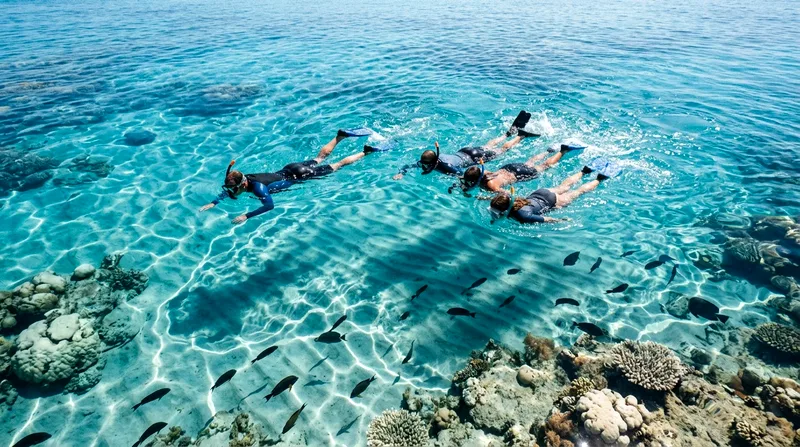
Stronger swimmers who want to see more than a shallow fringing reef should look at boat trips to Pigeon Island National Park or the turtle cleaning stations off Mirissa and Unawatuna. These involve a 10 to 30 minute boat ride, entry into slightly deeper water (3 to 8 metres), and sometimes a light current around headlands. The payoff is better coral cover, more fish biomass, and a decent chance of swimming alongside a green or hawksbill turtle rather than just spotting one from a distance. If you've snorkeled Kerala's limited reef sites or Goa's murkier coastal water, Sri Lanka's east coast in season will be a clear step up.
Sri Lanka Snorkeling Tours Compared
Tour categories in Sri Lanka break down less by price and more by how you get in the water and how many people you're with. None of these are expensive by international standards — even private boat charters here undercut a group reef trip in the Maldives — but the experience differs a lot between them.
Shore-entry suits budget-conscious first-timers, while small private boats give confident swimmers the best access to healthier reef and turtle sites.
Sri Lanka snorkeling tour categories compared by group size, access and suitability
| Tour Category | Typical Group Size | Water Access | Best Suited To | What to Check |
|---|---|---|---|---|
| Shore-entry (Hikkaduwa, parts of Nilaveli) | 4-10 people | Wade in from beach | Families, first-timers, tight budgets | Reef condition, crowding, life vest availability |
| Group boat trip | 6-15 people | Boat out 10-30 min | Solo travelers, budget travelers, casual snorkelers | Boat crowding near turtles, trip duration |
| Private/small boat charter | 1-4 people | Boat out 10-30 min | Couples, seniors, families wanting space | Price vs group rate, guide experience |
| Guided turtle snorkel (Mirissa/Unawatuna) | 4-12 people | Boat or shore, shallow bay | Turtle sightings, photography | No-touch rules enforced, feeding bans |
| Pigeon Island boat + reef walk | 8-20 people (park-regulated) | Boat to island, then shore/reef entry | Reef lovers, confident swimmers | Park entry ticket, ranger-guided zones |
Group sizes and access vary by operator and season; always confirm current capacity and park rules when booking.
Boat trips vs shore-entry snorkeling
Shore-entry snorkeling, common at Hikkaduwa's marine sanctuary and parts of Nilaveli, means walking into the sea from the beach — no boat, no captain, lower cost, and total flexibility on timing. The trade-off is that you're limited to whatever reef sits close to shore, which at Hikkaduwa has suffered real coral damage from decades of foot traffic and anchor strikes. Boat trips, by contrast, reach reef patches and turtle grass beds that are harder to damage and generally healthier — Pigeon Island's offshore reef and the boat-accessed turtle spots off Mirissa fall into this category. Expect a 20- to 40-minute round trip by small outboard boat, with 45 minutes to an hour actually in the water. Boat trips cost more than shore entry but less than you'd pay for a comparable excursion in Bali's Amed or the Maldives' house-reef transfers.
Private vs group tours
Group tours — typically 6 to 15 people sharing a boat — are the default and the cheapest per-person option, especially in Mirissa and Hikkaduwa where whale-watching boats often double as snorkel transport in the off months. Private tours cost more but give you control over timing (early morning tends to mean calmer water and fewer boats crowding the same reef patch) and let you avoid the worst of it: boats stacked three-deep over a turtle, a dozen snorkelers kicking the same coral head. If you're a couple on a honeymoon or traveling with elderly parents who need a slower pace, paying more for a private or small-group (4 people or fewer) trip is worth it. Solo travelers and budget-conscious backpackers will find group trips perfectly adequate.
Best Snorkel Trips by Coast and Season
The best time to snorkel in Sri Lanka depends entirely on which coast you're on, because the island sits between two monsoon systems that hit opposite sides at opposite times of year. Get this wrong and you'll be snorkeling in chop and poor visibility no matter how good the tour operator is.
Hikkaduwa and the southwest: turtles and coral
Hikkaduwa snorkeling, along with Mirissa, Unawatuna and Weligama further along the south coast, runs best from November through April, when the southwest monsoon has passed and the sea flattens out. Hikkaduwa's marine sanctuary is the most accessible turtle snorkeling in Sri Lanka — green turtles graze seagrass metres from the beach, and you genuinely don't need a boat to see one. The reef itself is patchy and shows visible bleaching and breakage in sections, a legacy of glass-bottom boat traffic and the 2004 tsunami, so set expectations: this is turtle snorkeling, not pristine coral snorkeling. Mirissa and Weligama, 20-30km east, offer calmer alternatives with better coral cover and double as whale-watching departure points in the same season.
Pigeon Island and the east coast
Pigeon Island National Park, a short boat ride from Nilaveli near Trincomalee, is widely regarded as Sri Lanka's best reef snorkeling, with hard coral cover, reef sharks in deeper channels, and far clearer water than the southwest coast typically offers. The east coast season runs roughly May to September — the exact inverse of Hikkaduwa's calendar — because that's when the northeast monsoon is off-season and the Indian Ocean here turns calm. Entry to Pigeon Island requires a national park ticket in addition to your boat transfer, and rangers do patrol snorkeling zones to stop people touching coral, which is a good sign rather than an inconvenience. Visit outside this window and you'll likely find the crossing too rough to run at all.
Options for Non-Confident Swimmers
Snorkeling for non-swimmers is more workable in Sri Lanka than most people expect, mainly because the best beginner sites — Hikkaduwa's shallow sanctuary, the calm bays near Nilaveli — have reef flats sitting in waist-to-chest-deep water close to shore. A well-run shore-entry tour will fit you with a life vest or pool noodle, keep you in water you can stand up in, and let you look down at coral and fish without ever needing to swim properly. Ask specifically whether a life vest is included before booking; some budget operators assume everyone can tread water and don't carry spare vests.
If you're genuinely nervous, avoid boat trips to Pigeon Island or Mirissa's turtle spots as a first attempt — you'll be snorkeling over 3-8 metres of water with no sandy bottom to stand on, which unsettles people who aren't used to it. Start at a shore site, get comfortable breathing through a snorkel with your face in the water, then move to a boat trip once you're not fighting the equipment. A private guide swimming beside you costs more than a group trip but is the single best investment for anxious swimmers — far more useful than a cheaper group slot where the guide is watching ten people at once.
What to Check Before Booking
Sri Lanka snorkeling tours are cheap and informal enough that it's tempting to just show up on the beach and negotiate with whoever has a boat. That works fine at well-trodden spots like Hikkaduwa, but a few checks before handing over money will save you a wasted morning.
Inclusions, group size and cancellation
Confirm whether mask, snorkel, fins and life vest are included or rented separately — on the cheapest beach operations, equipment is often an add-on not mentioned upfront. Ask how many people will be on the boat; a listing that says "small group" can still mean fifteen people if the operator doesn't specify a cap. Check the cancellation policy too, since sea conditions on both coasts can turn with little warning — a reputable operator will reschedule or refund if the crossing gets too rough to run safely, rather than taking you out anyway. Always compare current prices and reviews for your exact dates before booking, since availability and conditions shift with the season.
Reef-safe and responsible turtle practices
Wear mineral-based reef-safe sunscreen — oxybenzone and octinoxate, found in most standard sunscreens, are linked to coral bleaching and are genuinely a problem on a reef as pressured as Hikkaduwa's. A rash guard or UV shirt reduces how much sunscreen you need at all, which is the better option. On turtle encounters, the rules are simple and non-negotiable with any decent operator: no touching, no riding, no chasing, and no feeding — feeding turtles changes their behaviour and draws them toward boat traffic, which gets them injured by propellers. If your guide touches a turtle to pose for your photo, that's a tour to avoid, and you should say so in your review afterward.
When to Book Your Snorkel Trip
Peak season on each coast means peak demand for boats and guides, so if you're traveling over Sri Lankan or European school holidays — late December through early January especially — book your Hikkaduwa or Mirissa snorkel trip a few days ahead rather than assuming you'll find a spot on arrival. Pigeon Island gets busy in July and August when it's one of the few reliably calm options on the island and European summer holidaymakers fill the boats out of Nilaveli and Trincomalee.
Shoulder months — April on the west coast, May or September on the east — often give you the best combination of decent conditions and thinner crowds, worth considering if you'd rather not share a reef with twenty other snorkelers. Whatever month you land in, decide your coast first, your tour category second, and leave exact pricing to check at the time of booking, since it varies by boat size, season and how many people you're traveling with.
Frequently asked questions
Is there any good snorkeling in Sri Lanka?
Yes, though it's regional rather than island-wide. Pigeon Island National Park on the east coast has the healthiest hard coral and clearest water, while Hikkaduwa and Mirissa on the south/southwest offer reliable turtle encounters with patchier, more damaged coral. It won't match the Maldives for raw reef quality, but it's considerably cheaper and easier to combine with a land-based Sri Lanka itinerary.
How much does it cost to snorkel in Sri Lanka?
Shore-entry snorkeling with basic gear rental is the cheapest option, group boat trips cost more, and private charters or Pigeon Island's national park entry fee push the price higher again. Costs vary by season and operator, so check current prices and what's included — gear, life vest, park fees — before booking rather than assuming a quoted figure covers everything.
Where are the best coral reefs to snorkel in Sri Lanka?
Pigeon Island National Park near Trincomalee and Nilaveli is generally considered the best for coral cover and reef fish diversity. Hikkaduwa's reef is more degraded but remains the most reliable spot for turtle sightings close to shore, and Mirissa and Weligama offer a calmer middle ground with reasonable coral along the south coast.
What is the best time to snorkel in Sri Lanka?
November to April for the west and south coasts (Hikkaduwa, Mirissa, Unawatuna, Weligama), and May to September for the east coast (Pigeon Island, Nilaveli, Trincomalee). The two coasts run on opposite monsoon cycles, so there's almost always one side of the island with good conditions.
What marine life can you see while snorkeling in Sri Lanka?
Green and hawksbill turtles are the headline sighting, especially at Hikkaduwa and off Mirissa, along with reef fish like parrotfish, butterflyfish and surgeonfish. Pigeon Island adds the chance of blacktip reef sharks in its deeper channels, and reef rays and moray eels turn up on both coasts in the right season.