Compare Sri Lanka river tours: Madu Ganga and Bentota river safaris by wildlife, duration and value, plus booking tips for family outings.
Who Each River Tour Suits
A Sri Lanka river tour on the west coast sells itself as a lazy couple of hours on the water, and for most travelers it delivers exactly that — no hiking, no early alarm (unless you want the best wildlife light), and a decent chance of spotting monitor lizards, kingfishers, and the odd crocodile sunning on a mudbank. The two main contenders, Madu Ganga near Balapitiya and the Bentota River, sit less than 20 minutes apart by road but offer noticeably different experiences.
Madu Ganga is a proper estuarine wetland system with over 60 islands, narrow mangrove channels, and a fish-spa stop or cinnamon-island demonstration built into most itineraries. Bentota River runs more open and scenic, flanked by resorts and palm groves, with a shorter, punchier safari that works well if you're staying along that stretch of coast already. Neither requires any fitness or swimming ability, which makes both accessible to grandparents and toddlers alike — though I'd steer wheelchair users toward asking specifically about low, stable boats with side access rather than the narrow canoe-style craft some smaller operators use.
Families with young children
Kids generally do well on these tours because the boats are slow-moving and the novelty of monkeys in the trees or a basking crocodile holds attention better than a museum ever could. Life jackets should be provided as standard — if an operator doesn't offer them unprompted, that's a red flag, not a minor oversight. Bentota's shorter 1-1.5 hour format suits children under six who get restless; Madu Ganga's longer 2-3 hour loop works better for kids aged seven and up who'll enjoy the island stops and fish-spa novelty. Avoid midday departures with toddlers — heat and glare on open water make for a cranky second hour.
Wildlife and bird enthusiasts
Serious birders should lean toward Madu Ganga or even further north to the Muthurajawela Marshes near the Negombo Estuary, where boat traffic is lighter and herons, cormorants, and brahminy kites are easier to approach without engine noise scattering them. Bentota's wildlife viewing is respectable but secondary to the scenery — you're more likely to see monitor lizards and fruit bats than a wide variety of birds. If birding is the actual goal rather than a pleasant add-on, ask whether the boat can cut its engine and drift near nesting areas; many won't unless you request it directly.
Main River Safari Types Compared
Tours on both rivers fall into a few recognizable formats, and knowing which one you're booking matters more than which river you pick. The core choice is shared boat versus private charter, followed by whether the route includes extra stops like a cinnamon garden, a Buddhist temple island, or a fish spa.
Shared boats on Madu Ganga give the richest wildlife and island stops, while Bentota's shorter private charters suit travelers tight on time.
Sri Lanka river tour categories compared: Madu Ganga and Bentota safaris
| Tour Category | Typical Duration | Group Size | Best For | Relative Cost |
|---|---|---|---|---|
| Madu Ganga shared boat | 2-3 hours | 6-10 people | Families, birders, island stops | Low-mid |
| Madu Ganga private charter | 2-3 hours | 1-4 people | Photographers, couples, flexible pace | Mid-high |
| Bentota shared boat | 1-1.5 hours | 6-10 people | Short wildlife outing, time-limited visitors | Low |
| Bentota private charter | 1-2 hours | 1-4 people | Sunset trips, seniors needing easy boarding | Mid |
| Combined Madu Ganga + beach package | Half-day | Varies | Full day-trip from Galle or Bentota hotels | Mid-high |
Relative cost levels only — check live prices and reviews when booking, as rates shift with season, boat type, and operator.
Shared boat vs private charter
Shared boats, often arranged through hotels or small roadside operators in Balapitiya and Ambalangoda, group you with other travelers — typically six to ten people — and run on a loose rather than fixed schedule, departing once enough people show up. They're the budget-friendly option and fine for solo travelers or couples who don't mind company. Private charters cost noticeably more but let you set the pace, linger at a crocodile sighting, or skip the fish-spa stop if you find it a bit tired and overpriced for what it is (my honest take: skip it unless your kids are desperate to try it). For photographers or anyone traveling with a mobility concern, the private option is worth the extra cost simply for control over timing and seating.
Mangrove, island and cinnamon stops
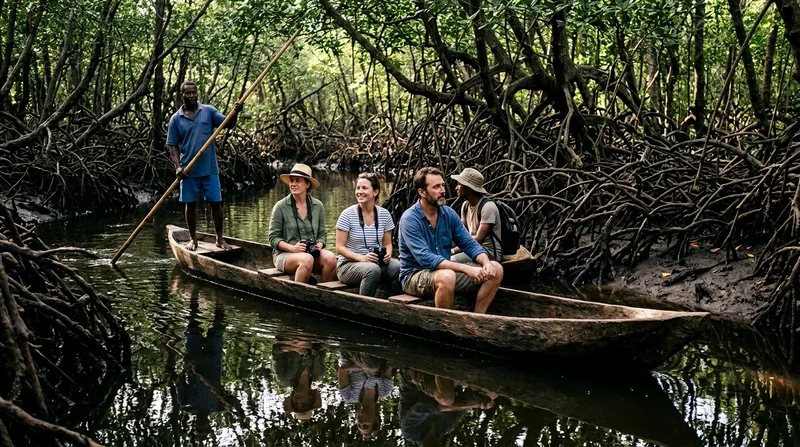
Most Madu Ganga itineraries include three to four stops: a mangrove tunnel passage, a small island with a Buddhist temple, a cinnamon-processing demonstration, and sometimes the fish spa. These add genuine cultural texture but also stretch a two-hour trip into three, and the cinnamon demo in particular can feel like a thinly veiled shop pitch. Bentota tours are leaner, usually sticking to the river and its wildlife banks without as many commercial stops, which some travelers will prefer for exactly that reason.
Madu Ganga vs Bentota River Safari
This is the real decision most readers are weighing, so here's the blunt version: Madu Ganga is the better wildlife experience, Bentota is the better time-saver.
Wildlife and scenery
Madu Ganga's mangrove channels are narrower and denser, creating that tunnel effect that makes for the best photos and the closest wildlife encounters — water monitors on low branches, kingfishers darting at eye level, occasional crocodile sightings near the quieter inlets. The scale of the wetland, with dozens of small islands, also just feels more immersive than Bentota's broader, resort-lined river. Bentota's scenery is attractive but more open and developed, with villas and tourist infrastructure visible along much of the bank, which dilutes the wild feel somewhat. If wildlife density is your priority, Madu Ganga wins clearly; if you just want a pleasant hour on water with decent scenery, Bentota does the job without fuss.
Duration and typical cost level
Madu Ganga safaris typically run 2 to 3 hours given the extra stops, while Bentota trips are usually 1 to 1.5 hours, occasionally extended to 2 for a sunset run. On cost, think in relative terms rather than fixed numbers: Bentota tends to sit in the lower-to-mid range given its shorter length, while Madu Ganga's longer format and extra stops push it to mid-range, with private charters on either river landing at the top end. Always check current prices and reviews on platforms like TripAdvisor or GetYourGuide before booking — rates vary by season and boat size, and a suspiciously cheap listing often means a larger shared boat with more waiting around.
What to Look For When Booking
Booking a river safari sounds simple, but the gap between a good operator and a mediocre one shows up in details you won't see in a thumbnail photo. Read the last 20-30 reviews on TripAdvisor or GetYourGuide rather than the overall star rating — look specifically for mentions of boat crowding, engine noise near wildlife, or rushed stops.
Inclusions, group size and life jackets
Confirm whether hotel pickup, the fish-spa stop, and the cinnamon demonstration are included or optional add-ons charged on the day — this catches people out more than any other detail. Ask the group size upfront; anything over 10 passengers on a standard long-tail boat means less maneuverability in mangrove tunnels and a worse wildlife experience. Life jackets should be mandatory and visibly worn, not just stored under a seat. If you're booking with young children, ask directly whether child-size jackets are available, since adult-size ones are nearly useless for anyone under 25kg.
Cancellation and eco-friendly practices
Check the cancellation policy before paying anything — many smaller riverside operators in Balapitiya and Ambalangoda take cash on arrival with no formal booking system, which is fine for flexibility but offers no recourse if the boat doesn't show. For eco-conscious travelers, ask whether the operator limits boat speed near nesting birds and avoids feeding monkeys or crocodiles for photo opportunities — feeding wildlife for tourist entertainment is unfortunately still common on both rivers and worth actively avoiding by asking the boat driver to skip it.
When to Book and Best Season
The west coast's dry season, roughly November through April, gives the calmest water and clearest skies for river safaris, though mangrove tours run year-round since the channels are sheltered from monsoon swell. Booking a day or two ahead is usually enough outside peak December-January weeks; during peak season, same-day shared boats can fill up by mid-morning.
Best time of day for wildlife
Early morning, around 6:30 to 8:30am, gives the best wildlife activity on both rivers — birds feed actively, water monitors bask on banks before the heat pushes them into shade, and the water is glassy enough for good photos. Late afternoon into sunset is the second-best window and more popular with couples for the light rather than the wildlife. Midday trips are the weakest choice: hotter, glarier, and quieter on the wildlife front, though some operators push them because boats are available between morning and evening groups.
Combining with Galle or beach days
Both rivers sit conveniently between Colombo and Galle, so a morning river safari pairs naturally with an afternoon in Galle Fort or a beach stop near Mahamodara River's quieter southern stretch. Travelers based in Bentota or Balapitiya can do the river safari before breakfast and still have a full beach day ahead. If you're staying in Galle and want to add a river tour, factor in roughly 30-45 minutes of driving each way to reach Madu Ganga, which makes it a half-day commitment rather than a quick add-on.
Frequently asked questions
Is the Madu River safari worth it?
Yes, for most travelers — the mangrove tunnels and island stops give a fuller experience than a short river cruise elsewhere on the coast. It's less worth it if you're only interested in speed or have under two hours to spare, in which case Bentota's shorter format suits better.
How long does a river safari in Sri Lanka take?
Bentota River safaris typically run 1 to 1.5 hours. Madu Ganga safaris run longer, usually 2 to 3 hours, because the standard route includes island and cinnamon stops in addition to the mangrove channels.
What wildlife can you see on a Sri Lankan river safari?
Expect water monitor lizards, fruit bats, kingfishers, cormorants, and various herons on both rivers, with occasional crocodile sightings, especially on Madu Ganga's quieter inlets. Troops of monkeys are common along both riverbanks, particularly near the island stops.
Which river safari is best for families?
Bentota suits families with children under six due to its shorter length, while Madu Ganga works better for families with kids seven and older who'll engage with the longer route and island stops. Either way, confirm child-size life jackets are available before booking.
What is included in a river safari package?
Most packages include the boat, driver-guide, and life jackets; hotel pickup, the fish spa, and cinnamon demonstrations are often separate add-ons rather than automatic inclusions. Always check the specific listing's inclusions on TripAdvisor or GetYourGuide before paying, since this varies by operator.