Plan the best time to visit Sri Lanka with family. See how Easter, summer and Christmas school holidays match each coast's weather, so you pick the right region.
Sri Lanka Best Time to Visit with Family: Matching Dates to Coasts
Here's the problem every family runs into: your travel dates are fixed by the school calendar, but Sri Lanka's weather isn't fixed at all. The island sits under two separate monsoon systems that hit opposite coasts at opposite times of year, so "Sri Lanka in July" means something completely different on the west coast than it does on the east coast. Searching for the single best time to visit Sri Lanka with family is the wrong question — it assumes one answer works island-wide, and it doesn't.
The right approach is simpler than it sounds. Figure out which school holiday you're traveling in — Christmas, Easter, or the long summer break — then pick the coast whose dry season lines up with it. Travel at Christmas or Easter, and the west and south coasts (Colombo, Bentota, Mirissa, Galle) are in their dry window, with calm seas and reliable sun. Travel in July or August, and those same beaches turn wetter and rougher, while the east coast around Trincomalee and Arugam Bay comes into its own. Get this match right and you avoid the single biggest mistake families make: booking a beach week on the wrong coast for the season.
Sri Lanka's Two Monsoons Explained
Sri Lanka's weather is governed by two monsoon systems, and understanding them is the entire key to timing a family trip well. This isn't a minor technicality — it's the reason generic "best time to visit Sri Lanka" articles mislead people. One monsoon soaks the west and south; the other soaks the east and north. They run on almost opposite calendars.
Southwest monsoon: west and south coasts
The southwest monsoon runs roughly from May to September, bringing heavier rain, wind and rougher seas to Colombo, the west coast beach towns (Negombo, Bentota) and the south coast favorites (Mirissa, Unawatuna, Galle). It doesn't rain all day every day — showers are often short and heavy, clearing to sun within an hour — but swimming conditions for young children get less reliable, and some boat trips (whale watching out of Mirissa, for instance) scale back or pause. If you're set on a west or south coast beach holiday, this is the window to avoid with small kids.
Northeast monsoon: east coast and the north
The northeast monsoon runs roughly from November to February and affects the east coast — Trincomalee, Passikudah, Arugam Bay — and the north around Jaffna. This means the east coast's dry, calm season is the mirror image of the west and south: April through September is the sweet spot for Trincomalee's beaches, while December brings choppier water and more rain to that same coast. Families fixated on a Christmas beach holiday often default to the west coast without realizing the east coast is actively wet at that time.
Best Coast for Families by Season
Once the two monsoons make sense, picking a coast for your dates gets easy. This is really the practical answer to "which coast of Sri Lanka is best for families" — and the answer changes depending on when you can travel, not on which coast is objectively nicer.
December to April: west and south beaches
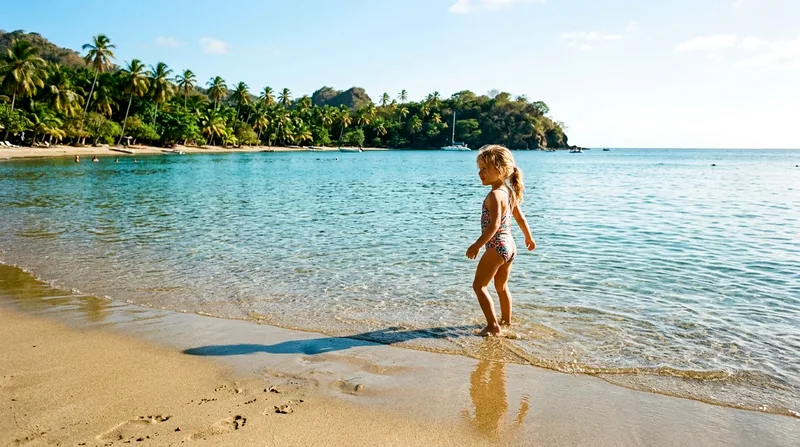
This is Sri Lanka's classic peak season, and for good reason. The west and south coasts are dry, sunny and calm, with daytime temperatures around 28-30°C and sea conditions gentle enough for toddlers to paddle safely. Mirissa, Unawatuna, Bentota and Tangalle all work well for family stays, with shallow entry points and (in several resort towns) lifeguard-patrolled sections. The trade-off: this is also when every other European family has the same idea, so flights and beachfront villas book up months ahead, and prices climb accordingly. If you're traveling over Christmas or February half-term, book your accommodation three to four months out at minimum.
May to September: east coast and the cultural triangle
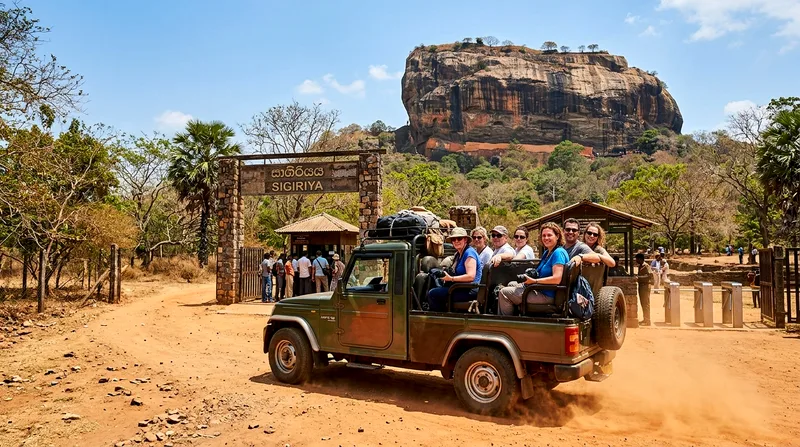
Once the southwest monsoon sets in, shift your beach plans east. Trincomalee and Passikudah are dry and calm from roughly May through September, with warm, clear water that's genuinely better for swimming with kids than the choppier west coast gets in December some years. This window also happens to line up with inland touring — the Cultural Triangle (Sigiriya, Dambulla, Polonnaruwa) and hill country around Nuwara Eliya and Ella are pleasant year-round but especially comfortable outside the wettest west-coast months, since you're not racing rain showers between sightseeing stops.
School Holiday Windows Mapped to Weather
Fixed school calendars mean most families aren't choosing freely between all twelve months — they're choosing between three or four set windows. Matching those windows to the right coast is the actual planning task.
Christmas and Easter favor the west and south coasts, while summer holidays favor the east coast and inland touring.
Sri Lanka school holidays mapped to the best coast by season
| School Break | Typical Dates | Best Coast | Weather Risk |
|---|---|---|---|
| Christmas | Mid-Dec to early Jan | West & South coasts | Low (dry season peak) |
| February half-term | Mid-Feb | West & South coasts | Low |
| Easter | Late March to mid-April | West & South coasts (early monsoon risk by late April) | Low to moderate |
| Summer holidays | July to August | East coast & Cultural Triangle | Low on east; wetter on west/south |
| October half-term | Mid-Oct | Inter-monsoon, island-wide showers | Moderate (short, heavy rain likely) |
General climate patterns only; actual rainfall varies year to year, so check a short-range forecast before finalizing beach plans.
Christmas and Easter holidays
Sri Lanka with kids at Christmas means the west and south coasts at their best: dry, hot, and busy. Expect daytime temperatures of 29-31°C in Colombo and coastal towns, cooler evenings in the hill country (Nuwara Eliya can drop to 15°C at night, worth packing a light jacket for). Easter sits at the tail end of the dry season — late March is usually still safe, but by mid-to-late April the first inter-monsoon showers can arrive early some years, so build in flexibility if your Easter break falls late.
Summer holidays in July and August
Sri Lanka in summer holidays is a genuinely good family option if you point yourself east instead of west. July and August are dry and settled on the Trincomalee and Passikudah coastline, with calm, warm water well suited to swimming with young children, and it's also peak season for Pinnawala's elephant orphanage visits and Kandy's Esala Perahera festival (usually falling in July/August, dates vary by lunar calendar). Avoid defaulting to Mirissa or Bentota in August expecting Christmas-level sun — you'll get rain and rougher surf there instead.
Season-by-Season Activities for Kids
Weather windows aren't just about sunbathing — they determine which wildlife and family activities are actually worth booking at a given time of year.
Beaches, whale watching and turtle hatcheries
Whale watching off Mirissa runs roughly November through April, when seas are calm enough for boats to go out safely — this lines up neatly with the west/south dry season, so a Christmas or Easter trip can combine beach time with a half-day whale-watching tour. Note that boat trips in choppy conditions are miserable for kids prone to seasickness, so this is one activity where timing really does matter, not just comfort. Turtle hatcheries along the south coast (Kosgoda, Rekawa) operate year-round regardless of season, since they're shore-based.
Safaris, hill country trains and heritage sites
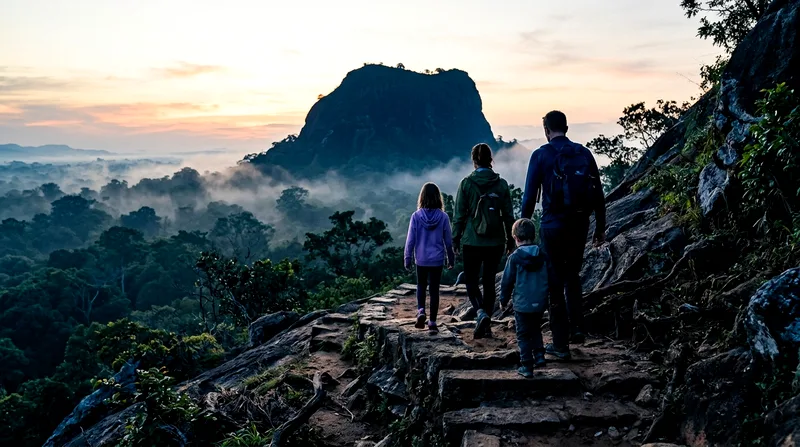
Yala National Park, the island's most popular safari destination, is best from roughly February to June when water sources shrink and animals cluster near remaining waterholes, making leopard and elephant sightings more likely — though Yala closes for about a month, usually in September, for annual maintenance, so check this before booking a late-summer safari. The hill country train ride between Kandy and Ella runs year-round and is a genuine highlight for kids of most ages, though it's more scenic (and less crowded) outside the December-January peak. Heritage sites in the Cultural Triangle — Sigiriya's rock fortress, Dambulla's cave temples — are climate-tolerant year-round, though the 1,200-step climb up Sigiriya is far more bearable before 9am or outside the hottest April weeks.
Family Practicalities: Crowds, Costs and Health
Weather is half the decision; crowds, cost and basic health precautions are the other half, and families often underweight these.
Peak versus shoulder season trade-offs
December through March is peak season on the west and south coasts, and prices for family-friendly villas and resorts reflect it — expect noticeably higher rates and the need to book flights and accommodation well ahead, especially around Christmas and New Year. The shoulder months either side of peak — October-November and April — often give you 80% of the good weather at a lower price, with thinner crowds at Sigiriya and Galle Fort. Compare this to Bali or Thailand's Phuket, where peak season pricing spikes are similar but shoulder-season weather risk is arguably gentler; Sri Lanka's shoulder months carry a real chance of short, sharp downpours, so it's a trade worth going into with open eyes rather than assuming it's risk-free.
Mosquitoes, heat and sea safety with young children
Mosquito activity rises with rainfall, so the wetter months on each coast also bring more bites — pack a DEET-based repellent suitable for children and consider a doctor's advice on dengue precautions regardless of season, since outbreaks aren't strictly confined to monsoon months. Midday heat (routinely 30°C+ on the coast) is harder on young kids than on adults, so plan safaris and temple visits for early morning. Sea safety matters more than people expect: unlike the Maldives' lagoon-calm house reef swimming, several Sri Lankan beaches have real rip currents, particularly on the south coast outside sheltered bays — stick to beaches with visible lifeguard flags and ask locally before letting children swim unsupervised.
Frequently asked questions
What is the best time to visit Sri Lanka with family?
There isn't one island-wide answer. For the west and south coast beaches (Mirissa, Bentota, Galle), December to April is best — dry, calm and hot. For the east coast (Trincomalee, Passikudah) and inland touring, May to September is better. Match your school holiday dates to the coast that's dry at that time rather than picking a month first.
Is Sri Lanka good to visit in August with kids?
Yes, if you head to the east coast. Trincomalee and Passikudah are dry and calm in August, with warm, swimmable water. The west and south coasts are in their wet monsoon season then, so avoid planning a Mirissa or Bentota beach holiday in August — rain and rougher surf are likely.
What is the weather like at Christmas in Sri Lanka?
Christmas falls in the west and south coast dry season — expect daytime temperatures around 29-31°C, low rainfall and calm seas, ideal for swimming with kids. It's also peak season, so book flights and family accommodation three to four months ahead to avoid inflated last-minute prices.
Which coast is best for families in different months?
December to April: west and south coasts (Colombo, Bentota, Mirissa, Galle). May to September: east coast (Trincomalee, Passikudah) and inland Cultural Triangle or hill country. October and November are inter-monsoon transition months island-wide, with a higher chance of short, heavy showers on either coast.
Is Sri Lanka safe and worthwhile to visit with children?
Generally yes — Sri Lanka is a well-established family destination with hospitals in major towns, widely available bottled water, and beach resorts used to catering for young children. Main precautions are mosquito bites, midday heat, and checking for rip currents or lifeguard flags before letting kids swim unsupervised.