See a realistic Sri Lanka daily travel budget at three spending levels, where the money actually goes, where foreigners overpay, and how to save.
Where Your Money Goes in Sri Lanka
Most first-time visitors assume Sri Lanka will cost roughly what it costs to backpack through Kerala or rural Vietnam. It doesn't, quite. Street food, local buses and guesthouse rooms are genuinely cheap. But the things tourists actually want to do — Yala or Wilpattu safaris, the Sigiriya and Dambulla entry fees, whale watching out of Mirissa, a driver for the hill country — are priced for foreign visitors in US dollars, and those costs stack up fast.
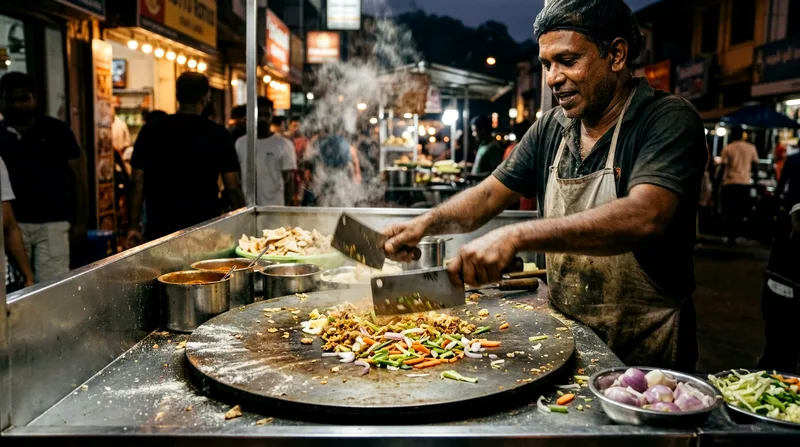
A realistic Sri Lanka daily travel budget has to separate "staying alive" costs from "doing things" costs, because the gap between them is bigger here than in most of Southeast Asia. A bowl of kottu or a rice-and-curry lunch runs 300–600 LKR (roughly $1–2). A single national park jeep safari with entry fees can run $40–60 per person for half a day. That asymmetry catches people out — they budget like they're in Vietnam, then get hit with a $25 entry fee at Sigiriya Rock alone.
Biggest costs: transport, entry tickets and tours
Three categories dominate any Sri Lanka budget: private transport, archaeological/cultural site entry, and national park fees. A private car and driver for a full day typically costs $40–70 depending on distance and season — reasonable split between three or four people, painful solo. Entry to Sigiriya runs around $30 for foreign adults (locals pay a fraction of that), and the Cultural Triangle round ticket covering Anuradhapura, Polonnaruwa, and other sites can exceed $50 per person if bought individually rather than as a package. National parks add a park fee, a vehicle fee, and often a tracker fee on top of your jeep hire — Yala alone can easily hit $50–70 per person for a half-day safari during peak season. None of this is scandalous by international standards, but it's where a "cheap country" reputation stops matching reality.
Understanding LKR and the rupee to USD rate
The Sri Lankan rupee (LKR) floats against the dollar and has swung significantly in recent years, so any fixed number quoted online ages badly — check the current sri lanka rupee to usd rate before you travel rather than trusting a figure from an old blog post. As a rough present-day anchor, expect somewhere in the range of 290–320 LKR to the US dollar, but verify this on arrival; airport exchange counters and some hotels offer worse rates than banks or ATMs in Colombo. Withdraw cash from bank-branded ATMs where possible — standalone tourist-area ATMs sometimes charge higher withdrawal fees. Many tour operators and national park fees are quoted directly in USD, which simplifies budgeting but means your trip cost is somewhat protected from local inflation, unlike your food and transport spending.
Daily Budget at Three Spending Levels
There's no single answer to how much money do you need for Sri Lanka — it depends almost entirely on how much private transport and how many paid activities you pack in. A backpacker sticking to trains, buses and guesthouses can get by on far less than someone hiring a driver for two weeks and doing a safari every other day.
A backpacker can manage on roughly $25–35 a day, while a comfortable mid-range trip typically runs $60–100 a day per person.
Sri Lanka daily travel budget compared across three spending levels
| Spending level | Accommodation | Food | Transport | Activities (daily avg) |
|---|---|---|---|---|
| Budget | $8–15/night, dorm or basic guesthouse | $5–8/day, local eateries | Public bus/train, $1–5/day | $0–10/day, occasional paid site |
| Mid-range | $25–50/night, 3-star or boutique | $12–20/day, mix of local and tourist spots | Reserved train, shared tuk-tuk, occasional car hire | $15–30/day |
| Luxury | $100–300+/night, resort or boutique villa | $30–60/day, hotel dining | Private driver for full trip | $40–70+/day, daily tours/safaris |
Figures are approximate per person (double occupancy except where noted) and vary by season and region; check current prices before booking.
Budget, mid-range and luxury compared
Budget travelers using public buses, dorm beds or basic guesthouse rooms, and eating at local rice-and-curry spots can realistically manage on $25–35 a day, including one modest activity every few days. Mid-range travelers — private trains in reserved class, a mix of tuk-tuks and the occasional private car, comfortable guesthouses or 3-star hotels, one paid activity most days — land around $60–100 a day. Luxury travelers staying in boutique hotels or well-known resort chains, hiring a private driver for the whole trip, and doing daily safaris or diving trips should budget $150–300+ a day, more if staying at high-end properties in places like Galle or the hill country. These are per-person figures assuming double occupancy; solo travelers pay a meaningful premium on accommodation and private transport since there's no one to split costs with.
Colombo versus rural and hill country costs
Colombo is the most expensive place in the country for accommodation and restaurant dining, closer to a mid-sized European city for a decent sit-down meal, though street food and local eateries stay cheap everywhere. The hill country — Ella, Nuwara Eliya, Kandy — sits in the middle: guesthouse prices are reasonable, but anything marketed to tourists (tea factory tours, "scenic" cafes near the Nine Arches Bridge) carries a markup. Rural areas and the south coast outside peak beach towns like Mirissa and Unawatuna are where your money stretches furthest — a decent double room with fan and breakfast can still be found for $15–25 outside peak season. Arugam Bay and the east coast run cheaper than the south coast for accommodation, partly because the surf season there runs opposite to the rest of the island.
Where Foreigners Overpay and How to Avoid It
Sri Lanka runs a formal dual-pricing system at most government-run sites — national parks and major archaeological sites genuinely do charge foreigners more, and that's published policy, not a scam. The overpaying that actually hurts your Sri Lanka daily travel budget happens elsewhere: unmetered transport, unofficial "guides," and inflated quotes from hotels acting as booking agents.
Tuk-tuks, tours and tourist-priced entry
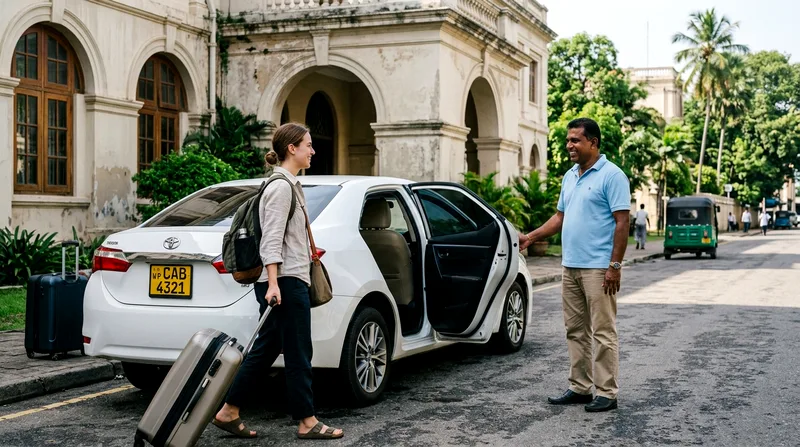
Tuk-tuk drivers in tourist towns routinely quote three to five times the local rate if you don't negotiate first. Use the PickMe app (Sri Lanka's local ride-hailing app, similar to Uber) where it operates — Colombo, Kandy, Galle, and several other towns — to see a fair metered price, then use that as your benchmark even if you flag down a tuk-tuk on the street. For longer day trips, agree the total fare and confirm whether it includes waiting time before you get in, not after. Safari jeep operators near Yala and Udawalawe often quote inflated "packages" that bundle in unnecessary extras; ask for the breakdown of park entry, vehicle fee and driver fee separately so you can see what you're actually paying for.
Local versus tourist pricing for food and services
Restaurants with English menus and photos of the food near beach towns and Ella charge two to four times what an unmarked local rice-and-curry shop charges for an equivalent meal. That's not necessarily bad value if the food and setting are better, but it's worth knowing you're paying a premium, not the "real" price. The same applies to laundry, SIM cards, and souvenirs — a tourist-district SIM card vendor might charge double what a Dialog or Mobitel shop in a regular town charges for the same data package. If you're traveling with kids and need quick, familiar food options, expect to pay tourist-town prices; that's a fair trade-off for convenience, just don't mistake it for the national average cost of eating in Sri Lanka.
Legitimate Ways to Save Money
None of these require haggling aggressively or cutting corners on safety — they're structural choices that change your cost base before you've even landed.
Timing, off-season and booking early
Sri Lanka has two monsoon systems, which means there's always a "dry side" of the island — the south and west coast peak from December to March, the east coast (Trincomalee, Arugam Bay) peaks from May to September. Traveling the off-peak side deliberately, rather than avoiding Sri Lanka entirely in low season, can cut accommodation costs by 30–40% while still giving you good weather. Booking guesthouses and homestays directly by email or phone, rather than through booking platforms, sometimes gets a better rate since the owner avoids commission — worth asking when you've found a place you like. Flights into Colombo are cheapest booked 2–3 months ahead outside the December holiday peak; last-minute fares during the Christmas and New Year period can double.
Combo tickets, trains, buses and shared transport
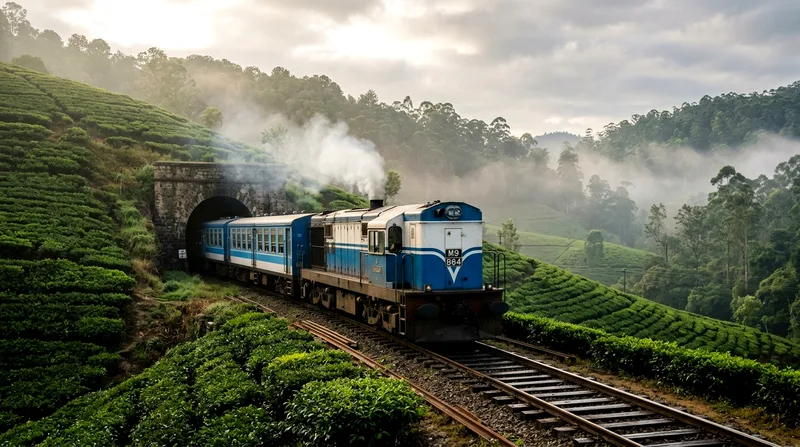
The Cultural Triangle round ticket, when it covers the sites you actually plan to visit, is cheaper than paying separate entry at Anuradhapura, Polonnaruwa and Sigiriya individually — but only buy it if you'll genuinely visit at least three of the covered sites within the validity window. Trains are the best value transport in the country: the Kandy to Ella line costs a few dollars in second or third class and is one of the most scenic rides in Asia, no different in view from the pricier first-class observation carriages that tourists often overpay for. Intercity buses cost a fraction of hired cars and run frequently, though they're slower and less comfortable — fine for solo backpackers, less fine for families with young children or heavy luggage. Splitting a private driver three or four ways between fellow travelers you meet at a guesthouse is one of the most effective savings for mid-range travelers, since the per-person cost of a $50 day car drops to $12–15 once shared.
What Is Not Worth Skimping On
Cutting your Sri Lanka cost to travel too aggressively in the wrong places creates real risk, not just discomfort. There are two or three things worth paying for properly every single time.
Safety, insurance and reliable drivers
Travel insurance that covers medical evacuation is non-negotiable if you're doing anything in the hill country, surfing, or visiting national parks — rural hospital care is basic, and a serious injury may mean transfer to Colombo. This typically costs $40–80 for a two-to-three-week trip depending on your provider and age, trivial against the cost of a medical flight. On the roads, don't choose a driver purely on price — Sri Lanka's roads mix buses, tuk-tuks, dogs, and pedestrians with minimal lighting outside towns, and an inexperienced or exhausted driver on a long hill-country route is a genuine hazard. Ask guesthouse owners for a driver recommendation rather than taking the cheapest quote from a stranger at the train station. I'd also avoid skimping on bottled or filtered water in the heat — dehydration-related illness ruins more trips than overspending ever does, and the cost difference is a dollar or two a day.
Booking Checklist Before You Go
Before locking in flights, check whether you need an Electronic Travel Authorization (ETA) — most nationalities do, it's a short online application, and the fee is separate from anything mentioned above, so budget for it before converting the rest of your cash. Confirm the current LKR to USD rate a few days before departure rather than relying on a number from months ago, since it directly affects how far your rupee cash goes for day-to-day spending. If you're planning national parks, decide in advance whether you want one big safari (Yala, well-known for leopards) or a cheaper, less crowded alternative like Udawalawe or Wilpattu, since fees are broadly similar but crowd levels and sighting odds differ. Book your Kandy–Ella or Colombo–Kandy train seat a few days ahead in reserved classes during peak months (December–March, August), as these sell out; unreserved third class is always available but means standing room only on busy days. Finally, decide your transport strategy for the whole trip upfront — a single hired driver for 10–14 days, versus a mix of trains, buses and short tuk-tuk hops — because switching strategy mid-trip usually costs more than committing to one from the start. Compare current national park fees, train fares and driver day-rates before you book, since all three are the figures most likely to have shifted since any guide was written.
Frequently asked questions
How much money do I need per day in Sri Lanka?
Budget around $25–35 a day for basic travel on public transport with simple guesthouses and local food, $60–100 a day for a comfortable mid-range trip with some private transport and paid activities, or $150–300+ a day for a luxury trip with a private driver and daily tours. National park days and Cultural Triangle sightseeing days will run noticeably higher than quiet beach or hill-country days.
Can you travel Sri Lanka on a very low daily budget?
Yes, backpackers can manage $20–25 a day by sticking to public buses and third-class trains, dorm beds or the cheapest guesthouse rooms, and local rice-and-curry meals. The trade-off is skipping or sharing the cost of national park safaris and private drivers, since those fees stay fixed regardless of how frugally you otherwise travel.
Where do foreigners overpay in Sri Lanka?
Unmetered tuk-tuks in tourist towns, unofficial "guides" who approach you at temple entrances, and hotel-brokered day tours are the biggest overpayment risks. Use the PickMe app to benchmark tuk-tuk fares, decline unsolicited guide offers at major sites, and get an itemized breakdown before agreeing to any safari or tour package price.
Is Sri Lanka cheaper than Thailand or Vietnam?
Day-to-day food and local transport in Sri Lanka are comparable to or slightly cheaper than Thailand and similar to Vietnam, but Sri Lanka's national park fees and major site entry tickets are considerably higher than equivalents in either country. Overall trip cost ends up similar to Vietnam and somewhat below Thailand for most travelers, mainly because of how much time people spend on paid safaris and Cultural Triangle sites.
How much does a month-long trip to Sri Lanka cost?
A backpacker doing a month on local transport and basic rooms can expect to spend roughly $750–1,050 total, excluding flights and the ETA fee. A mid-range month with some private transport and regular paid activities typically lands between $1,800–3,000, depending on how many national parks and private driver days you include.