Sri Lanka best time to visit by month: how two monsoons split the coasts, when to book safaris, surf, beaches and hill country tours.
Sri Lanka Weather and Monsoons Explained
Sri Lanka's weather doesn't move in one pattern — it moves in two, and they hit from opposite directions at different times of year. That's the single fact that makes "Sri Lanka best time to visit" a harder question than it looks. Compare it to Thailand, where most of the country shares one dry season from November to April, or Bali, where the dry months are fairly uniform across the island. Sri Lanka splits down the middle: when one coast is having its best weather, the other is getting soaked.
The island sits close to the equator, so temperatures barely change month to month — expect 26-32°C on the coast year-round, cooler in the hills around Ella and Nuwara Eliya, where nights can drop to 10-15°C. What changes is rainfall and wind direction, driven by two monsoon systems that arrive roughly six months apart. Get the timing wrong and you can end up with a week of grey skies and rough seas in Mirissa while Trincomalee, 300km away, is having perfect weather.
This isn't a reason to avoid the off-season coast entirely. Rain in Sri Lanka's monsoon tends to arrive in short, heavy bursts rather than settling in for days, and shoulder months either side of each monsoon often bring a mix of sun and rain that's perfectly workable for a trip, just with less certainty than peak season.
Southwest Monsoon (Yala)
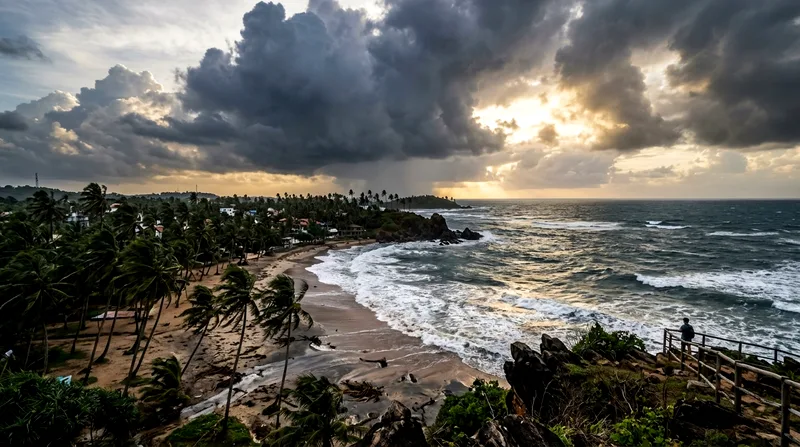
The Southwest Monsoon, locally called Yala, runs roughly from May to September and dumps most of its rain on the south and west coasts — Galle, Mirissa, Bentota, Hikkaduwa — plus the hill country. This is the wet season for the most popular tourist coast, with rough seas, reduced visibility for diving, and surf conditions that go from clean to messy. It doesn't rain constantly; you'll often get a heavy downpour for an hour or two, then clear skies. But persistent cloud cover and rougher seas make this a weaker window for beach holidays on that side of the island. Don't confuse this monsoon's name with Yala National Park — the name overlap trips people up, but the park itself is on the drier southeast and is barely affected by this monsoon.
Northeast Monsoon (Maha) and Inter-Monsoons
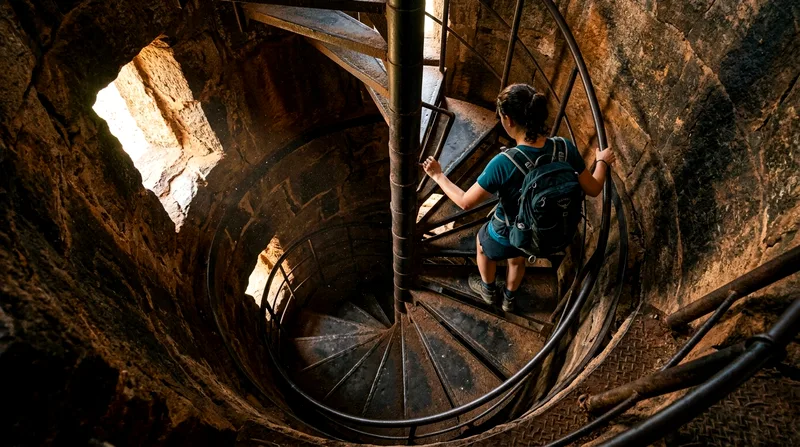
The Northeast Monsoon, or Maha, runs roughly October/November through February and affects the east coast and north — Trincomalee, Arugam Bay, Jaffna. While the south and west are enjoying their driest, sunniest months, the east coast is getting its heaviest rain and rougher surf. Between the two main monsoons sit two inter-monsoon periods, roughly October and April, when rainfall becomes less predictable island-wide — short, intense thunderstorms can pop up anywhere, including the Cultural Triangle and hill country. These transition months aren't bad for travel, but they're the least predictable, and I'd avoid building a trip around one specific outdoor activity (a single sunrise hike up Sigiriya, say) without a backup day.
Best Time to Visit by Region
Because of the two monsoons, the honest answer to "when should I go" is "it depends which part of the island you care about most." If your itinerary is beach-heavy, the coast you choose matters more than the calendar month. If you're after a broader loop — coast, hill country, Cultural Triangle — you can usually time it so at least one or two regions are in their dry window whenever you travel.
The south and west coast peak from December to March while the east coast peaks from May to September — pick your coast to match your travel month, not the other way round.
Sri Lanka best time to visit by region and month
| Region | Best Months | Rainiest Months | Good For |
|---|---|---|---|
| South & West Coast (Galle, Mirissa, Bentota) | December-March | May-September | Beaches, whale watching, diving |
| East Coast (Trincomalee, Arugam Bay) | May-September | November-January | Surfing, snorkeling, quieter beaches |
| Hill Country (Ella, Nuwara Eliya) | January-April | October-November | Hiking, tea estates, cooler climate |
| Cultural Triangle (Sigiriya, Dambulla) | May-September, also Jan-Mar | October-November | Temples, ruins, cycling |
| Yala National Park & south safari belt | February-June (dry, driest June-Sept) | October-December | Leopard and elephant safaris |
| North (Jaffna) | April-September | November-January | Culture, lagoons, fewer tourists |
These are typical seasonal patterns; monsoon onset and intensity shift year to year, so check a short-range forecast close to departure.
South and West Coast vs East Coast
The south and west coast — Galle, Mirissa, Unawatuna, Bentota — has its dry season from December to March, with shoulder months in November and April still decent. This is peak season here, and it shows: prices for guesthouses and tours climb, Galle Fort gets busy with day-trippers, and Mirissa's whale-watching boats fill up weeks ahead in peak weeks. The east coast — Trincomalee, Arugam Bay, Pasikudah — flips almost exactly opposite, with its best weather from May to September. Arugam Bay's famous surf season peaks in this window too, drawing a different crowd than the south coast's winter surf scene. If you're choosing one coast for a beach-only trip, pick based on your travel month, not reputation — Mirissa in July can be rainy and rough, while Arugam Bay in July is close to ideal.
Hill Country, Cultural Triangle and North
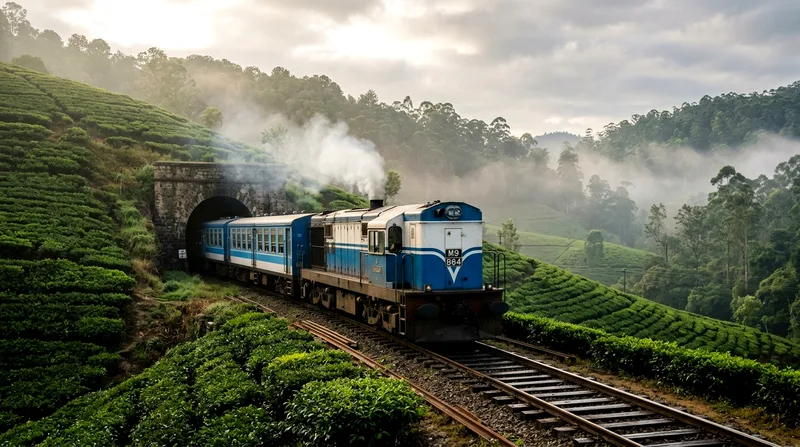
Ella and the hill country get rain from both monsoons to some degree, since the central highlands sit in the path of moisture from both directions, but January to April tends to be the clearer stretch for hiking to Little Adam's Peak or catching the Nine Arches Bridge without mist. The Cultural Triangle — Sigiriya, Dambulla, Polonnaruwa, Anuradhapura — sits in a drier inland zone and is reasonably visitable year-round, with its driest spell roughly from May to September, overlapping with the east coast's best window, which makes a Sigiriya-plus-Trincomalee combination a logical pairing for a June or July trip. The far north around Jaffna follows the northeast monsoon pattern, best from April to September.
Sri Lanka Month by Month
Looking at Sri Lanka weather by month is more useful than thinking in seasons alone, since conditions shift gradually rather than flipping overnight.
December to April: Peak Season Highlights
December through March is peak season for the south and west coast and the hill country, and it's peak season for a reason — the lowest rainfall, calm seas for swimming and diving around Mirissa and Hikkaduwa, and reliable conditions for the Galle Fort ramparts at sunset. January and February are the busiest and most expensive months; Christmas and New Year week sees a noticeable price spike on both guesthouses and vehicle hire, so book well ahead if you're traveling then. April brings the Sinhala and Tamil New Year (mid-April), a major domestic holiday when transport gets booked out and some businesses close for a few days — worth knowing if your dates overlap. By late April, the inter-monsoon starts bringing afternoon thunderstorms back to the south coast.
May to November: Shoulder and Green Season
May to September is low season on the south and west coast but high season on the east — this is when Arugam Bay's surf crowd arrives and Trincomalee's seas are calmest for snorkeling and boat trips out to Pigeon Island. It's also when hotel rates on the south coast drop noticeably, which suits travelers happy to trade a guaranteed dry week for lower prices and thinner crowds, accepting that some days will be washed out. October is the trickiest month island-wide — the inter-monsoon brings unpredictable storms to both coasts, so it's a reasonable month for the Cultural Triangle or hill country but a gamble for a beach-only trip. November starts the shift back toward the south coast's dry season while the east coast's rains begin.
Best Season for Safaris, Surf and Whale Watching
Wildlife and water sports both depend heavily on season, arguably more than general sightseeing does, so it's worth planning these around the calendar first and fitting the rest of the trip around them.
Wildlife Parks and Elephant Gatherings
Yala National Park, Sri Lanka's most visited park and one of the best places anywhere to see leopards, is driest and most accessible from February through June, though it closes for roughly a month (usually September) for annual maintenance — check current closure dates before booking a safari. Udawalawe, a reliable spot for elephants, stays accessible year-round since it doesn't close annually. The standout wildlife event is the Elephant Gathering at Minneriya and Kaudulla, when several hundred elephants congregate around the shrinking reservoir — this typically peaks from July to September, during the dry inland months, and it's a genuinely different experience from a standard game drive. Compare that to safari planning in Kerala or Nepal, where wildlife viewing is far more tied to a single dry season with no equivalent of this migratory gathering.
Surf Breaks and Whale Seasons by Coast
Surf season splits cleanly by coast. Arugam Bay's point break works best from April to October, peaking in the Southwest Monsoon months that ruin the south coast — one of the clearest examples of why coast-matching beats a single "best month." The south coast around Weligama and Hikkaduwa has its surf season from November to April, better suited to beginners thanks to gentler, more consistent waves. Whale watching out of Mirissa runs roughly December to April, chasing blue whales and sperm whales in calm seas; Trincomalee offers a secondary whale-watching season from May to September. If whale watching is a priority, build your trip around Mirissa's window rather than squeezing it in during rough seas — boats do still run in marginal weather, but sightings and comfort both drop.
Is November a Good Time to Visit?
November sits right at the inter-monsoon transition, which makes it one of the more debated months for Sri Lanka travel — and one of the most searched. It's not a bad month, but it's not the safest bet either, and the right answer depends heavily on where you're going.
What to Expect and Where to Go
By November, the Northeast Monsoon is starting to bring rain to the east coast — Trincomalee and Arugam Bay are winding down their dry season — while the south and west coast are just beginning to dry out after the Southwest Monsoon. In practice this means early November can still see rain and rough seas in Mirissa and Galle, improving steadily through the month, while the east coast is heading into its wetter months. Hill country and the Cultural Triangle are reasonably stable in November, with Sigiriya and Dambulla unaffected by coastal monsoon timing. For a November trip, I'd lean toward the south and west coast in the second half of the month, paired with hill country and cultural sites, rather than betting on the east coast. It's also a genuinely good value month — shoulder-season pricing still applies before the December rush, and crowds at Galle Fort and Ella are noticeably thinner than in peak January.
How to Plan Your Trip Around the Seasons
The practical approach is to decide what matters most — beach time, safari, surf, hiking — and let that drive your month, then build the route around whichever coast is in season. A two-week loop combining Sigiriya, Kandy, Ella and the south coast works well from January to March, when most regions are simultaneously dry. A trip weighted toward Arugam Bay and Trincomalee makes more sense from June to August. Trying to force a single itinerary that hits Mirissa, Ella and Arugam Bay all at their individual best in one short trip isn't really possible — accept that one leg will be shoulder-season at best.
Compare this to planning a Bali or Thailand trip, where a single dry season (roughly April-October for Bali, November-February for most of Thailand) covers nearly the whole country — Sri Lanka demands more route-level thinking in exchange for a smaller, more varied island where you can genuinely do coast, hills and wildlife in one loop. If you're short on time, don't try to out-think the monsoon by chasing both coasts in a 10-day trip; pick one coast, the hill country, and the Cultural Triangle, and save the opposite coast for a return visit.
Once you've settled on a month, it's worth browsing Sri Lanka tours and itineraries built around that specific season — multi-day safari and south coast combinations for the December-April window, or surf-and-culture loops pairing Arugam Bay with Sigiriya for the May-September window — and checking current prices and availability before booking, since peak-season rates on the south coast can run noticeably higher than shoulder months just a few weeks either side.
Frequently asked questions
What month is the best time to visit Sri Lanka?
There isn't one universal best month — it depends on the coast. December to March is best for the south and west coast, Galle, Mirissa and the hill country. May to September is best for the east coast, Arugam Bay and Trincomalee. If you want the most regions dry at once, aim for February or March.
Is November a good time to visit Sri Lanka?
It's workable but inconsistent. Early November can still bring rain to the south coast as the inter-monsoon tapers off, improving through the month, while the east coast starts turning wet. Hill country and the Cultural Triangle are fairly stable. Late November on the south coast, paired with Kandy and Ella, is a reasonable shoulder-season bet with lower prices than peak January.
When is the monsoon season in Sri Lanka?
Sri Lanka has two monsoons. The Southwest Monsoon (Yala) runs roughly May to September and soaks the south and west coasts. The Northeast Monsoon (Maha) runs roughly October to February and soaks the east coast and north. Two inter-monsoon periods, around October and April, bring unpredictable storms island-wide.
Which coast of Sri Lanka is best in summer?
The east coast — Trincomalee, Arugam Bay, Pasikudah — is at its best from May to September, during what's summer in Europe. That's exactly when the south and west coast are in their wettest months, so if you're traveling June to August, head east rather than to Mirissa or Galle.
What is the cheapest time to visit Sri Lanka?
The off-season for whichever coast you're visiting is cheapest — for the south and west coast, that's roughly May to September; for the east coast, it's November to February. October and November, the inter-monsoon months, also tend to have lower prices island-wide due to less predictable weather, before the December peak-season surge.